The strategy has identified 19 commodities and services as key export potential items and laid down an action matrix for the government to follow to develop a competitive export supply for the future.[break]
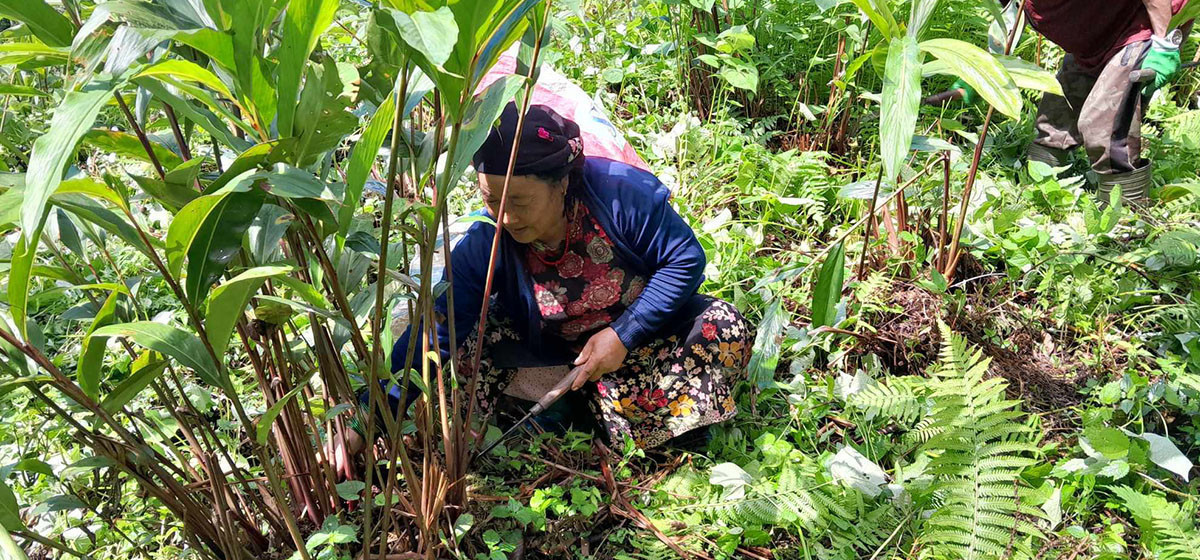
The strategy-identified potential commodities include agro-food items like large cardamom, ginger, honey, lentils, tea, instant noodles and medicinal herbs or essential oils. Handmade paper, silver jewelry, iron and steel products, pashmina products and wool products have been identified as export potential products under industrial goods.
Likewise, it has tagged tourism, labor, IT and BPO, health services, education, engineering and hydropower as highly potential export services.
The strategy says Nepal can effectively diversify and expand the export basket and export destinations if the government focused more on promoting these products.
In this connection, the strategy suggests the government to focus on setting up a number of good agricultural practices (GAPs), integrated pest management (IPM) and quality management system (QMS) in case of agricultural commodities.
"Along with GAPs, IPM and QMS, third party certification (TPC) too is crucial to enhance the quality and quantity of supply and lower the current burden of sanitary phyto-sanitary (SPS) certification for exports," says the strategy.
Among the seven agro-food potential products, the strategy has suggested the government to lay instant initial focus on tea, lentils, cardamom and ginger, as Nepal is already exporting these four products substantially.
The strategy also stresses on deepening knowledge of trade negotiators on attractive destination markets identified for each of the 19 export potential commodities.
Among others, the strategy suggests the government to enhance bilateral negotiations and prioritize India and other SAARC countries, China, selected Gulf and Middle East countries as priority target markets for Nepal.
It further urges the government to accelerate the creation of a Board of Investment (BoI) and develop strategic investment promotion plan to align investment with the identified potential export sectors. It also asks the government to organize and develop trade information and trade support services in regions where the export potential sectors are based in a targeted manner. In this connection, the strategy has pushed for re-definition of Trade and Export Promotion Committee´s (TEPC´s) functions and mission.
NTIS 2010 has also laid down strategies for strengthening agreements with labor importing countries, urged the government to establish Nepal Business Forum as soon as possible for instituting accountability in government operations.
Related story
Kakarbhitta customs point sees Rs 16 billion in imports as expo...