Below are excerpts.
Myrepublica.com: What is your assessment of network marketing business?
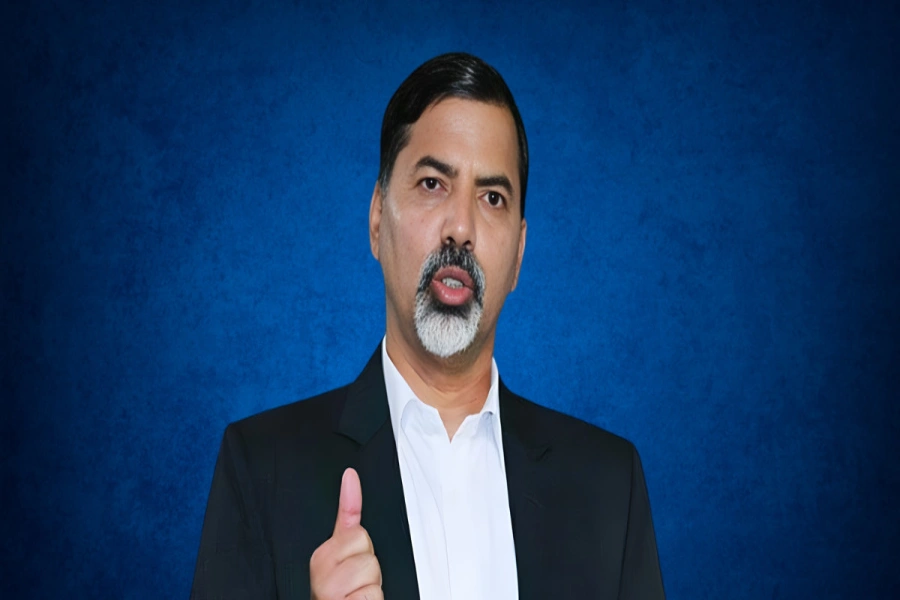
Madan Krishna Sharma: Binary marketing with pyramid style of push sale is an unviable business model. That has been proven the world over. If any business entity is following this model, it is either looking at short term benefits only (without concern for long-term sustainability) or doing it out of ignorance (about the limitations of this model). In most cases, we find businessmen taking cash flow as profit, whereas cash flow and profit are two different things. Cash flow in almost all cases is money collected for meeting some liability (for delivery of products or services or both), whereas profit is money that you earn and add over and above such collections. But network marketing operators take cash flow itself as profit. It distributes commissions on the basis of this income and because such commissions are distributed among different tiers of the marketing chain, the volume of distribution is hefty. The promoters use the same money for running their offices and also take away a portion of it as their share of profit. Under this model, the marketing is done at grass-root level. Because of the promises they make and commissions they distribute in the beginning, the number of clients (and future marketing hands) grows rapidly. This means, cash flow will come in rapidly and is spent at the same pace. The people in the lower tier (grass-root level) of the chain far outnumber people in the upper tier. The beneficiaries, hence, are those at the top. As the business itself is not viable, those actually benefitting are much fewer, while those subjected to the risk of losing their money are many.
So, it operates like this: the upper tier takes hefty benefit from people at the lower level and encourage the latter to do likewise further down to make handsome gains in turn. It thus creates a bubble all over the chain.
Myrepublica.com: There are numerous marketing practices and business models across the globe. Where does network marketing in pyramid style stand among them?
Sharma: This model has not been sustainable and has not been able to meet its long-term commitments (liabilities) any where in the world.
Myrepublica.com: Under what conditions will this model work?
Sharma: If prudently managed, this model can work in the sale of products where the company has no future liability to clients. The client will get at least the promised goods instantly and will not expect further proceeds. And because prices of goods tend to go down over time (due to innovation and scale of production), the company, by setting the price at a constant level, can earn profit as well. In such a situation, it can use the profit for distributing commission or bonus or dividend, whatever you call it, among the people in the marketing chain. But if the company is accepting future and long-term liability, this model will eventually go bust.
The clients themselves can realize the flaw in this business model in just 15 minutes if they sit down with ULI´s agents and ask them the right questions: how will the company sustain itself, meet its liabilities, how will it make profit and from where is it distributing handsome commissions. If you do not fall blindly for their promises and ask their agents to persuade you through rational calculations of how they will give you what they are promising, you will understand the model´s weakness instantly.
Myrepublica.com: Why do you say such a company will eventually go bust?
Sharma: Just look at Unity´s case. The company is paying 13 percent VAT. It needs to operate hospitals and manage overhead like offices, staff and the network chain. That would cost an extra 5 percent (at least). On top of that, it is distributing funds as commissions to people in the marketing chain (which the company´s MD says stands at about 20 percent). The company has further promised annual interest returns of 10 percent to the client. More still, it needs to return the principle amount. Also add to this the volume of fund misappropriations and leakages, which generally tends to be unsustainably high in such operations. Furthermore, it collects cash only once from an individual but commits to providing so many things for ever.
It can be a sustainable business proposition only if it has kept intact the money collected from clients, adopted prudent fund and portfolio management and earned a hefty profit, say at least 50 percent every year. But the reality is, in the present free-market competition no company in any part of the world can sustain itself with such high costs for a long span.

Myrepublica.com: But Bishnu Chhetri, Managing Director of ULI, claims that the company will double the money it has collected from the clients every 5 years and in 40 odd years Rs 13,000 will yield as much as Rs 20 million?
Sharma: I do not believe that unless its assets and future liabilities are computed on the basis of internationally accepted standards of transparency.
Myrepublica.com: What if the company has invested in real estate, whose prices were doubling every six months until very recently?
Sharma: It can sustain itself in that case. But what we must understand is that real estate prices were not doubling every six months until three years ago and we don´t expect that to happen always. Such high returns prospects last for a few years only, whereas the company is talking about high profits every year and forever. How is that possible? With the central bank´s recent intervention in the realty market, we are already witnessing the realty demand nosedive and expect prices to go into reverse gear and drop. In that case, how will the company earn the profit it needs to sustain itself?
Myrepublica.com: What is assurance? Is it different from insurance?
Sharma: Assurance is nothing but insurance. It is a social security scheme that people can buy from authorized institutions. It can be short-term as well as longer-term. Some insurance companies across the globe term their packages assurance plans, while many others offer them as insurance plans. Words may be different, but their spirit is the same.
Myrepublica.com: But the Unity people say assurance is not insurance.
Sharma: If the company is saying assurance is different from insurance, it is just playing with words for business gain. Ask anyone in the field of insurance and they will affirm to you what I said. Words may be different, but the spirit is the same. Companies across the world use these words synonymously.
Myrepublica.com: If assurance is actually insurance, then who should regulate Unity?
Sharma: Obviously, the Insurance Board should look into this. You must ask IB officials: How could the Board let a scheme run without intervening? I hope it has the knowledge and capacity to understand the spirit of the word.
Myrepublica.com: But the company says its assurance plan is also a banking scheme?
Sharma: That´s another wildest thing I have ever heard. Is Unity an insurance company or a bank? Technically, it can function as only one or the other under prevailing laws in Nepal. The systems of managing and calculating assets, liability, profit and returns for banks and social security institutions like insurance firms, provident funds and pension funds are different. If Unity says its assurance plan is a banking plan, it will fit nowhere in the formal business framework or model.
If it is running a banking scheme, has it acquired permission from Nepal Rastra Bank (NRB)? No. If it is saying it´s a banking scheme, what is the central bank doing? An institution is collecting billions of rupees from the people and NRB has done nothing!
Myrepublica.com: May be its business fits the model of a fund manager. Can´t that be so?
Sharma: Fund management is a sophisticated business. As I said previously, institutions that hold people´s social security earnings (eg insurance, EPF and pension fund) are managed and governed more strictly than banks. But who is governing and regulating Unity? Has it acquired license to function as a fund manager? No.
Myrepublica.com: The company says it has a presence in 62 countries, physical office setups in 17 countries and 250,000 clients in countries across the globe, including Malaysia, the Gulf countries, Israel and India. There are clients of other nationalities as well. What do you say to that?
Sharma: Really! I can´t believe it. Our laws so far do not allow Nepali companies to invest outside Nepal unless they obtain necessary approval. If it has foreigner clients and has collected money from them, where has it kept the money? Has it brought the money back home? How will it pay clients beyond the border? Has it got authority to deal in foreign currency? Has NRB allowed that? Its operations attract the Foreign Exchange Act as well.
Myrepublica.com: What do you think of Unity then?
Sharma: Well, first, Unity needs to provide answers to the questions discussed above and at the same time the government and regulatory agencies concerned should ensure that operations of this magnitude involving more than half a million people are transparent and the people´s interests are protected.
Myrepublica.com: What should the government do?
Sharma: The government must act immediately. If the company is a public limited company and has such a huge client base, then how it operates is a matter of public concern. The government must uphold consumers´ rights and protect their concerns. It must investigate the case and bring such ventures under a transparent, financially protected and publicly accountable system.
Otherwise, officials who are now refraining from taking any action, fearing heat from 650,000 clients, will eventually face heat from still larger masses. It will be no better than the maize saga that surfaced recently. While some illicit traders got away with supplying substandard seeds, farmers compelled the government to compensate for the loss that someone else subjected them to.
Besides, if the government is collecting tax from Unity, it recognizes its business. In that case, it will have to bear the company´s liability as well. If it doesn´t act now, it will be compelled to do so later on.
Related story
Conflict victims threaten to ask UN to intervene in TJ process