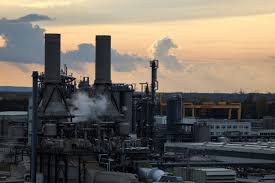
PARIS, Oct 7: Europe, spurred on by France, wants to provide support for its crucial chemical industry, which is struggling with high energy costs and global competition.
Yet a slew of stakeholders fear that bolstering the sector will harm the environment, public health and even consumers.
France Chimie, the sector lobby in France, along with its Dutch, Hungarian, Italian and Spanish counterparts, said in a joint press release at the start of the month that the European chemicals industry, which produces fertilisers, plastics, medicine and industrial gases, is facing a "systemic crisis."
The European Commission, the European Union's executive arm, has set up a "Critical Chemicals Alliance" (CCA) with industry groups, and holds its general assembly this Thursday in France's eastern Moselle region.
"Over the past two years we have witnessed the announcement of closures of more than 20 major production sites in the EU, with associated job losses and the erosion of our market position," Siobhan McGarry, an EU spokesperson for industrial policy, told AFP.
"The Alliance is focused on maintaining our chemicals industry during its clean transition," McGarry said.
Endocrine Disrupting Chemicals found in personal care products...

Between 2008 and 2024, Europe's share of the global chemicals market slid from 23 percent to 13 percent, while China's share rose from 19 percent to 46 percent, according to European industry association Cefic.
Over the same period, the global market expanded in value from $2 trillion to $5 trillion.
- Strong "pressure" -
The European chemical sector, which is a major consumer of gas and processes petroleum-based products, is also grappling with rising fossil fuel prices owing to the war in the Middle East, which comes on top of 2022's price surge following Russia's invasion of Ukraine.
Cefic told AFP that "competitive pressures, declining investment and production challenges in certain value chains" were now so high that it "currently acts as a disincentive to large-scale investments."
The association, which brings together industry giants such as Arkema, TotalEnergies, BASF, Dow, Syensqo and Ineos -- as well as public bodies and several NGOs -- is hoping to reach a consensus on what chemical production is most critical to Europe's economy.
The group calls for a "level playing field" with China, arguing that it subsidises its companies, enabling them to undercut prices.
Some others fear rising customer prices if the right balance on protectionism is not struck.
- Key French role -
France plays a key role in pushing the EU to support the chemical industry.
In mid-September, the French Minister Delegate for Industry, Sebastien Martin, urged Europe to "take concrete and swift measures" to "protect and strengthen our chemical production." But the push has sparked concern among environmental protection groups.
On October 1, the European Environmental Bureau (EEB) announced it was walking away from the alliance, which it believed would "preserve current chemical production -- including hazardous substances, high emitters, and those reliant on fossil fuels -- rather than initiating the transformation Europe needs."
The EEB's Tatiana Santos said the alliance comprises "around 300 industrial groups and four or five NGOs. So we know the outcome and we just don't want to be linked to any of these proposals that are so threatening for protecting human health, the environment and climate."
In July, the EEB published a report with another NGO, Corporate Europe Observatory, expressing concern that "several problematic and hazardous substances," specifically PFAS, or "forever chemicals", might be classified as "critical."
Vicky Cann of Corporate Europe Observatory says she fears that the alliance's conclusions will serve "established players in the chemical industry," making the "transition to a cleaner, safer, and more sustainable industry even more difficult."




.jpg)