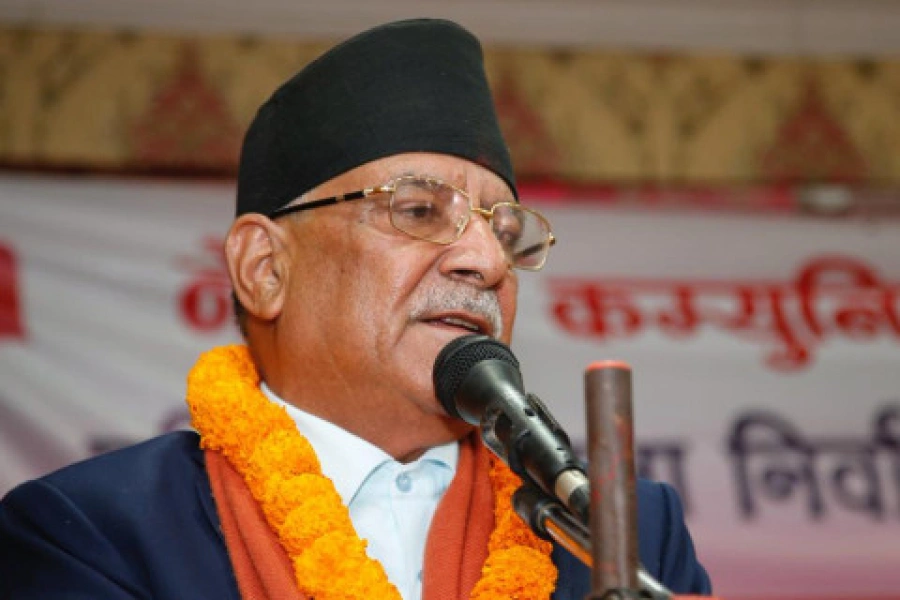
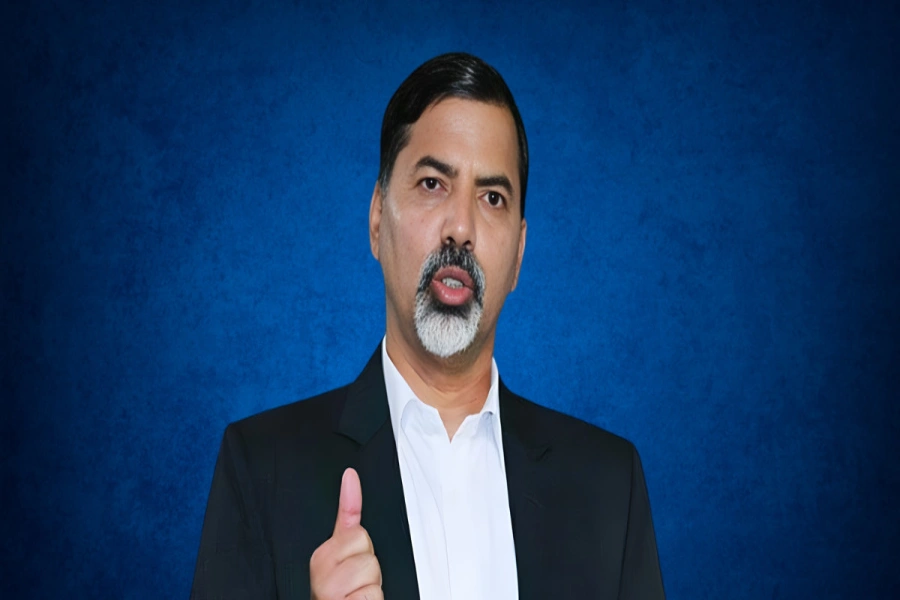
The precondition set by UCPN (Maoist), which enjoys nearly 40 percent majority in the House, to support CPN-UML chairman Khanal’s premiership (whose party has only18 percent hold in the House) was that ‘Khanal should garner support of two-third votes of the legislative assembly before the election starts’—failure to do which would pave way for its Chairman to go ahead with his candidature. Maoist vice-chairman Bhattarai’s name, although the most acceptable one across most parties, could not get through, thanks to Dahal’s maneuverings.
The central committee of CPN-UML also set the same ‘two-third’ pre-condition for its own president Khanal’s candidature, failure to meet which would result in withdrawal of his nomination. Prime minister and senior party leader Nepal, who proposed Khanal’s name on his party’s behalf, made no delay in withdrawing the nomination as soon as the conditions were not met. The tit for tat precondition and the subsequent withdrawal aimed at punishing Khanal for his efforts (in coordination with the Maoists, albeit covertly) to dislodge the government headed by his own party leader Nepal ever since it was formed some 14 months before.
Obviously, Maoists owed Khanal a repayment for his favor; they would also like to form an alliance with his faction as owing to the hung nature of the parliament, it was impossible for them to form a government on their own. But the factional support would be possible only with the formal split of CPN-UML; this was one of the reasons why the Maoists wish CPN-UML to split at its earliest. Thus support for Khanal’s candidature was intended to, besides serving other purposes, expedite the split.
More importantly, the support would serve the purpose of quelling the possibility of Bhattarai’s accession to the post. Dahal’s one and only aim has been to become the PM himself; but in case it is not possible and an alternative to his candidacy has to be agreed upon, he at least wants to stop his fellow party leader Bhattarai from getting the job. Therefore, support to Khanal would materialize only when Dahal would find it impossible to become the PM himself.
For the last few years, some communists, including a section of the not-so-communist CPN-UML, had been constantly advocating for communist unity. They argue that with their combined strength of nearly 62 percent in the House, they can do wonders should they unite.
The question arises, why Dahal doesn’t like Bhattarai? Well, like most top leaders of radical communist regimes/parties Dahal too hates and/or fears an able deputy; and he rightly rates Bhattarai as the only leader within the party who has potential to substitute him- a dangerous quality for # 2 in revolutionary communist hierarchies. Bhattarai should be grateful that Nepal is a democracy, however dysfunctional but a democracy all the same. If it were a one-party communist state Bhattarai himself so proudly advocates to create, he could have met the fate of Liu Shaoqi if not that of Trotsky. He has narrowly escaped that destiny once before- when the underground September 2005 plenum of the party famously known as Chunwang Baithak withdrew actions against him during last ten months (including the much rumored ‘house arrest’) for his two written submissions that defied Dahal’s political line.
What people know and communists disagree is that as humans, communists are susceptible to most human frailties and that personal and factional conflicts take place between communists as much as they do between non-communists. Unlike in freer societies their frailties and fights may remain covered inside iron curtains of states or parties, but exist they do anyway, anywhere. During formative years the radicals really believe that as communists they are (and should be) immune to weaknesses like desire for money and power or personality clashes which they brand as ‘bourgeois ills’; with the passage of time when personal weaknesses, social needs and economic necessities gradually take over revolutionary idealism, they pretend to believe. CPN-UML rank and file is already in the latter stage now while Maoists are slowly being pushed toward the inevitable.
For the last few years, some communists, including a section of the not-so-communist CPN-UML, had been constantly advocating for communist unity. They argue that with their combined strength of nearly 62 percent in the House, they can do wonders should they unite. Fine; but far from ‘wonders’ why can’t they use their majority simply to elect a PM for weeks after weeks and elections after elections? And why all of them (from big Maoists and CPN-UML to the dozen odd fringe parties) can’t get along with each other, could any communist unity advocate care to answer these questions?
The answer is that, good or bad, the communists here are functioning in a democracy which provides them the choice to separate (as much as to unite) and where they are free to make decisions according to the dictates of their conscience and not according to the text-books of Leninism which divide people and nations into friends (communists) and enemies (others). The brand ‘enemy’ may have relevance in one-party communist rules as it is used to acquire legitimacy to the regime (as well as to avenge or oppress opponents both outside communist party and inside). But in pluralistic democracies alliances are periodic, not permanent; further, they are formed on the basis of policies, programs, issues and interests, and not on the basis of perceived enemies and friends. And Nepal is a democracy, albeit a weak one where alliances are formed or broken for power and positions. That is why CPN-UML leaders like Khanal often has to coin self-contradictory terms like ekata, sangharsha ra rupantaran (unity, confrontation and transformation) to define their relationship with Maoists—a mix of enemies and friends and of coalitions and oppositions.
In fact, the intra and inter-party disagreements between communists are too serious and too many to overcome and they are there in all forms and fronts- ideological, strategic, tactical, organizational, factional, personal and regarding relationships with foreign powers, especially with India. Take CPN-UML for example, which may formally break anytime; indications are that it will chunk into ‘democratic left’ close to NC (headed by Nepal-Oli) and ‘left alliance’ aligned to Maoists (headed by Khanal- Ishwar Pokharel), while a small group led by Bam Dev Gautam will join UCPN (Maoist).
Seed has been sowed in UCPN (Maoist) too; when, how and in what mode and scale will the break-up reap remains to be seen. As of now, its in fights have three facets- one, anti-India versus India-neutral lobbies, two, personality clashes between Dahal and Bhattarai and three, triangular power struggle between Dahal, Bhattarai and Baidya-Badal faction. Bhattarai, the international face of the party but one who has a weak following, and Mohan Baidya, the dogmatic leader with considerable hold in the party have at the moment stood together against the authoritarianism and power-hungriness of the all powerful, shrewd and tactical party chief— Dahal.
It is time communists learned to live with their differences and encourage constructive criticism among parties and persons rather than parrot the impossible and futile rhetoric of communist unity only to fight fiercely.
jeevan1952@hotmail.com
Related story
Communist unity will incorporate UML as well, hopes Coordinator...