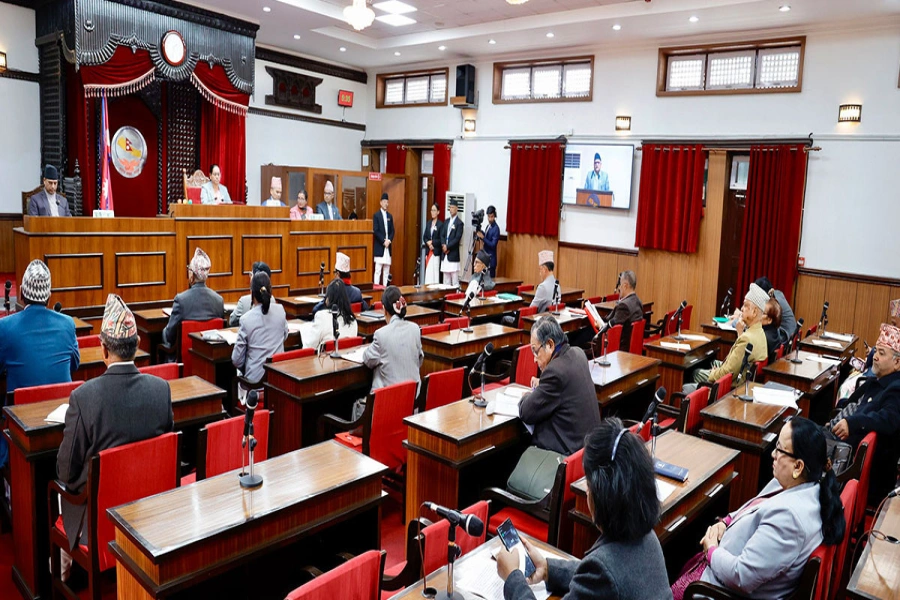
The government of Nepal is due to promulgate its new constitution next year. Yet we cannot be very hopeful given the mounting differences among the political parties. Nepal awaits its new constitution along with millions of voiceless children, who constitute half the country’s population. These children have no say but to once again accept the decision made for them.
Efforts are being made to make the voices of children heard at the local and national level. In the past years, much work had been carried out by non-governmental organizations to capture the voice of children in the drafting of the constitution. Two child rights’ coalitions, Children as Zones of Peace (CZOP) and Consortium of Organizations Working for Child Participation, called for the inclusion of comprehensive child rights and associated structures to protect child rights.
Since 2006, children from districts across Nepal have been voicing their concerns about child rights in the new constitution. This was possible with the huge efforts made by the above-mentioned networks in organizing a series of far-reaching consultation with children at the national and district level. It aimed to capture the voices and concerns of children regarding their rights in the new and interim constitution. A national campaign collected thumbprints of one million children from across Nepal under the leadership and participation of local organizations and headed by children in 67 districts. The campaign was run from a bus, called the Child Rights Bus that traveled from one district to another. The campaign ended on September 14, 2009, National Children’s Day with the exhibition and handing over of the thumbprints to the Chairperson of the Constituent Assembly, Mr Subas Nemwang. This gave hope to the many children who showed keen interest and enthusiasm in being a part of a process that would highlight their needs and ensure their rights. Much of their concerns were also captured and documented as expert submission on child rights in the new constitution of Nepal.
It is encouraging to note that in the concept note of the preliminary draft constitution, many of the recommendations made by children through child rights’ coalitions have been included to guarantee their rights. However, failure to put this into action now through a timely declared constitution will not only be a good waste of time and resources but also a dampening of children’s expectations from adults.
Timely investment on children on their basic rights to survival and development will ensure healthy citizens who will be the future decision makers of the country. This will be guaranteed only when child-friendly policies are in place at the right time.
The once hopeful children are now left wondering when decisions concerning their basic rights to survival, development, protection and participation will be put to action. Children of Nepal have been neglected by the state for a long time now. They have also been severely impacted by the decade long armed conflict from 1996 to 2006. During that time, hundreds of children were killed, maimed, orphaned, displaced and used as combatants. Today, children still continue to be misused for political purposes and rallies. Abduction is on the rise and children’s lives continue to be in danger. Children are trafficked for domestic work, carpet weaving, circus, forced marriage and prostitution.
The country can no longer be indifferent to the state of the children. Every day, 191children die needlessly. 5000 children are working and living on the streets. 2.6 million children aged 5-14 are working as child laborers in order to eke out a living. Half of all under-fives suffer from chronic malnutrition. 34 percent of all marriages involve children. An estimated 12,000 girls are trafficked into urban centers and across the border each year. Another estimated 990,000 children have lost one or both parents. (CZOP and Consortium: Expert Submission)
The new constitution will address many areas of their rights, which pertains to their well being and safeguard their interests. It will serve as a testimony of the state’s declared responsibility toward them. Children will be able to live a life with dignity and ensure the state’s responsibility toward them. Children will have provisions that will not only address their needs but also highlight the role of the state to fulfill those needs. Delaying the constitution will mean ignoring the state of children of Nepal.
How long will children have to wait to be protected by the state? Timely investment on children on their basic rights to survival and development will ensure healthy citizens who will be the future decision makers of the country. This will be guaranteed only when the child rights provisions are endorsed by the constitution and subsequently child-friendly policies are in place at the right time.
The state has to make a deliberate attempt to listen to what the children have to say when they postpone decisions pertaining to the latter’s welfare. And most importantly keep in mind the impact it will have on children who are at the receiving end. Delaying decisions means we are answerable to them. Children cannot wait. Adults’ lack of decision and consensus can cause irreversible damages in their lives.
Delaying the writing of the constitution, which contains the fundamental laws of the country, will deprive children of their rights as little citizens.
(Writer is the Advocacy and Communications Director of World Vision International Nepal.)
deepesh_paul_thakur@wvi.org
Related story
Worth of stories




-1200x560-1779450784.webp)