

They have to report the number of gharial crocodiles they see as the ´critically endangered species´ come out of the water for a while to sun-bathe. [break]
“The groups watch for the crocodiles the whole day until the sun sets. This process will go on for two more days,” said crocodile expert Bed Khadka, who is also chief of the only crocodile breeding center in the country. “This is a very thrilling procedure. We are counting the crocodiles, which is done every two years.”
The crocodiles are monitored for three days to ensure as accurate a count as possible.

PHOTO: CHANDNI HAMAL
“On one hand we have assigned the park segments to particular staff so that they will even notice the shape, size and any uniqueness of the crocodiles and they will likely not be counted again if they resurface more than once the same day. And similarly, for better results we take an average of the number of counts for the three days,” Khadka said.
“But the number we get would still be the minimum as many other crocodiles may have chosen not to come out even once.”
The crocodiles are found only in two districts in Nepal -- Bardiya and Chitwan. The Rapti and Narayani rivers in Chitwan, where the census was carried recently, have far more of the rare reptiles than Bardiya. The result of the census in Chitwan is to come out soon, but the count in Bardiya stared only from Thursday.
“We hope there will be encouraging results this time,” notes another wildlife expert, Jhamak Karki, who is chief warden at Chitwan National Park.
“It is extremely important to take care of these reptiles as they are very fast depleting. This kind of crocodile was seen in many other countries until some time back. Now, they are found only in Nepal and India,” he said.
The number of crocodiles in Nepal as per the last census was just 102. Twenty-one were found in Bardiya and the rest in Chitwan.
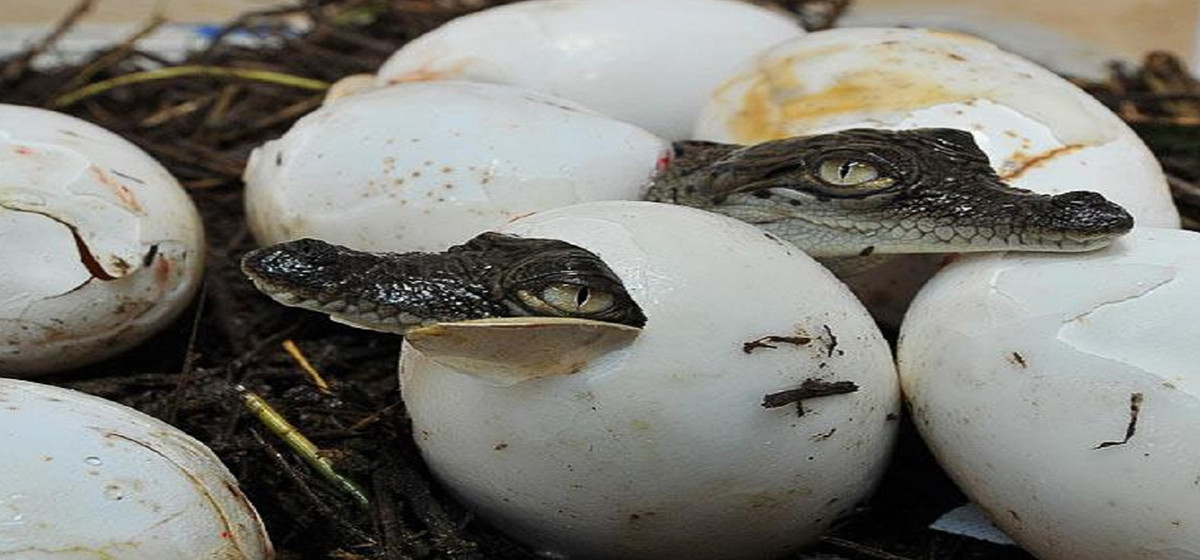
Even though there have been efforts to raise the numbers of these crocodiles, such as through artificial breeding, the very low survival rate of the hatchlings makes this very challenging, states Karki. “It is very difficult to save a crocodile hatchling. There is not even a 10 percent chance of success. That is why each additional crocodile counted in the new census should make us very glad.”
Related story
202 endangered crocodiles hatched out at Gharial Breeding Cente...









-1200x560-1779450784.webp)


