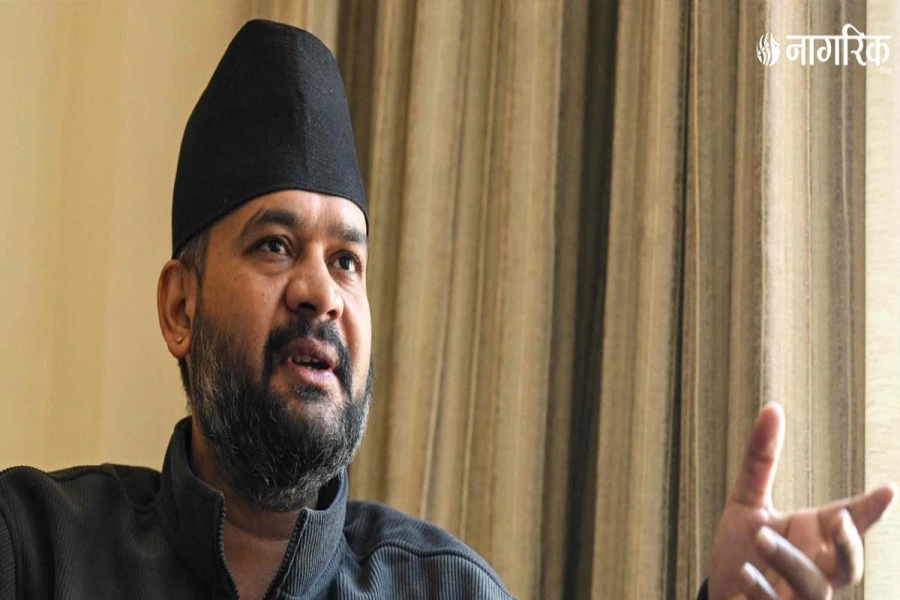
Excerpts:
So what are you reading right now?
These days I find myself focusing more on existentialism and realism. I have started challenging the beliefs of deities and theology as a whole so I'm trying to figure out what is real and what is not. I'm, once again, counting on books to help me get to the bottom of this.
You have earned a doctorate in philosophy. Has this subject always interested you?
I'd say it began when I was around 28 years old. I always thoroughly enjoyed comparative studies as well as unearthing different theories. The thing about philosophy is that, the more you start to read about it, the more confused and hence more curious you become. Before you know it, you are hooked. Inevitably one finds oneself pouring over hundreds of great works, some of which are even of different genres. Even though it was decades ago, I still remember one of my first reads in college was Voltaire's 'The dictionary of philosophy'. Voltaire introduced me to other good literature as well. Tolstoy was one of them. Tolstoy then got me interested in Dickens who in turn made me curious about Burton Russell. So on it went and the cycle of new discoveries still hasn't stopped.
Not many people have the patience to go through philosophical books, how would you convince them to change their minds?
I agree there is a decreasing trend in reading philosophical works or even classics. I have found that most prefer reading fictional novels and there is nothing wrong with that. I enjoy them too. However, that's for entertainment. Fictions can't give you arguments to defend your beliefs or knowledge to have a discussion. That's where philosophy really comes in handy. It can help mould your perspectives. It can give your character a depth. So it's worth picking them up.
What has reading philosophical books helped you understand so far?
Reading philosophical books make me more inquisitive by the day. I believe it's very important to understand how people grow. The core lies in the cause and different causes produce different effects. These various effects in turn give birth to completely new causes. It's such a delicate balance. If one tiny factor were to be changed, the whole reality comes tumbling down. Such countless phenomenon together create a universe. There is just so much to understand and discover, and I believe philosophy helps you realize that.
Along with philosophy, you also have plenty of knowledge about history, human rights, and international law. So does that mean you have an impressive collection of books?
Yes, books are very much a part of my daily life. It's work and it's entertainment. Actually an entire floor in my house has been converted into my library. As you can probably guess, a large part of it is collection of philosophies. I began collecting books since 1993 and it's become my pride and joy. I enjoy sharing my books as well. Not so long ago I donated the 52 volumes of the total interpretation of Hindu and Oriental philosophy to a college. Anybody can take the books from my library as well but not without writing it down on my register book first. I get annoyed if they don't do that. The rule applies to my daughters as well.
What about your own writings? You have a collection of poems and published novels. How did they come about?
In a way, after being surrounded by books and being such an avid reader, I believe writing comes naturally. You can't help but write. It has become a habit, to be honest. I don't get tired of it. I can sit at the desk for hours at a stretch. Usually my writings reflect the issues of the society. There are things I have seen as well as have experienced mixed with philosophies in my writings. I use it all in my literature which makes the novels a little post modernist in style.
Has your reading habits helped you as a professor as well?
Most certainly. When I read an interesting book, I find myself sharing it with the class. In fact every Saturday we have a couple of hours of philosophy debates. At times the students make presentations, at times I do. It's my own little way of helping the young generation discover the joys of philosophies. At a time, when they claim the kids are getting bored with the subject, it's amazing to see my students proving them wrong. Similarly, we have a private Facebook page. It's called the Living Philosopher. There we have long debates, share opinions, and ask questions. I really enjoy sharing whatever I have read with them.
On Dr Sangroula’s bookshelf
The Youth by Leo Tolstoy
Unfortunately I did not get a chance to read this book in my youth, but how I wish I had. The way Tolstoy paints a picture and explains the joys as well as sorrows of being young is extraordinary. If I had read this book when I was young, I would have definitely been different, perhaps more intelligent as well. But it’s never too late, and I highly recommend this read.
Books to get you started on philosophy

The Price of Inequality by Joseph Stiglitz
To understand how the modern world works and at times in rather scandalous ways, Stiglitz is a very exciting and explosive source. From unfair distribution of wealth to globalization, from cultures to the many ways international organizations are exploiting the third world country, his book covers it all.
The Bhagavadgita by S. Radhakrishnan
This book explains the emergence of philosophy in Bhagavad Gita. With Krishna as the main character, it uses duality and non duality. The knowledge that he imparts throughout the course of the story is rooted in philosophy and this book looks into it all.
Great Expectations by Charles Dickens
In terms of realist literature, I really like Charles Dickens. Great Expectations, in particular, is my favorite, a classic if there ever was one. I always recommend this to my students. The way Dickens presents his characters and society is bound to have a huge impact on any reader.
War and Peace by Leo Tolstoy
Once again, I pick Tolstoy because I believe you can’t be an intellectual without reading War and Peace. This book talks about a transitional society’s pain and many Nepalis should be able to relate with it. There is also an interesting observation on how intellectuals successfully emerge during these tough times. Further in the epilogue of this book, Tolstoy talks about how history is created. This is one enlightening book to say the least.





-1200x560-1774606010.webp)
-1200x560-1783685616.webp)