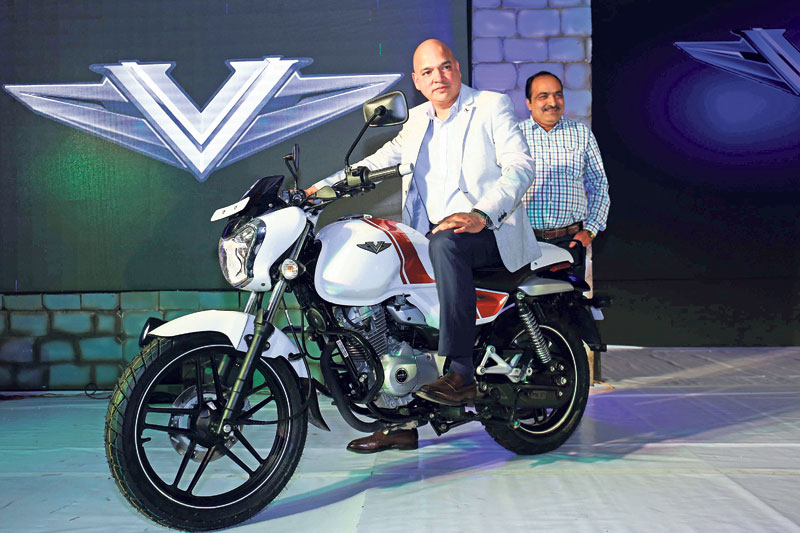
The new launches include an upgrade of Bajaj´s popular Pulsar 220 and the Discover 100. The new Pulsar 220, which has been tagged as the fastest commercial bike in India, has a top speed of 144 kmph and can go from standstill to a speed of 100 kmph in just 7.11 seconds, according to Hansraj Hulaschand.
“The new addition to the Bajaj series has a 100 cc engine. But this is an all new type of engine which delivers the performance of a 125 cc engine. Rider will feel like s/he is driving a 125 cc bike and will get fuel efficiency of a 100 cc bike,” Golchha added.
Golchha is optimistic about the future of automobile sector in Nepal. “The automobile sector, especially the two-wheeler segment, has become a priority sector for people. The state of public transport sector is such that people are always looking for an alternative. So for the middle and upper-middle class people, there is no alternative to bike or a car,” he added. He, however, rued the apathy that the government is showing to the sector, which is the biggest contributor to the government´s coffer.
“The sector contributed Rs 60 billion to national economy in the last fiscal year. But there has been very little investment in roads and other infrastructures,” Golchha said, adding that the government should invest at least a portion of the revenue to upgrade our roads and develop a better mechanism for traffic control. He also suggested the government to enhance the capacity of traffic police. “Though the number of vehicles has increased by leaps and bounds, our infrastructure is all the same. As if it were not enough, undisciplined drivers further aggravate the situation,” Golchha added. He also claimed that the automobile sector was providing employment opportunities, both directly and indirectly, to large segments of population and also triggering development activities.
Another problem that Golchha sees in the automobile sector is the quality of fuel. “The vehicles that we import are of Euro or Bharat III emission standard. But the Nepal Oil Corporation, the sole importer of fossil fuel, imports cheap yet low quality fuel. The adulteration practiced by fuel stations is another thing to worry. This has been affecting the performance of vehicles here and contributing to environment pollution,” he added.
The head of the Golchha Organization, which also imports Daihatsu vehicles from Japan and SsangYong vehicles from South Korea and manufactures Hulas Sherpa vehicles in Nepal, is pleasantly surprised by the growth in automobile sector. “Despite all these drawbacks, the growth is amazing,” he adds. Golchha said the growth of two-wheeler and small car segment in the last fiscal year was healthy, while there were some setbacks for expensive cars.
Talking about the brands under his belt, Golchha said Bajaj was doing excellent - selling around 25,000 two-wheelers last fiscal year, SsangYong was doing good, while sales figure of Daihatsu had gone down a bit. “The depreciation of Nepali currency against Yen made Daihatsu vehicles more expensive. SsangYong has a very niche market for people who want to ride a different kind of SUV. This brand is showing improvements here,” he added.
Golchha´s own Hulas Sherpa, which costs Rs 1 million for a pick-up and Rs 1.5 million for the covered version, is also gaining popularity.
Related story
Bajaj Celebrates ‘25 Years of Leadership’ in Nepal