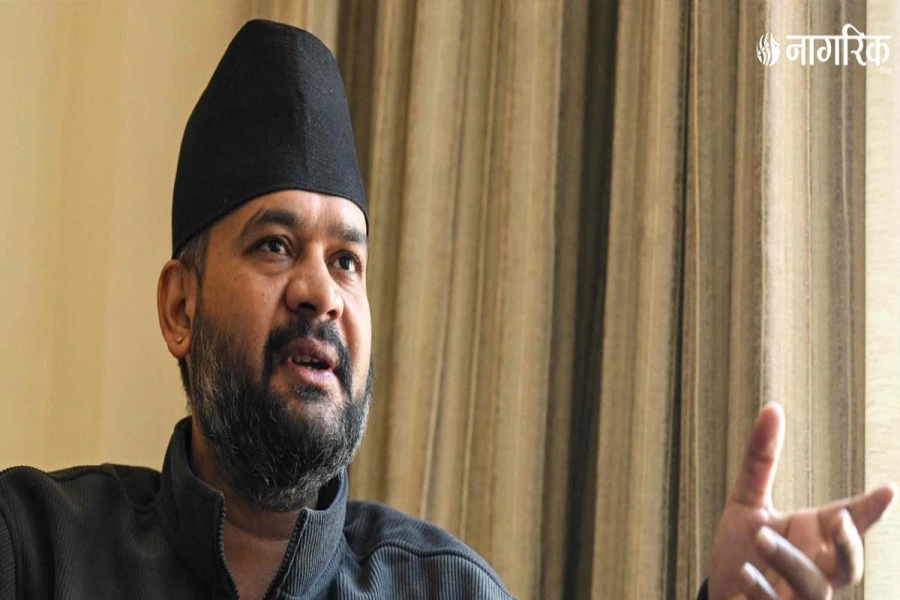
In March 2002, the main point on the then Nepali Premier Sher Bahadur Deuba’s agenda during his six-day visit to India was to secure the Indian government’s support in combating the Maoist insurgency in Nepal. There were concerns then that India had become a safe haven for Maoist leaders responsible for fomenting violence in Nepal. [break]
Nepal still had an active monarchy and Deuba was clearly perceived to be pro-monarch. The then king Gyanendra wanted India to help Nepal combat the Maoist insurgency. India, for its part, had assured Deuba that it would initiate adequate action to counter the Maoist activity in the border regions and elsewhere in India. Reiterating its support, India offered equipment and training to Nepal for combating the insurgency. Both the countries agreed to cooperate in intelligence-sharing and border surveillance. Deuba himself disclosed after the visit that India had assured “complete cooperation to stop the smuggling of arms and explosives by the Maoists into Nepal from India.”
Besides being seen as the King’s man then, he was also perceived to be pro-West, a proposition which made India weary of all-out support to Deuba government. Moreover, the Indian assistance then was contingent on Nepal initiating measures to countering the ISI’s subversive presence in Nepal.

Fast forward to 2013. Deuba came to New Delhi on another six-day visit as senior leader of Nepali Congress (NC) to seek the support of the Indian leaders for the second Constituent Assembly (CA) elections, now slated to be held on November 19 this year. Deuba’s transformation was clear—from being a pro-monarchy face to the one united with mother party and advocating federal, republican and inclusive agenda in the country.
Deuba reunited with the mother party, shunned monarchy and came to accept the changed reality of Nepal. Delhi too incorporated popular aspiration of the Nepali people in its foreign policy and wooed the Maoists. But by inviting Deuba to New Delhi this time it has given a powerful message to the Nepali Maoists—that it is still not totally convinced of their allegiance to the multi-party system. Although UCPN (Maoist) Chairman Prachanda tried to lobby hard for himself and his party during his visit to China and India earlier last month by talking up “progressive nationalism”, Delhi was not sufficiently convinced. It is clear that after having wooed the Maoists since 2006, India is now reaching out to its tradition ally, the Nepali Congress.
Deuba’s meeting with UPA Chairperson Sonia Gandhi was a clear indication of this. It is to be noted that Gandhi did not meet Prachanda during his visit to Delhi in May. Neither did she hold talks with the then Maoist prime minister Baburam Bhattarai when the latter paid a state visit to India in October 2011.
Some Nepal experts in India have opined that the support to Deuba would be to balance the Maoists in Nepal and also to urge the NC to reach out to the marginalized sections in Nepal, including the Madhesis, Janajatis and Dalits. It is to be remembered that India had supported the NC-Madhesi alliance soon after Prachanda stepped down as the premier in 2009. NC is still perceived to be leading the democratic block in the Nepali politics. But Delhi is also unhappy with the factionalism in NC.
However, Delhi’s deliberate attempt to sideline party President Sushil Koirala was evident when it extended the invitation to Deuba soon after Prachanda’s visit to the south. There has been a certain degree of animosity between Koirala and the Indian establishment ever since Koirala took strong exception to India’s interference in Nepal’s internal affairs after the SD Mehta episode. Mehta, a consul at the Indian Consulate General Office based in Birgunj, had faced Koirala’s wrath for his remarks allegedly inciting Nepal’s Madhesi political actors to launch a powerful movement in their area for “One-Madhesh-One Pradesh” agenda in May 2012.
Koirala had reportedly wanted India to “recall” Mehta. The Indian side had, however, said that the charges labelled against him were “misleading”. By not inviting the President, it is clear that Delhi looks at Deuba as a powerful leader of NC. Significantly, India did not throw its weight behind Koirala when the four-party had proposed an election government under Koirala’s leadership.
Deuba’s visit, which concluded on June 14, was also to convince the NC to opt for early polls. The general belief in New Delhi is that some section of the NC was against the CA polls. Since such a sentiment could damage the democratic process in Nepal permanently, Delhi wanted to urge the NC leadership to find consensus amongst the political actors and go ahead with the polls.
During his deliberations in Delhi, Deuba was clearly told that to strengthen multi-party democracy, there is no option but to go for polls. This was the main message during his meetings with top Indian leaders, including UPA Chairperson Gandhi, Prime Minister Singh as well as opposition BJP leaders. While Deuba sought “goodwill and logistic support” from India for the upcoming polls, the Indian leadership urged for peace and stability in Nepal.
Another important agenda in Deuba’s visit was to lure Indian investments to Nepal, particularly in the far-western region where his constituency lies. In this, Deuba succeeded in securing Indian assistance in the construction of a bridge on the Mahakali River to connect Mahendranagar with Banbasa, and for Kathmandu-Nijgadh fast track road.
Likewise he sought Indian assistance in the construction of a suspension bridge from Gojbuda VDC to Punaravedi and to build an Institute of Technology in the far-western region. The proposal for building this Institute has been on the cards since 2002 and was taken up with the then PM of India, Atal Bihari Vajpayee.
Also high on his agenda was the development of hydro-power projects in Nepal. It was during his earlier visit to India as Prime Minister from February 11–17, 1996 that the historic Treaty concerning the integrated Development of the Mahakali River, including Sarada Barrage, Tanakpur Barrage and Pancheshwar Project” (The Mahakali Treaty) between India and Nepal was signed. That is why Indian Commerce Minister discussed the status of Indian investments in Nepal’s hydro-projects. India has demanded security for its investments in Nepal. Given his long commitment to this sector’s development, Deuba can re-emerge as the point man to promote Indian investments in Nepal’s hydro sector. Deuba has assured Indian side of early consensus on this issue.
The author is associate fellow at Observer Research Foundation, a Delhi-based think-tank, and a contributor to Republica
Related story
Dahal, Oli can’t contain their smiles