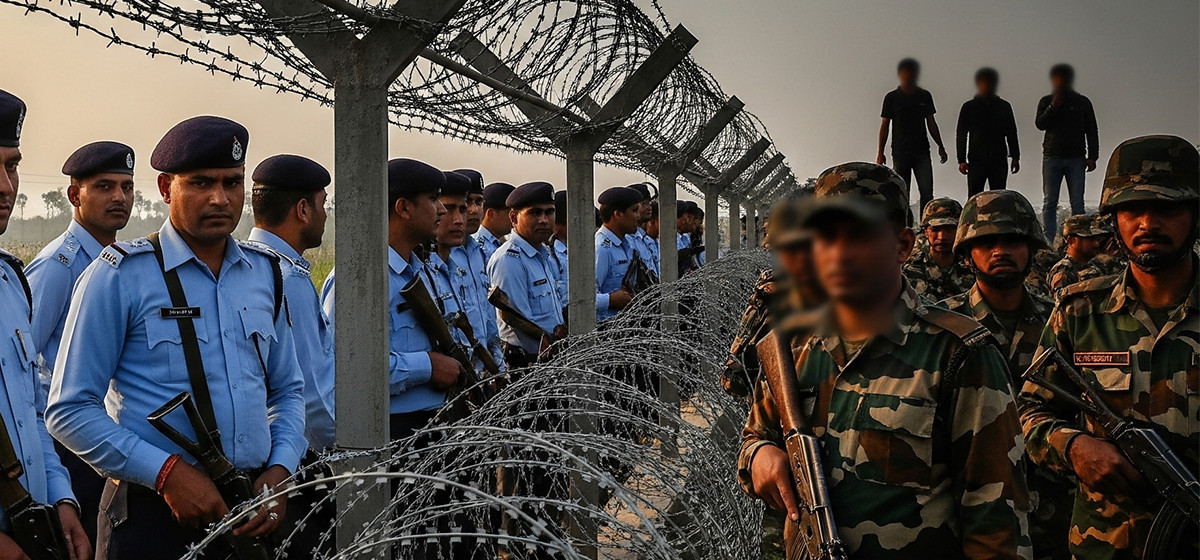
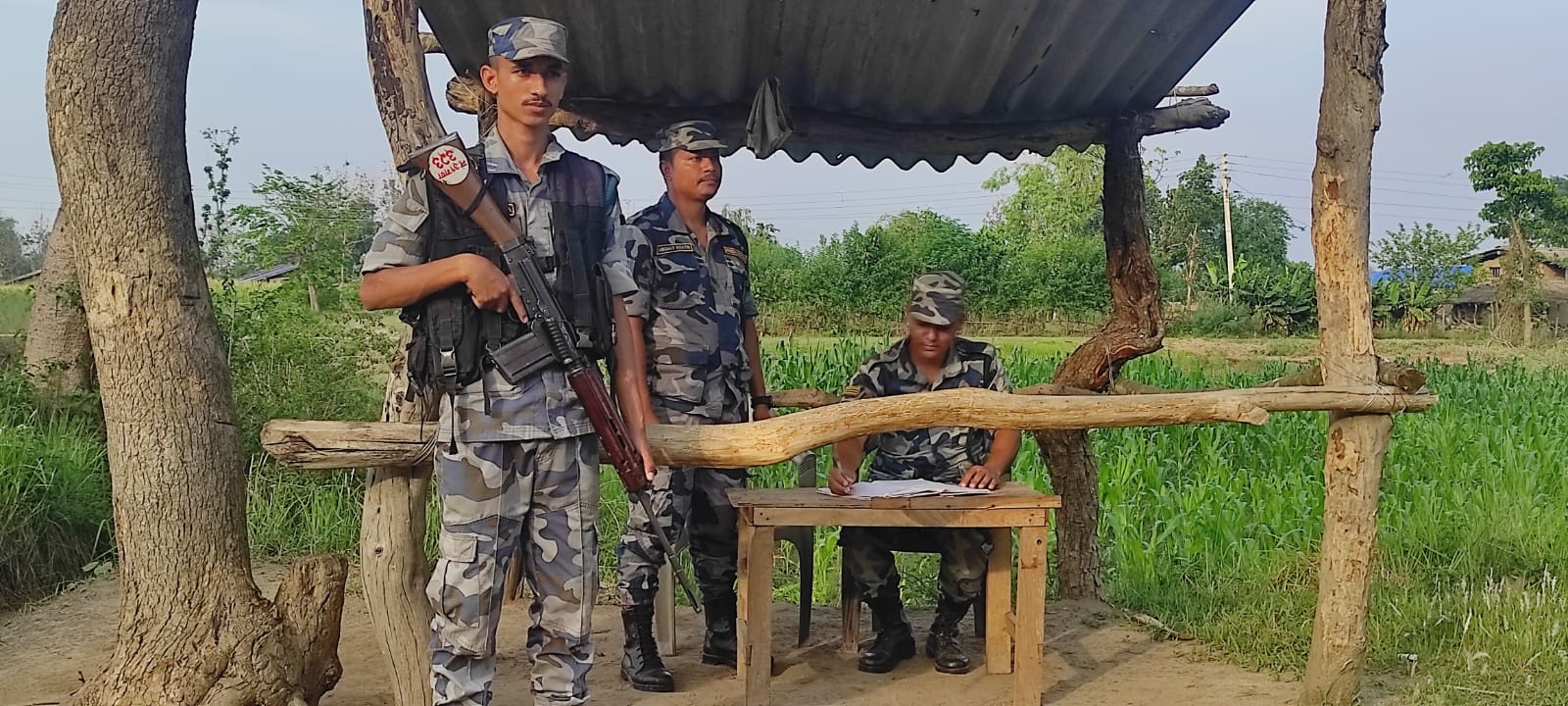
One factor behind the blockade is the five-phase Bihar election as Indian Prime Minister Narendra Modi has made it a referendum on him. In order to win the crucial election, BJP-led NDA (National Democratic Alliance) has taken keen interest in Bihar. A national party such as BJP having a regional presence or a regional party having localized interests cannot ignore political dynamics of the contested region. Modi in Bihar wants to defeat the 'Mahagatbandan' comprising Bihar Chief Minister Nitish Kumar's Janata Dal United-led Grand Alliance. Apart from Janata Dal United (JDU), the Grand Alliance has the Congress and Lalu Prasad Yadav's Rashtriya Janata Dal (RJD).BJP-led NDA, although it won a whopping majority in 2014 national elections, wants to win State elections to consolidate its hold. However, after failing to win Delhi state elections, questions were raised about the capacity of BJP to address local issues. Hence BJP and Modi in particular want to win Bihar—which is a core of Hindi heartland—at any cost. Winning Bihar is also crucial for consolidation of Modi's hold in the party.
For this, BJP needs to prioritize local issues in Bihar. Since 1989, and particularly after 1995, coalition politics in which regional political parties play increasingly important roles throughout India. This has impinged on the dynamics of federal polity. India's Constitution provides for a bicameral legislature at the center and the states are represented in the Rajya Sabha. Thus, in effect, the states have a say in determining major international treaties and agreements in parliament. The state, through the national parliament, can play a crucial role in foreign policy.
Its border states have become critical component of India's neighborhood policy, not only because they are coalition partners of central government but also because of their cross-border socio-cultural linkages which can be harnessed to further bilateral ties. In fact, these states have come to greatly influence foreign policies, as was the case with West Bengal when it refused to accept the center's proposal on water sharing with Bangladesh.
Such influences can also be felt in Nepal. For instance, Bihari ethno-linguistic affinity creates a support for co-ethnic groups in Terai-Madhesh, which in turn has dragged New Delhi into interfering in Nepal. The role of ethnic groups in supporting political movements across the geographical boundary is an open secret. The support has come in terms of providing refuge to Madheshis, providing them essential supplies, creating awareness of their plight and putting pressure on Modi government to adjust its policies and this has influenced India's Nepal policy.
Water sharing has been a prominent area of dispute between Nepal and India since 1950. Koshi, Gandak and Mahakali, all the treaties have had negative net return for Nepal. Moreover, these treaties have resulted in Nepal losing ownership on its water and disproportionately benefited India's bordering states. This has been carefully crafted policy of successive governments in India, to ensure its bordering states benefit and its security and prosperity are taken care of. Controlling Nepal's river has been an Indian strategic interest since independence. Later, India has also looked to control cross-border criminal activities, illegal trafficking, counterfeiting of Indian currency and Islamist terrorism.
Nepali Constitution has guaranteed significant rights to Madheshis, and their demands such as electoral constituencies based on population and proportional inclusive representation could still be included in new constitution. But Nepal should not concede 'One Madhesh two provinces' and the provision of allowing naturalized citizens to hold important governmental posts. No doubt Bihar elections and India's federal polity relation are being reflected in the blockade.
Modi believes that by cashing on Bihari 'roti-beti' relationship with Madheshis it can influence election in Bihar. Second, by creating 'One Madhesh two provinces' it is looking to protect its strategic interest. So the current unofficial blockade owes to Modi's aspiration to win Bihar. For this Modi has made Nepal's Madheshis an electoral issue in Bihar. When the Bihar election results are out on November 8th the blockade could gradually ease. India will look to save its face through the two proposed amendments of the constitution.
The author is an Assistant Professor at Kathmandu School of Law and co-editor of the book Geo-Strategic Challenges to Nepal's Foreign Policy and Way Forward (2015)
Related story
Failure to call blockade a blockade caused poll defeat: Dr Koir...