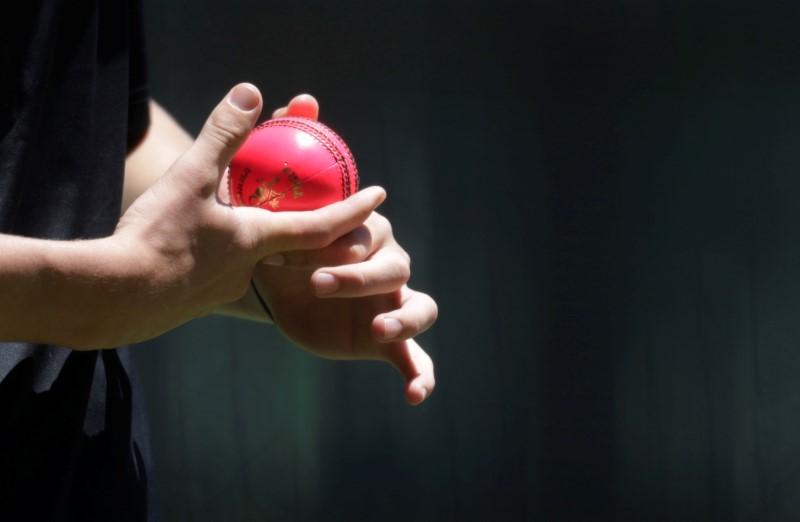
Kookaburra managing director Brett Elliott said Monday the pink ball, to be used in the day-night third test between Australia and New Zealand at Adelaide from Nov. 27, is "as close to the red ball as we could make it."
Elliott's statement followed further criticism of the pink ball from Australian test batsman Adam Voges and bowler Peter Siddle, who played for a Prime Minister's XI against New Zealand in a match Friday in which it was used.
Voges was quoted as saying the ball swung for only a handful of overs and "was more green than pink by the end."
Those comments echoed complaints from New Zealand and Australia players who have trialed the pink ball that it is both less durable than the red ball and harder to see than the white ball in day-night conditions.
Elliott dismissed those concerns, saying no cricket ball had gone through more testing and development and that players would quickly adapt.
"Players have become very skilled at adapting to the different playing conditions around the world," Elliott said. "In England they have to get used to different pitches and weather conditions and the Duke ball.
"In Inida they play in completely different conditions again and use an SG ball. The pink ball is probably the most insignificant or most subtle change that they have tried to deal with, because in essence it's just a replication of the red."
Cricket Australia also defended the ball, saying they were not concerned by reports from players that it wore very quickly.
"We're not reading too much into the condition of the ball during the Prime Minister's XI match," Cricket Australia head of cricket operations Sean Cary said. "We know the Manuka (Oval) wicket is very abrasive."
But the Australian Cricket Players' Association warned on Monday that the concept of day-night test matches, which it supports in principle, could be damaged if there was too much haste to play before pink ball technology had been perfected.
Pink balls will be used in next weekend's opening round of Australia's domestic Sheffield Shield competition and ACA president Greg Dyer said feedback from players after those games might be crucial in deciding whether to proceed.
Related story
England unsure what to expect as pink-ball cricket arrives