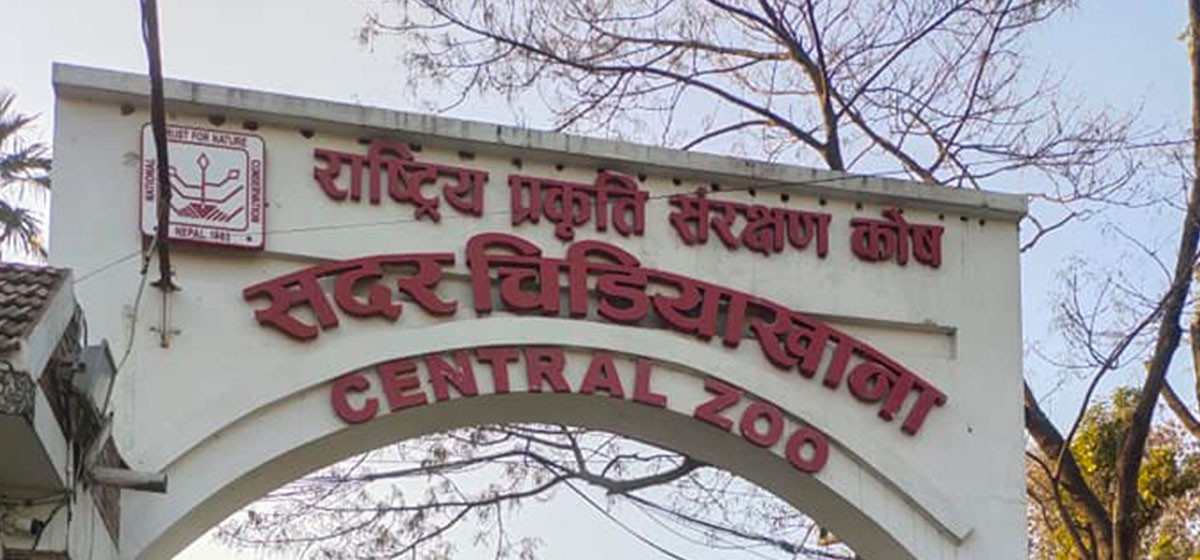
Animals in the zoo are fed appropriately and on time every day, officials say. Foods for animals are supervised by suppliers and animals are provided with cereals, meat, fruits and vegetables according to their diet. There are 40-43 cereal items for herbivores and birds, meat for carnivores and fruits and vegetables for primates. With 25 staffs for cleaning and providing foods to the animals, the zoo has its own time to feed animals.
The zoo has different timing for food distribution for different animals due to difference in their food habits. Some animals constantly need food, whereas for some, once a day meal would suffice. The monkey clan, for instance, has to be fed every now and then.
“We provide food 4-5 times a day for primates,” says Ganesh Koirala, Assistant Curator of Central Zoo. “Carnivores and birds are fed only once and elephants and antelopes are fed twice.”
Elephants have proven to be the most voracious animals that consume 12 kg of wheat, 1 kg molasses, 12 kg straw, 150 gm salt, 2 kg carrot, 2 kg pumpkin, 2 kg potato and green fodder to fill their tummy. Birds are least rapacious consuming only cereals like white millet in particular. Carnivores are fed with buff meat each day and are restrained from eating for good health a day in a week. “We do not provide meat for a day in each week to maintain animals´ proper diet,” says Koirala.
The zoo has also been providing clean water to animals for drinking. “We fetch water that the government has been providing and if there are problems with water sources, we give them underground water,” Koirala says.
Lack of safe drinking water in the zoo has often caused animals to fall sick. Animals in zoo have witnessed diseases like diarrhea and other water-borne diseases due to unsafe drinking water. The zoo has 1 vet and 2 assistants and they make day to day observation of the animals and treat ones that seem ill or ones that needs cure. The zoo also takes the responsibility for animal vaccination. They administer rabies vaccines, especially to primates, distemper to antelopes and elephants and other vaccines for animals to combat illnesses.
According to Koirala, 2-3 animals fall sick in the zoo each week. Birds are the most vulnerable to diseases. Antelopes are other species that often fall sick and their treatments are carried out in the zoo itself.
Animals seem to be threatened by pollution. Black buck, an antelope died 7 years back in Central Zoo due to plastic consumption. The zoo has thus banned plastic bags since June 5, 2009.
Vandalism is another problem that the zoo animals face. According to the officials, a Chinese Alligator lost its eye when a person pelted stones at it. Similarly, a bird´s wing was broken when stones were thrown at it. “These inhumane acts have troubled animals,” Koirala says, “Central zoo, being the only zoo in Nepal should be preserved.”
The zoo plans to improve their system, extend its area and bring more species. “We might soon be bringing Red Panda,” says Koirala. They have been trying to change Rhinoceros cage with the help of ACE Development Bank. The bank has agreed to offer financial assistance worth Rs 1.5 million.
Related story
Animals at Jawalakhel zoo miss humans, others enjoy the peace