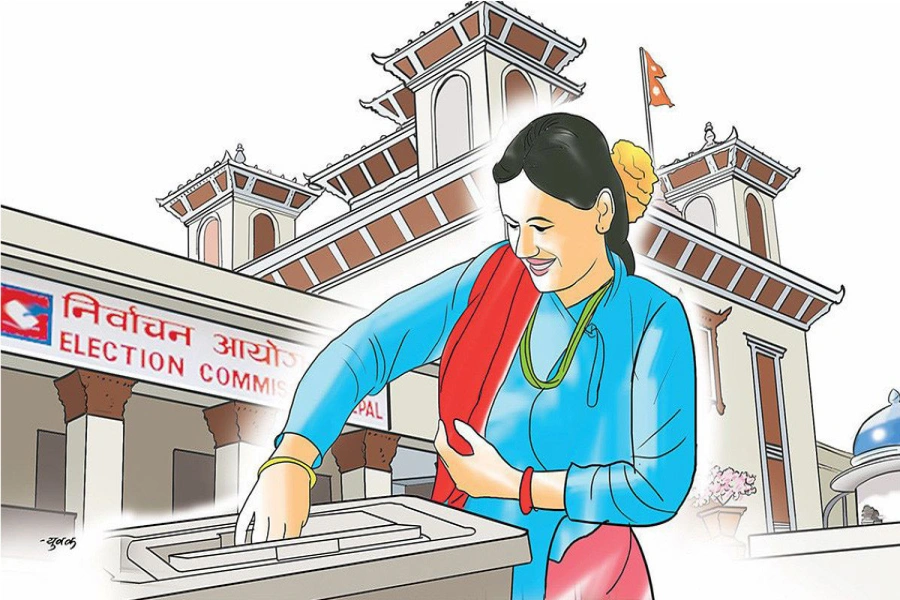
Historically, women all over the world faced disadvantages in running for office and winning voter approval. Experts say these barriers are lower today. In Nepal, as elsewhere, female lawmakers have highlighted the issues affecting women, their families and children. The sad truth is that partisanships within the country have thwarted such initiatives.[break]
Even in the US, having a woman as president is still considered as a distant reality. Hillary Rodham Clinton, the former First Lady, waged one of the most formidable presidential campaigns by a female candidate in U.S. history. Many of her supporters voiced concern that her campaign was hurt by sexism in the media coverage of the race.
Julia Gillard, the first Australian woman Prime Minister and leader of the Labor Party, is a perfect example of a politician who had to basically terminate her position due to gender discrimination and sexist behavior from the opposition. She is a politician who worked herself up the ladder and led her party and became Prime Minister from 2010 to 2013. She was the first woman to hold both the positions as leader of her party and Prime Minister of Australia.
Women like Indira Gandhi, Margaret Thatcher, Benazir Bhutto and a few others left their mark in their respective countries and were considered great statespersons. However, even today, men still dominate the topmost political positions all over the world. Although the understanding and acceptance of both genders in leadership positions is increasing, men are still the preferred choice and women still have to struggle more to achieve the same positions.
Such patterns could in some ways be attributed to the fact that various theories have been generated since centuries on beliefs related to hierarchy in the power structure, especially the ‘traits’ that are attributed to leadership, and linkage to “men” as leadership guardians.
The “Great Man” theory by Thomas Carlyle (1841) was the first systematic attempt to benchmark a “Trait theory” whereby Carlyle focused on the innate qualities possessed by great social, political and military leaders like Mohandas Gandhi, Abraham Lincoln, and Napoleon. There are similar theories where political leadership is attributed to male charisma, intelligence, and capability. There are hardly any theories working on women leadership based on their gender-constructed roles.
Women still face numerous obstacles in getting fair representation in governance. Their participation has been limited by the assumption that the women’s proper sphere is still the “private” sphere. While the “public” domain is one of political authority and contestation, the “private” realm is associated with the family and the home. By relegating women to the private sphere, their ability to enter political arenas is curtailed. Gender inequality within the families, inequitable division of labor within households and cultural attitudes about gender roles further subjugate women and serve to limit their representation in public life.
Societies that are highly patriarchal often have local power structures that make it difficult for women to contest and win elections. Even after being elected, women mostly get ministerial portfolios which are seen as “soft” or subsidiary positions. The more powerful portfolios like finance, defense and home are seen as masculine. These are the reasons that politically elected women face a lot of discrimination and violence at home and the workplace.
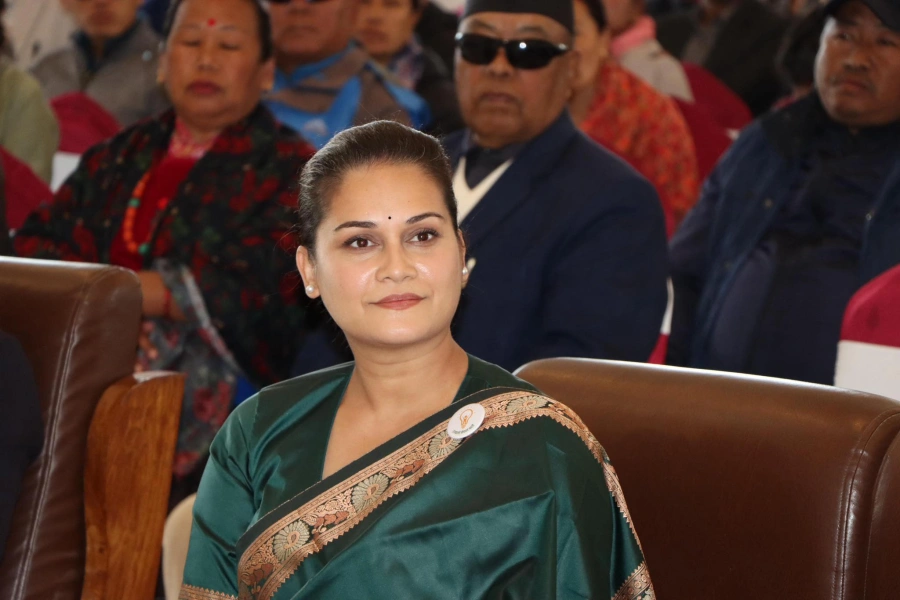
The article entitled “Women politicians, too, are not exceptions to domestic violence” written by Laxmi Basnet and published in this issue raises very important issues on how some of the leading women political personalities in Nepal are struggling to keep their identity both as women and political leaders. All the dynamic women mentioned by Basnet struggled to climb the political ladder in their parties. However, most of them still need to fulfill their domestic chores the first thing in the morning and the last thing at night.
Women politicians are always under the scrutiny of the media. They are either “overexposed” or “dumb”! More focus is given to their private lives than their political careers. The media is very quick in pointing out if their fashion choices and looks are either too feminine or masculine. The woman political leader’s romantic life is a subject of much interest to the general public rather than her political responsibilities and stances.
If the woman political leader is married and has children, then the question arises as to how she balances her work and family, something that a male politician would never be asked about. Unlike their male counterparts, the female candidates face barriers like sex stereotyping, political socialization, lack of preparation for political activity and work and family balance.
The work-life balance is invariably more difficult for women as they are generally expected by society to act as the primary caregivers for children and the elderly as well as for the maintenance of the home. Due to the demands of work-life balance, it is assumed that women choose to delay political aspirations until their children are older, or remain unmarried or childless. For this, too, they will be “blamed” by the society for not maintaining the traditional gender-constructed values.
The many cases cited by Basnet in her article show the reality faced by Nepali women political leaders. The back seat they need to take to their husband’s political aspirations or all the domestic chores that need to be fulfilled by them before they leave the domestic frontiers to venture out into the political arena indeed are daunting.
However, it is a fact that women politicians in Nepal have always been participating equally to bring Nepal to its aspired-to republicanism. Right from the Panchayat regime, women like Sahana Pradhan, Shailaja Acharya, and many more – both well known and numerous unknown – have contributed significantly in their fight against autocratic monarchy and restoring democracy in 1990 and then championing for a republican state. Women combatants, too, have played significant roles in the Maoist uprising against the state. There are several Maoist women leaders who have combated with new-born babies clutched in their arms and have been subjected to war crimes like rape, molestation and other hardships.
The stereotyped role of women and their struggles to attain top political positions still continues. They still face the stigmas of gender discrimination and roles that they need to fulfill while their male counterparts go scot-free. Now, at the dawn of new elections to the Constituent Assembly, there needs to be a strong emphasis to retain the 33 % seats allocated for women.
There is also a need to ensure that the cases of violence as described by Basnet in her article need to be addressed. Women politicians and leaders need to be supported within their households, their communities and the nation so that they can demonstrate their leadership skills to full potential, without facing any sort of violence either in the domestic arena or in the workplace.
namrata1964@yahoo.com
Related story
28 women and girls fall victim to domestic violence during 16 d...