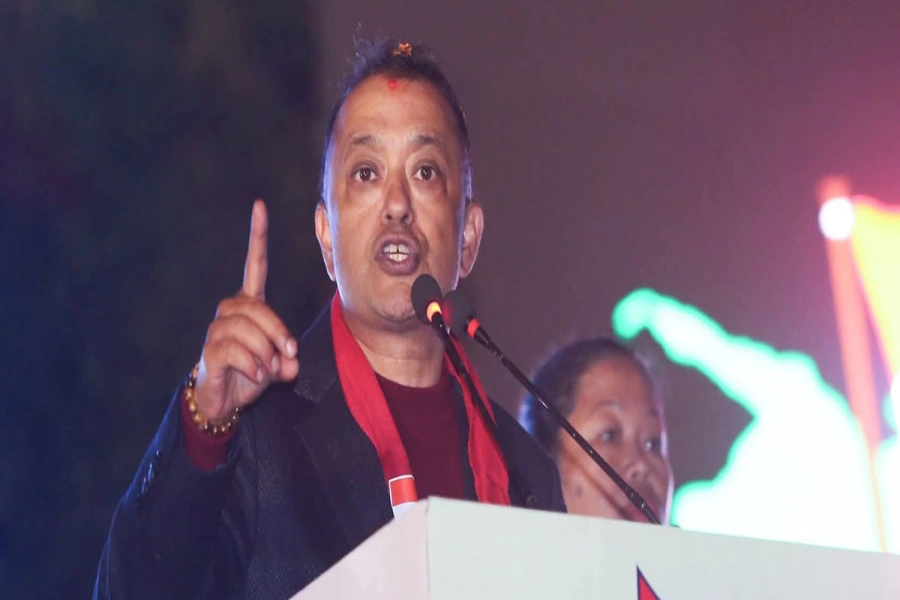
The plot surrounding November 19 polls continues to thicken. Nepali Congress President Sushil Koirala is just back from his week-long India visit. His utterances suggest his Indian interlocutors would be more than pleased with NC’s strong election outing. Even if there were no polls, it wouldn’t be a surprise if India were to fall back on its traditional ally in NC to guide the course of events in Nepal. [break]
Clearly, India is not convinced UCPN-Maoist under Pushpa Kamal Dahal can be trusted. Dahal’s loyalty to India has been under the microscope ever since he chose to make China his first foreign stop on assuming prime ministership in 2008. There is also growing belief among the Indian establishment that the cash-Maoists’ utility for India might have run out. Surely, Koirala’s ‘royal’ treatment in New Delhi hasn’t gone unnoticed among the reds. Perhaps NC CWC’s decision to adopt ‘maximum flexibility’ on demands of agitating parties has something to do with positive signals from the south. But as of now it is by no means certain that even the maximum flexibility that NC and UML avow will convince Baidya-led CPN-Maoist.
There are indications that Upendra Yadav-led MJF and Ashok Rai-led FSP, two of the main opponents of CA polls under the status quo along with CPN-Maoist, might be amenable to compromise if their demand of 601-strong Constituent Assembly is granted. Both NC and UML have indicated they are open to this. We would still like to see a smaller, nimbler CA.
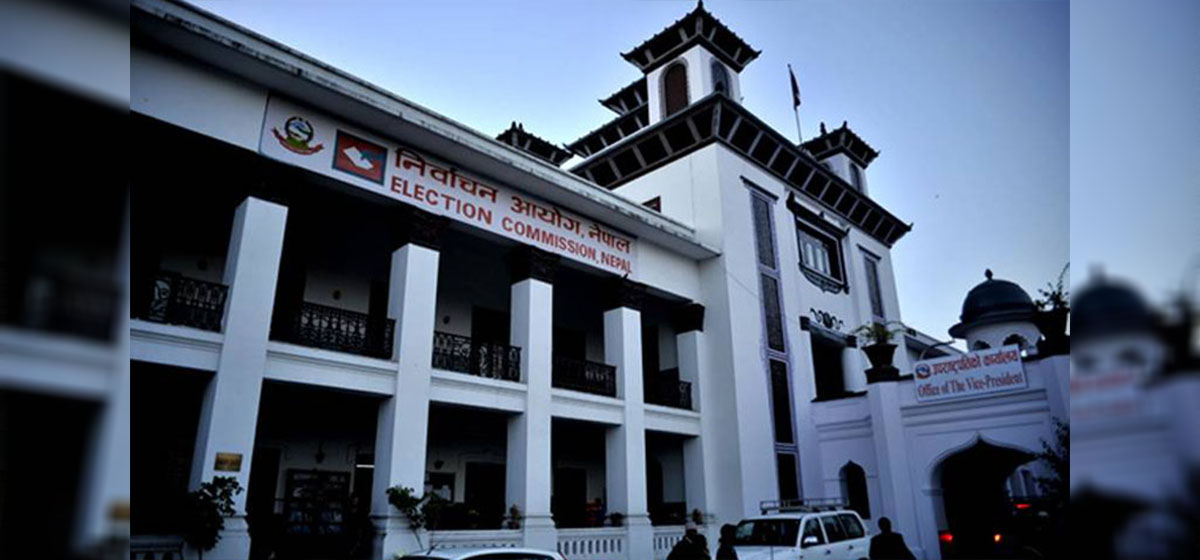
The size of the legislative body, we believe, has a direct bearing on the ease of negotiations. Yet if a bigger CA is the only guarantee of widespread representation, the demand might yet be considered. Still more contentious is poll postponement. Even in NC’s CWC meet on Saturday, some members were open to postponing election if it helped bring disgruntled forces on board. This is a dangerous course. The major political parties installed the Khil Raj Regmi government four months ago with the sole mandate of holding new CA polls. If this government fails to do so, it will not be considered so much the failure of Khil Raj Regmi but that of the political forces that helped put him in place.
Every effort should be made to make new CA polls as inclusive as possible, but certain things ought to be non-negotiable, poll postponement and government change among them. Whether or not one agrees with the process of formation of Regmi government, its goal of timely polls ought to be the priority of all democratic forces. Changing the government at this eleventh hour will push the country into more uncertainty.
Deferral of the proposed poll will also send a very negative message and dent people’s already flagging confidence in their representatives. It is sure to give more impetus to all the forces that have always been against post-2006 changes. Nevertheless, we wholeheartedly welcome the decision of HLPC representatives to adopt maximum flexibility in negotiating with agitating parties—if they mean it. If they do, and some forces are still not ready to engage in meaningful dialogue, it is time to move ahead without them.
Related story
Nepal has 28 percent arable land and 42 percent forest cover
_20240214184451.jpg)