Our current political struggle to decide how the country should be run, who should run it, and how long they should run it for, belies the rarely accepted fact that as a people, Nepalis are pretty solidly united. Though there are some unintended consequences of this unity (the anti-Hrithik Roshan incident a few years ago, for example, when a few Nepalis died over the actor’s alleged and yet unproven statement), in recent years the unity that we have showcased as people has mostly been for the purpose of good. The only exception seems to be in our political sphere where we don’t seem to agree on anything.
One of the first indications of the clear strength of Nepali unity was seen when Prashant Tamang participated in Indian Idol, a reality show based singing competition. Not only were the Nepalis in Nepal united to make sure that Prashant won that contest, but Nepalis of Jackson Heights in New York City had installed collection booths, the money from which would be sent to Nepal to finance SMS voting for Prashant from Nepal. Last year, Nepalis in droves voted for Soumya Rai and Om Chhetri—two children of Nepali origin—in Dance India Dance, another reality show. As a result, Soumya came fourth, and Om came second in the competition. This solidarity and unity in supporting these candidates was found not only inside Nepal but also among people of Nepali origin in India.

PHOTO: CNN.COM
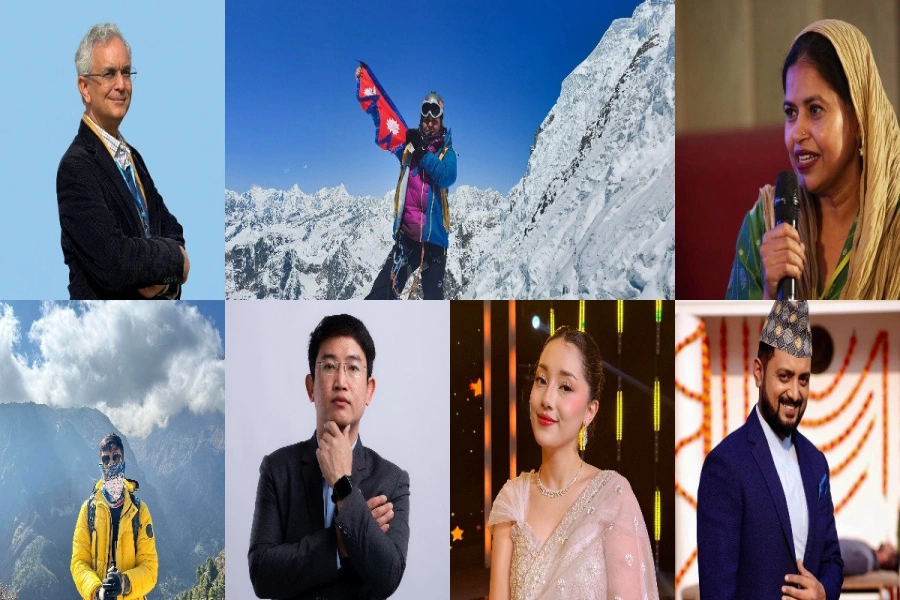
And now, twice in the past three years, a Nepali has won the CNN Hero contest—Anuradha Koirala in 2010 and Pushpa Basnet in 2012. What do these wins of Nepalis in cyberspace and electronic media tell us about ourselves? Did Nepali support for Prashant have anything to do with us wanting to shed our “bahadur” tag in India? Did our support for Om and Soumya have anything to do with trying to prove to the billion plus Indians that Nepali kids are as good as, if not better, than other Indian kids? Was our support for Anuradha and Pushpa, and their eventual wins, our way of telling the world that we matter?
There is no doubt that the people that nominated and campaigned for the likes of Anuradha and Pushpa are young and tech savvy. In addition, this crowd is idealistic, and holds dear the democratic value of participation. There is also an understanding among these “voters” that online and SMS voting are democratic and fair. Because of their belief in fairness and democracy in those competitions, they invest significant efforts in the same.
The same cannot be said of the ground level election process in Nepal, which in a way is also a competition between different participants. In the last CA election, voters from two different constituencies did not vote enough for Madhav Kumar Nepal, deciding that he wasn’t fit to be a member of the parliament. Nepal lost from both those constituencies, but he ended up becoming the prime minister. It has to be noted that he did so through a legitimate process, and no rules of the land were broken. But still, the fact that he became a prime minister despite losing from two different constituencies was a slap in the faces of the constituents who thought he wasn’t fit to become an MP, let alone the PM.
We should not be expected to keep supporting a democratic process that gave us a PM out of a two-time loser. We cannot be expected to keep believing in democracy when the version we are supposed to practice is different from the western versions that we grew up watching, reading and idolizing. We are interested and invested in online voting because we feel they reflect our ideology of a fair democratic process more aptly.
I keep hearing people and politicians complaining about the apathy of our youths towards politics and political processes. They are apathetic because they have seen constituents and their wishes being made fun of. We participate in online polls and voting in support of candidates like Anuradha and Pushpa because they are “apolitical”, and because the online voting processes and results are more democratic than our “real” elections.
We are not apathetic. More than anything, the wins of people like Anuradha and Pushpa through a fair and democratic online voting represents our yearning for democratic participation that we, as a people, have always cherished. While a bare majority of eligible voters in the US (the torchbearer of “democracy”) vote, over 70 percent of eligible Nepalis voted in the last election. We have successfully overthrown one oppressive regime after another through popular uprisings. That would not have happened if we were apathetic. We cherish democracy and voting rights, be it online or offline. Since “real” elections in this country are difficult to come by, we participate in virtual elections to satisfy our yearnings. I know I did, and I like to think that others who voted did so for the same reason.
mukhanal@gmail.com
Related story
A bunch of jobless people seeking to bring instability in the...