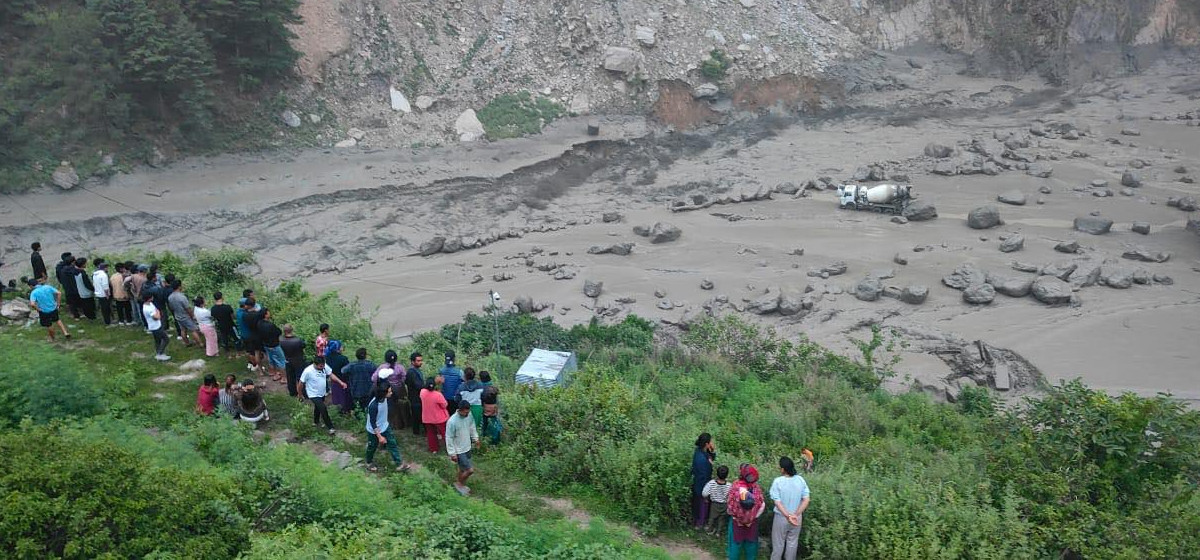
Climatologists believe rising temperatures are to blame for such unseasonal flooding in this region of the world. Although flooding is common in South Asia, most of them take place during the monsoon. The belief is that a rise in temperature is resulting in faster melting of ice up in the mountains, which in turn puts the settlements downstream under great risk. In the event of a GLOF, the consequences could have been even more devastating than witnessed on Saturday.
The GLOF event on August 4, 1985, at the Dig Tsho glacial lake in Eastern Nepal destroyed vital infrastructure worth billions of rupees, including a small hydropower project. Thankfully, since most people downstream had left to attend a Sherpa festival, only five people lost their lives. Such threats continue to lurk: Of the identified 3,252 glacial lakes in Nepal, 20 are believed to be potentially dangerous. The biggest risk is the bursting of Tsho Rolpa in Dolkha district, one of the biggest glacial lakes in Nepal, which could imperil the lives of thousands downstream.
Various governmental and non-nongovernmental bodies have been involved in risk assessment of likely GLOF and other glacial events, but not much seems to have come out of this. Saturday´s event once again highlighted lack of preparedness for big glacial events, as rescue works were hampered by shortage of both manpower and material. To be fair, these events are devilishly unpredictable, as even the most developed countries are struggling to come to terms with impacts of climate change. But some things can certainly be done. For instance, there has been tremendous awareness on earthquake preparedness, thanks to tireless campaign by bodies like NSET.
As the glacial lakes in Nepal pose no smaller threat, given their perilous locations right above major settlements, there have to be similar campaigns in flood-prone areas. On Saturday, as the deluge swept through the two villages, locals seemed completely at sea. In recent years, Nepal has also been making its voice heard in international climate forums like the Durban meet last November. The country has to raise the pressure, along with other mountainous countries in the region, on major polluters to cut their emissions of greenhouses gases responsible for global warming. We have to act now. Saturday´s flooding should be a warning that there is no time to lose.
Related story
We have already done needful to ensure early preparedness for D...