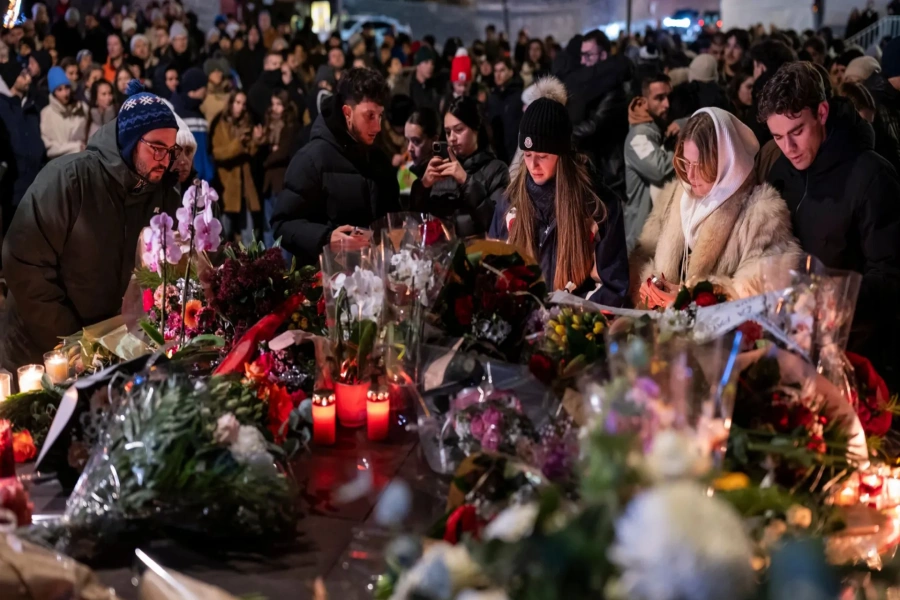
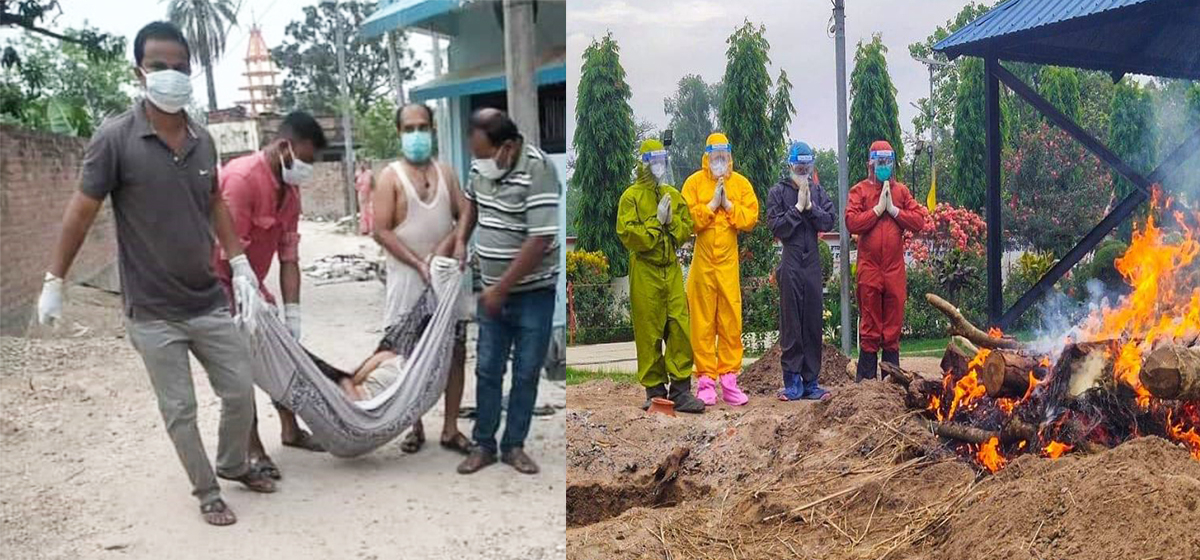
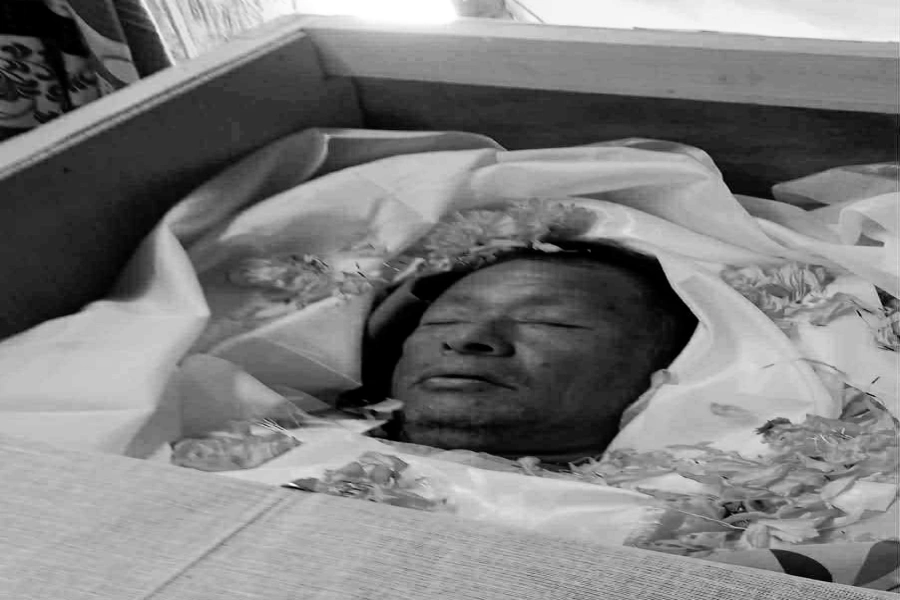
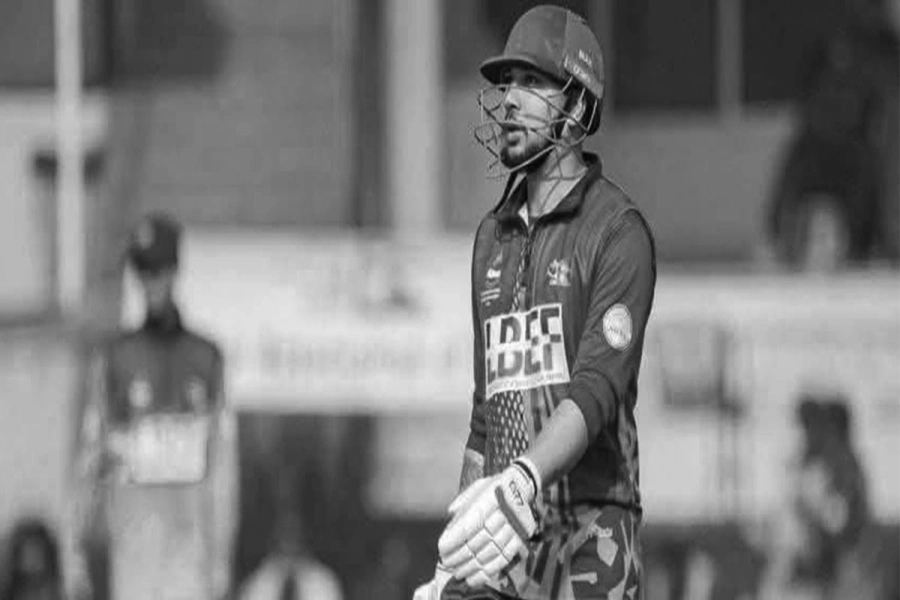
The Budhamagar family, who had converted to Christianity some 10 years ago, faced more tragedy for the last rites of Raju and visited half a dozen places, looking for a cemetery. Raju’s brother, Deepak Budhamagar, recently shared the tragic story of the bereaved family with The Week.
“On January 7, our family reached an agreement with the National Sports Council (NSC) and the organizers on the issues of compensation. We had planned to perform his last rites at the Pashupati Chhetra on January 8 but the decision of the Pashupati Area Development Trust (PADT) to stop providing the area of Sleshmantak forest for burial of dead barred us,” said Deepak.
“In the meantime, we looked for other possible sites. We visited different places in Bhaktapur, Lalitpur and Kavre district in search of a proper burial place. We then decided to bury his body in Naubise, Dhading, on a public land of a school. But the school management committee refused the idea, stating that they needed prior approval of the villagers,” Deepak then shared the disheartening series of catastrophes that followed.
“The body was decaying, and finally, one of our aunts provided her own land for the funeral at Naubise. We buried his body secretly on the night of January 10.”
As PADT took the decision to stop providing the area of Sleshmantak forest for burial on December 29, the bereaved Christian families in Kathmandu are facing a series of such tragic moments.
“Some 100 Christian families have had to go through similar experiences in the last two months after PADT took the decision,” said CB Gahatraj, general secretary of the Recommendation Committee for the new Constitution from the Christian community in Nepal.
“The government of secular Nepal didn’t consider the problem seriously and provide us with an alternative graveyard area,” he added.

According to Gahatraj, the Christian community in Kathmandu had drawn the attention of major political parties and the previous governments for the last three years regarding the need of a proper graveyard site.
“Each time they gave their words to consider the issue seriously but they are still playing deaf.”
Gahatraj further informed that Nepali Christians have started a protest program since the newly formed government, too, is not responding to their problem.
“We have started protesting after our Sunday prayers at 61 different places from last week,” said Gahatraj, adding, “The then prime minister Madhav Kumar Nepal had assured us to hold a meeting with the ministries concerned but such meeting was never held.”
On the other hand, the government agencies and ministries are themselves confused about the issue.
“As the PADT decision brought the issue forward and since it’s a religious matter, we’ve shown our concern but it’s not clear which ministry should look after the issue,” said Modraj Dotel, secretary at the Ministry of Culture and Constituent Assembly Affairs.
“We’ve asked the Christian community leaders to take initiatives to finding a proper area of burial and we’ve assured them of our help in the process,” said Dotel, adding, “Developing a graveyard in a place, however, is very often questioned by the local community.”
Meanwhile, Gahatraj explained the government’s reluctance to provide proper burial sites for Nepali Christian communities as a failure of the state in managing religions.
“In a secular state, the government should manage all religious issues, but our political leaders and bureaucrats aren’t serious about it,” he said.
Gahatraj forwards the idea of enshrining provisions of a Religions Management Commission and Religion Act in the new Constitution to solve such issues in the long term.
To bury, or not to bury, one’s dead
The main problem lies in implementation. Nepal has been declared a secular state, but the government hasn’t done much when it comes to exercising policies that forge the laws and sensibilities of secularism. As stated in Article 23 of the Interim Constitution – practice, profess and preserve; it’s every human’s basic right to perform and practice rites and rituals according to their belief. And Nepal is also obligated under the multilateral treaty adopted by the United Nations General Assembly of 1966, the International Covenant on Civil and Political Rights (ICCPR) which commits to respect the civil and political rights of individuals, including the right to life, and freedom of religion. In a way, it’s baffling to witness such lethargy on the government’s part. It’s the case of all big talk, no walk. The only solution is for the government to take a firm stance and formulate laws and policies and implement them in reality. Such negligence can be fatal and invite civil war.
Govinda Sharma “Bandi”
Advocate, Supreme Court
Advocate, Supreme Court
Every citizen has the right to peaceful burial, no matter what religion or background they belong to. When Nepal was a Hindu state, policies were made accordingly. Now, after accepting pluralism and Nepal being declared a republic and a secular state, policies should be amended in the country.
This decision by the state and the concerned department has left a very bad impression on the other communities. Before taking such decisions, the state should’ve at least made an effort to consult or inform other communities. Or it should’ve come up with sensible ways for graveyard management. And it’s the state’s core responsibility to come up with alternatives. In the long run, it’s quite obvious that it might trigger dire consequences because it’s related to people’s sentiment.
Lucky Sherpa
Constituent Assembly Member
Constituent Assembly Member
Hardcore fundamentalism can create issues of its own, and couple it with an incompetent government, such as ours at present, and then it’s a surefire recipe for disaster.
Personally, I’m very shocked by such conduct. It’s insensitive, if not absurd, to deny such basic human rights. You cannot dictate individuals and impose your belief on them, that’s an archaic notion. For once, our leaders should abandon their internal tussles for power position and focus on the larger picture at hand. If we aren’t careful, such conflicts will only add up to the tension and be the harbinger of civil war.
Min Krishna Maharjan
Former Board Member of National Sports Council
Former Board Member of National Sports Council
To be honest, this doesn’t have to be an issue at all. Secularism shouldn’t be just on paper but should be practiced in all walks of life. There might be some political agenda behind this whole movement, especially after the whole “ethnic movement,” but that doesn’t give any party the right to victimize the whole community. It’s not just Christians but Bahai’s also have faced similar problems at the burial site at Kapan.
The government has promised a delegated space to build cemetery but till now it’s just confined to talks. Maybe it’s because the minorities don’t have a voice to represent them. The Kirantis have an upper hand on this one, as Speaker Subash Nembang has been actively advocating for a proper graveyard. But the others don’t even have a representative. One other reason could be due to space constraint in Kathmandu, as the issue seems to be confined to the Valley.
Deepak Adhikari
Journalist
Journalist
The whole charade of burial issues in a namesake secular state is funny to me. Everyone has a right to believe and practice according to what he or she wants, period, as long as it doesn’t violate or discriminate. Religion and the rites associated with it shouldn’t be subjected to bias. I urge the government to take action as soon as possible. Religious tolerance does prevail, but it shouldn’t be provoked.
Suman Joshi
CEO, Laxmi Bank
CEO, Laxmi Bank
Related story
100 plus migrant workers’ dead bodies await repatriation