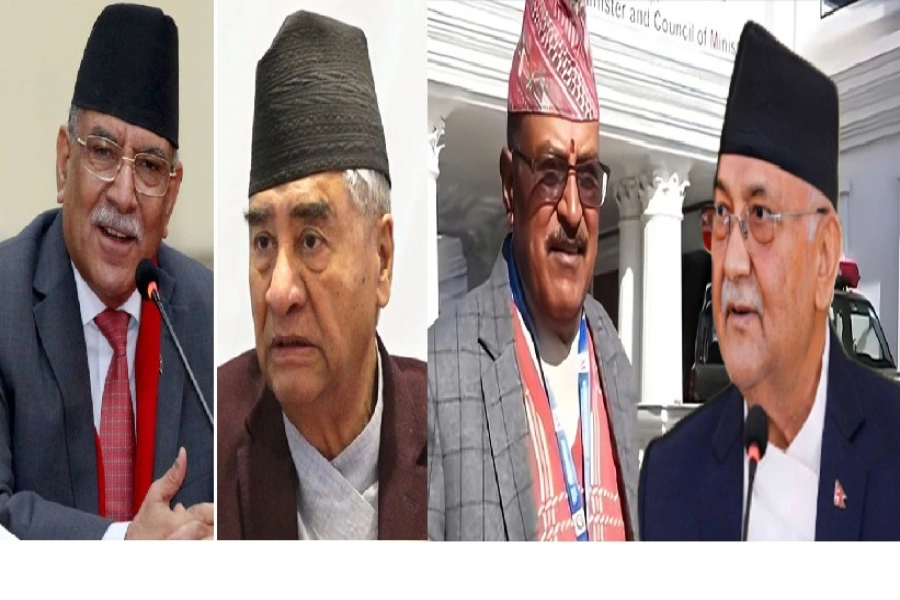
The main opposition is aggrieved that the move of the coalition government is undemocratic and unconstitutional. Some constitutional lawyers do feel the same way, though.
NC has a history of issuing ordinances -- both before and after parliament was summoned and prorogued. [break]
On February 5 this year, the government passed three ordinances on disappearance, making the public services inclusive and amending the compilation of electoral rolls act. The government, however, decided to put on hold two ordinances passed on January 28 – the Investment Board Ordinance and the Special Economic Zone Ordinance.
All three ordinances have far-reaching consequences and the move by the government has attracted flak from many quarters. The one on disappearance commission has not only been criticized by international human rights organizations, National Human Rights Commission has also voiced its strong displeasure. The chairman of the NHRC even said publicly that its suggestions on disappearance commission has been ignored by the government.
However, when it comes to issuing ordinances by "bypassing the parliament", (a charge against the Maoist-led government), Nepali Congress is no stranger to the practice.
In fact, it was the NC-led government that first introduced any ordinance post-1990´s movement.
Just days before the 2001 winter session of parliament started, it was NC´s Girija Prasad Koirala-led government that issued an ordinance creating the Armed Police Force (APF) to fight former Maoist guerillas in January 2001. It was again the same government that issued the second ordinance on APF in April 2001. This happened just a week after the parliament session was prorogued.
There´s another example.
When the parliament was not in session, NC´s Sher Bahadur Deuba-led government imposed the Terrorist and Disruptive Activities (Prevention and Control) Ordinance [TADO] in November 2001. TADO was later approved by the House and it became TADA (Terrorist and Disruptive Activities Act). To avoid imminent opposition from the parliament to his proposal to extend the emergency rule, the Deuba-led government dissolved parliament in May 2002, extended the emergency rule and re-introduced TADO, which the human rights community as "draconian" measure then.
NC’s chief whip Laxman Prasad Ghimire defends his party’s opposition to the fresh wave of ordinances by claiming that Maoists have ulterior motive behind the ordinances. "We had asked Maoists if they had any bill in mind so that the parliament session could have been further extended before the House session was officially prorogued on January 19," Ghimire told myrepublica.com. "But, Law Minister Dev Gurung said there was nothing in their mind."
Second reason for the NC opposition, says Ghimire, is that even the partners of the ruling coalition are publicly speaking against the ordinances. "Why couldn’t Maoists take the coalition partners as well as the opposition into confidence?" asks Ghimire. "If there is real need for bringing the ordinances, we also could have supported the Maoists. We could have agreed to call for a special session of the House.”
Ghimire says NC will make its official stance on the government move on ordinances only after the text of the ordinances is made available to them and they have the chance to go through it. NC’s suggestion to the Maoist-led government, says Ghimire, is to call the special session of the House. "Only that will bring the things in order."
tilak@myrepublica.com
Related story
Govt delays bringing ordinances in parliament as it struggles t...