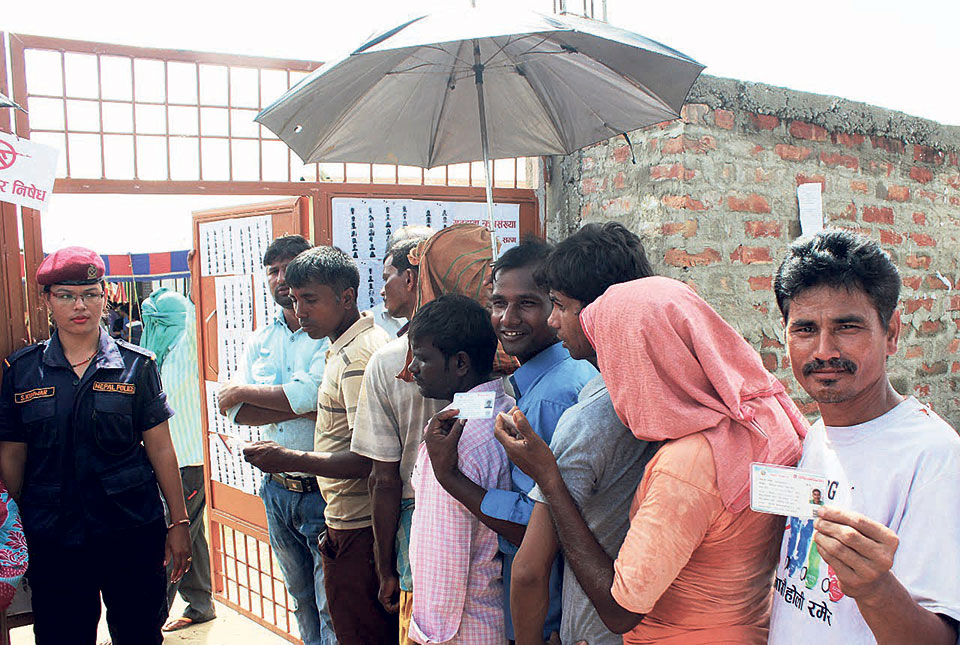
As Nepal prepares for the House of Representatives election on March 5, 2026, the spotlight falls on political candidates not merely as campaigners but as stewards of public trust, ethical governance and societal responsibility. In an era defined by digital connectivity, instant communication and relentless political competition, how candidates engage with voters will determine not only electoral outcomes but also the future trajectory of Nepalese democracy.
Yet, amid this high-stakes environment, some candidates are turning campaigns into public performances rather than platforms for serious policy discussion. Flashy appearances, whimsical rhetoric and baseless promises may draw applause, but they sidestep the crucial task of presenting coherent visions, proposing legal reforms and charting a path toward national prosperity. In this theatre of spectacle, voters are entertained but left without clarity on policies that truly shape the country’s economic, social and cultural future.
The Ethical Compass: Beyond Popularity
Elections, by design, are contests of ideas, promises and leadership. Yet in a politically charged environment, the allure of short-term popularity often tempts candidates toward sensationalism and populist gimmicks. Historical precedents offer valuable lessons: during the 1860 U.S. presidential election, Abraham Lincoln emphasised moral clarity over expediency, advocating principled governance rather than opportunistic manoeuvres. Similarly, political aspirants in Nepal must prioritise ethical integrity over ephemeral applause.
Economic, cultural and social issues lie at the heart of voter concerns. Candidates should communicate concrete, evidence-based plans addressing employment generation, rural livelihoods, energy development and sustainable economic growth. Simultaneously, cultural sensitivity is indispensable. Nepal’s rich tapestry of ethnicities, languages and traditions requires political messaging that is inclusive, respectful and unifying rather than divisive or exploitative. Candidates who demonstrate a genuine understanding of their constituents’ lived realities earn trust that extends beyond the election cycle.
Effective political communication is fundamentally a two-way process. While candidates must articulate a coherent vision, listening to constituents is equally critical. In modern elections, engagement is no longer confined to rallies and posters; it extends to interactive platforms such as town halls, social media forums and constituency visits. These platforms enable voters to express concerns, scrutinise candidates’ positions and assess credibility. Nepalese voters, increasingly politically literate, demand transparency, responsiveness and consistency. A candidate who consistently engages with constituents, acknowledges feedback and demonstrates follow-through fosters long-term legitimacy. Conversely, ignoring public sentiment risks not only electoral defeat but also reputational damage that can extend far beyond the immediate campaign.
Avoiding the Pitfalls of Cheap Popularity
KMC asks cinema halls, clubs and other entertainment businesses...

Nepal’s political history provides cautionary tales of candidates succumbing to the allure of superficial popularity. From extravagant handouts to inflammatory rhetoric, such tactics may yield short-term attention but erode democratic norms. Mahatma Gandhi’s timeless assertion — that “the true measure of any society can be found in how it treats its most vulnerable members” — resonates profoundly in electoral conduct. Leadership is measured not by applause but by principled action and enduring public good.
Candidates must resist the temptation of personalistic campaigning, ad hominem attacks and divisive slogans. Instead, political messaging should be anchored in reasoned argumentation, ethical integrity and tangible benefits for society. Evidence-based promises, culturally sensitive policies and a transparent approach to governance are far more enduring than transient popularity.
To navigate the competitive electoral environment while maintaining ethical responsibility, candidates can adopt several strategies. Narrative authenticity is crucial, as stories resonate with voters; candidates should connect policy propositions with constituents’ real-life experiences. For instance, rather than abstractly pledging economic growth, a candidate could illustrate how small-scale farmers might benefit from irrigation schemes, market access or agricultural credit facilities.
Evidence-based promises are equally important, as voters are increasingly sceptical of lofty but unverified claims. Candidates must substantiate proposals with credible data, clear timelines and measurable outcomes — for example, specifying programmes and target metrics when promising employment generation. Digital diligence is essential in today’s media landscape. Social media can amplify reach and facilitate dialogue, but it can also magnify misinformation and superficial messaging. Candidates should curate content that informs, clarifies and engages rather than inflames or misleads.
Cultural sensitivity is another critical consideration. Nepal’s diversity is both a strength and a responsibility. Candidates should respect linguistic, ethnic and regional plurality and avoid rhetoric that alienates communities. Inclusive policies foster social cohesion and reinforce democratic ideals. Candidates should also prioritise interactive platforms, facilitating citizen consultations through public forums, Q&A sessions and local debates. Such engagement allows voters to gauge authenticity and enables candidates to refine their messaging according to local concerns.
Finally, consistent ethical signalling underpins all communication efforts. Integrity in personal conduct and public pronouncements is non-negotiable. Candidates must avoid smear campaigns, sensationalist narratives or deceptive advertising, which may yield short-term gains but compromise long-term credibility.
Democracy thrives on dialogue. The relationship between candidates and voters is symbiotic: one cannot exist meaningfully without the other. Candidates articulate visions, explain policy nuances and offer solutions; voters respond with scrutiny, feedback and judgment. This iterative engagement reinforces democratic legitimacy. Franklin D. Roosevelt famously conducted “fireside chats,” communicating directly with citizens to explain policy and inspire confidence during crises. Similarly, Nepalese candidates can cultivate trust by establishing transparent communication channels, responding to public inquiries and demonstrating accountability. Trust is built not through rhetoric but through repeated, authentic engagement.
Raising the Bar: Responsibility Beyond the Ballot
An election is not merely a contest of votes; it is an ethical crucible testing candidates’ commitment to society. Economic promises must align with fiscal prudence; cultural rhetoric must reinforce inclusion; policy proposals must translate into tangible improvements in people’s lives. Candidates should recognise that leadership is a long-term covenant with society, extending well beyond election cycles.
In a 2017 case, a Nepali candidate’s promise to distribute handouts during the campaign gained immediate attention but ultimately undermined the candidate’s credibility when the initiative proved unsustainable. Such episodes illustrate that voters value substance over spectacle. Leadership entails foresight, ethical judgment and social responsibility — qualities that transcend transient electoral gain.
Media, both traditional and digital, play an indispensable role in amplifying messages and shaping perceptions. Responsible media coverage can facilitate informed voter decision-making by providing fact-checked information and moderating public discourse. Candidates should engage proactively with the media, ensuring transparency, clarifying policy positions and avoiding manipulation of narratives for short-term advantage.
Similarly, social media platforms can democratise political communication, enabling candidates to reach diverse audiences and receive real-time feedback. However, these platforms also pose risks, including the spread of misinformation, echo chambers and polarising narratives. Candidates must navigate these digital spaces with prudence, emphasising accurate information and constructive engagement.
Leadership as Ethical Stewardship
As Nepalese voters prepare to cast their ballots next month, candidates are called upon to embrace a dual mandate: to compete vigorously yet ethically, and to communicate persuasively yet responsibly. Political engagement is not solely about winning elections; it is about legitimising leadership through transparency, empathy and societal contribution.
Leadership is defined less by ephemeral applause than by enduring commitment to the public good. Ethical communication, evidence-based policymaking, cultural sensitivity and two-way engagement constitute the pillars of responsible electoral conduct. Candidates who embrace these principles not only increase their electoral viability but also strengthen the foundations of Nepalese democracy.
Ultimately, an election is a dialogue between vision and voter, promise and practice, ambition and ethics. In this election, the choice is clear: engage voters not merely as instruments of electoral victory but as partners in building a just, inclusive and prosperous Nepal.
The author is a development communication expert.