It’s been a significant year for Nepal and its people. 2015 bought upon events that changed the face of our country and shall go on to dictate the future of the nation. The Week talked to people from different sectors and asked them to reflect on the year gone by.
Shouldering responsibilities
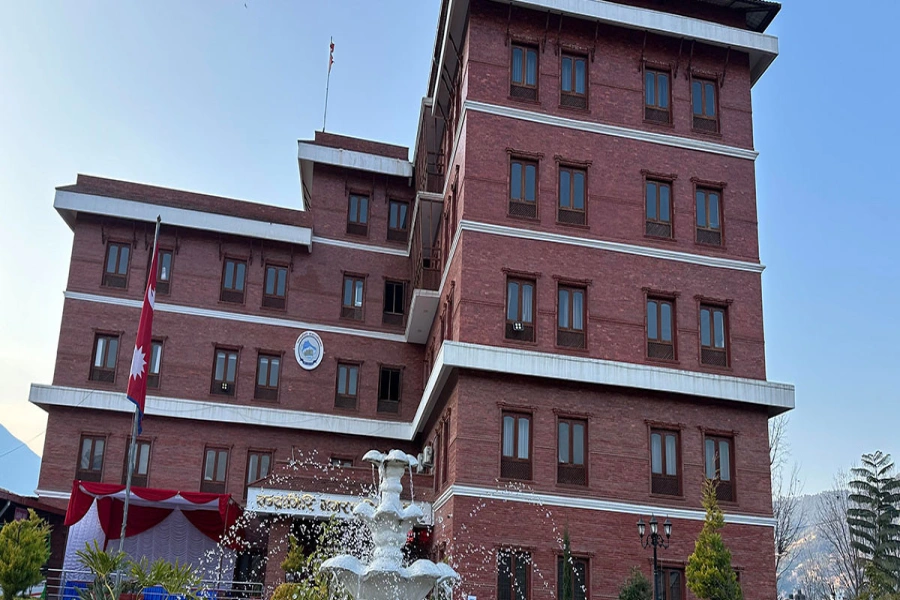
A large group of doctors from Bir Hospital gathered at the Ministry of Health office. They are there as per the order of Shanta Bahadur Shrestha, director of the ministry. The plan is to build a team of doctors who will visit various earthquake affected areas and provide medical assistance to those who have fallen victim to the cold weather. The earthquake has affected the medical fraternity to a large extent in 2015. Shrestha reveals that he and the ministry have learnt many lessons and there have been some achievements as well.
SC to review its ruling on 20-meter riverbank buffer

“At a time of utter chaos where we had to carry out around 23,000 surgeries and more than 100,000 general checkups, I believe the paramedics, doctors and nurses all worked very efficiently. We were running emergency health centers within an hour. We stuck to our clinical protocol and that made sure there were no mishaps or carelessness on part of the caregivers,” shares Shrestha.
On the flipside though, Shrestha confesses it also laid bare our medical community’s shortcomings. He cites examples of emergency medical teams. Various countries were able to send theirs within a day or so after the disaster but Nepal itself didn’t have its own. Thus, at the moment, the Ministry is working on forming an emergency team.
Similarly, there is the issue of health insurance. We were brutally made aware of its importance this year. However, even those keen to get them have to deal with various legal challenges. Shrestha claims they are making it a point to amend the loopholes. Moving forward for the next year they want to enforce a more convenient insurance act and a full coverage policy. In collaboration with the Ministry of Law, they are in process of drafting the act.
“Policy is where it all starts but there are many glaring loopholes in the policies and as a director my main agenda is to reform the necessary ones. For example there is no public health act. This means while treating their patient, if there is a mistake on part of a private hospital, the ministry often can’t and doesn’t know how to reprimand them because there are no such clauses,” says Shrestha.
While developed country invest more than 10% of their GDP in the health sector, we have to make do with six percent of the budget. Shrestha claims that he is well aware of the fact that hospitals such as Kanti, and Bir are staggering under the influx of patients so decentralization of health institution, he insists, is key. In 2016, the Ministry of Health is looking forward to get permission to build more dean universities outside the valley.
Carrying on
It’s Lhosar, a national holiday, but Karna Bahadur Shahi has no choice but to run classes at Texas Higher Secondary School. Teachers are feeling the pressure to finish the syllabus. Shahi, however, is not only the founder and principal of Texas Higher Secondary School but he is also the President of NPABSON and Chairman of All Private Educational Institution Nepal, APEIN. He shares that this has been an arduous year for private schools.
“Both public and private schools suffered immense damages but the government is not willing to take responsibility in case of private institutions. We even suggested the option of soft loans but they were not willing to help us. As a result most founders and principals have been left to deal with the situation themselves,” says Shahi. Add to that the blockade crisis. 500,000 students, parents, and teachers alike had protested around the streets of the capital not so long ago. Shahi admits NPABSON was behind the idea but despite drawing much criticism, he insists it was their way of expressing their grievances.
“Schools have been listed as a priority sector but that doesn’t give us any advantage. We had calculated the amount of petrol required for the buses to run and the government had designated certain petrol stations and days specifically to cater to school transportation but that has not been implemented yet,” reveals Shahi.
Nevertheless, he insists everybody is finding ways to carry on for the children. Schools, even in conflict areas, have been running on holidays, and finding other ways to somehow reach the lessons of the 220 days of schooling. NPABSON has also convinced the Ministry of Education to postpone the SLC date so it will be carried out around the end of March in the year 2016.
“Perhaps the insurgency period with its own share of bandhs and disruption had given the teachers enough experience to finish the syllabus even in this restricted time. My concern is more about the quality of education. Our children shouldn’t have to suffer the consequences of inept governance. I worry this could affect their development,” says Shahi.
Thus he believes we must find a way to prioritize important sectors such as health and education and ensure that they will not be compromised at any cost. Shahi understands that such unrest is part of democracy and politics thus he expects it to continue. So he insists, if there is any lesson we can take from 2015, it is the need to develop policies or mechanisms that leave education out of political reach.
Teetering on the brink of loss
The Nepali business community confirms its standing: at the moment, they are all on survival mode. At the beginning of 2015, even with its share of political instability, there were prospects of profit and expansions, at the end of year though their sole focus is on sustaining their
business.
“Unfortunately there isn’t anything we can do about this political situation. We have little choice but to stand and collectively look towards the government in hope that they will come up with a settlement. We are in urgent need of it. Our business have crossed a threshold, we are not sure we can carry on like this for long,” shares Bardan Basnet of Agni groups, the authorized distributors of Mahendra cars.
Basnet talks about his intentions 0of business expansion at the start of 2015 but then like the rest of the country, they too had to hit pause on many of their plans. Basnet says that they were already starting to recover from the earthquake when the blockade started. This has proven to be a bigger crisis than the 7.8 magnitude earthquake to the entire business sector.
“August to October used to be our peak season and that is exactly when the blockade began crippling our lives. People spend when they feel secure about their financial status. Especially when it comes to the four wheelers, they consider its purchase when there is stability in their lives and savings. Now at the moment, with the inflated market, they are naturally being extra cautious with their savings,” says Basnet.
Though many businesses have opted for alternative ways to run their operations, it is really adding up to their expenses. Basnet talks about the lack of mobility due to fuel shortage and the need to approach the black market. He also shares how he has been trying to reroute his imports but there never is a guarantee that it’s going to work.
“We had to approach Nepali as well as Indian government because there were policies about these rerouting systems. It has only been a month since we have been doing this but it isn’t effective. All I can think about is the lost time and money,” says Basnet.
Better late than never
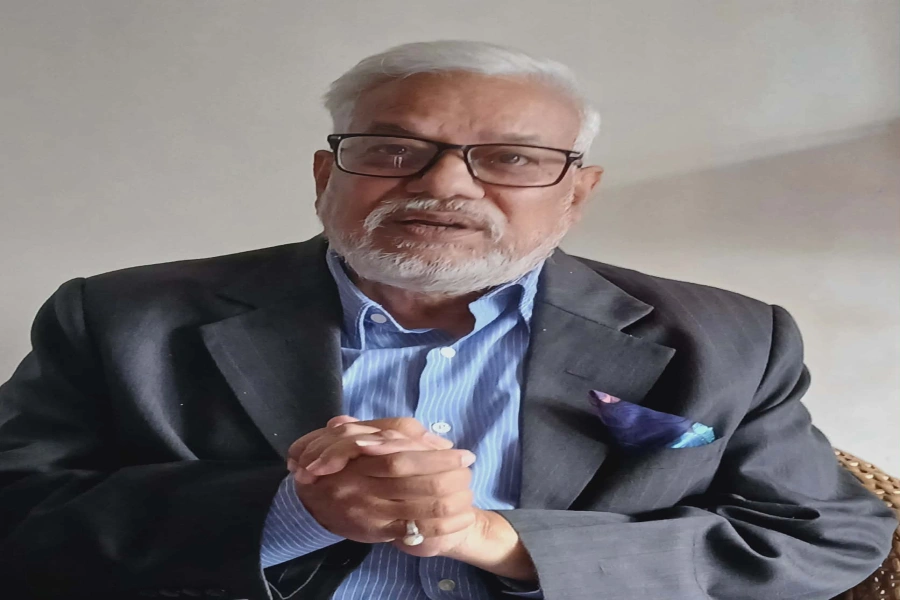
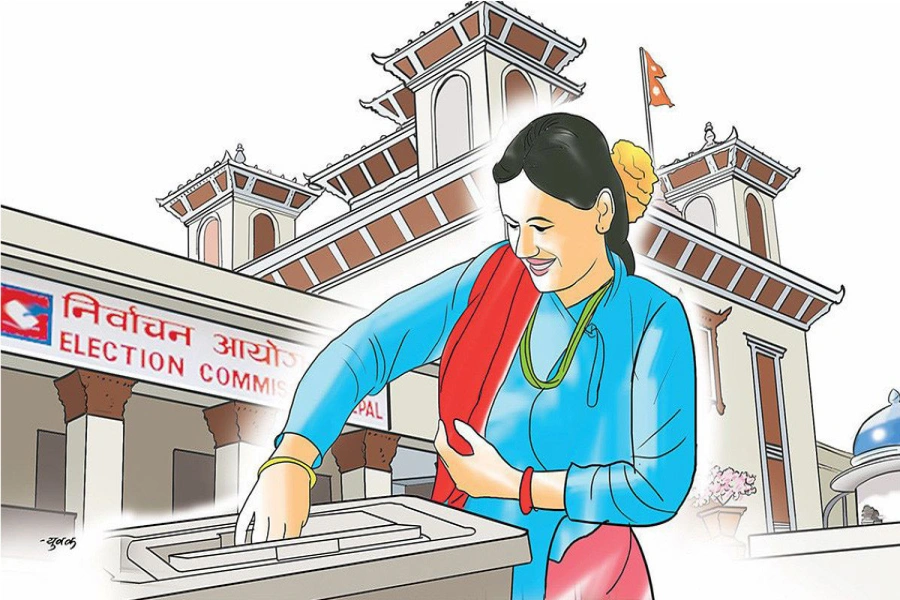
For 25 years, Neel Kantha Uprety, the former Chief Election Commissioner of Nepal International had a front row seat to all the elaborate developing that unfurled on our national political stage. Recently retired he now sits at home remorseful about the fact that their generation could not hand over an efficiently running government to the youngsters. Where the political front is concerned, like the rest of the country, he too is ending 2015 on a disappointed note.
“We had already lost a lot of valuable time, money and development opportunities in eight years we spent in hope and wait of Nepal’s constitution. The earthquake in the first half of the year was devastating but we all saw the urgency that it bought about for the leaders and parties to work on the bill. Despite all the chaos, it was crucial for our country to adopt new democratic secular constitution,” insists Uprety.
He believes this new chapter in Nepal’s political history should be hailed as the highlight of 2015. He acknowledges the shortcomings in the process that led up to the constitution bill but again they could have been worked upon. As he puts it, “Constitutions aren’t carved in stone.” The part where the political players genuinely missed their mark though, he says, was the distribution of the federal states.
“I think we all could see that expert consultation in the decision making process was woefully lacking. Geographers, social scientists, economists should have been thoroughly conferred with to create viable state provinces. However, the division was being based on ethnicity and as if that wasn’t tragic enough, it was also evident that the leaders were prioritizing their personal political interests over development prospects,” says Uprety.
Looking back at the year, this indeed was the spark that ignited the Madhesh issues which had already been simmering for decades now. At the moment, there are multiple problems crippling our country and what’s more, from the border blockade to the Tarai movements and even the obstruction of earthquake reconstructions, we can see they are all interconnected to a certain extent. Nepal’s politics is a tangled multilayered web of power, pride and strategies but ultimately the main point of turmoil leads back as always to the same self serving tendencies of our leaders.
“It is unfair that Nepali’s biggest challenge at the moment is cooking their meal or reaching their workplace on time. We are dictated by our daily struggles. Where is the time to come up with creative solutions for development and progress?” questions Uprety.
He believes the government should shift their focus on infrastructure and economic development as soon as possible but he doesn’t see an instant solution. There are no shortcuts, he warns. As a country we have to go through these political struggles. But the way forward, at the moment, is to stop evading the necessary talks. Uprety urges that this situation must be normalized by the first month of 2016, at the least.
“The political parties are the responsible bodies, they have to do something. They must. The situation, what with the burgeoning black market, is threatening leave a lasting impact thus the only way out is for the leaders to sit together, address the issues, and come up with suitable agreements,” he concludes.