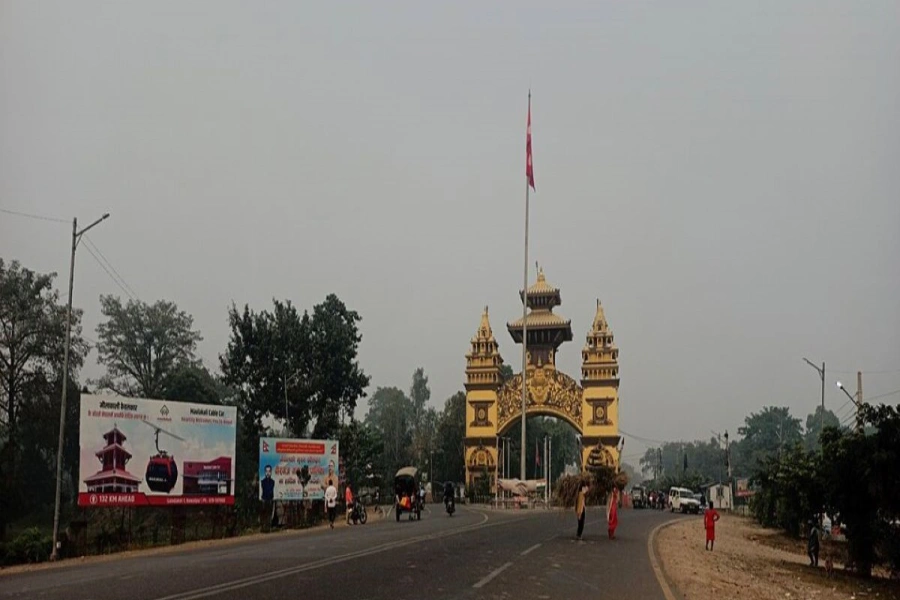
KATHMANDU, July 31: Police in Bara have arrested a man with 10,380 capsules of Tramadol, a drug commonly used as a narcotic. According to the police, Manjan (Upendra) Sah of Bihar, India, was arrested while attempting to smuggle narcotics into Nepal from India. Drug traffickers have long exploited the open border between Nepal and India.
Data from the Narcotics Control Bureau (NCB) under the Nepal Police reveals a worsening drug crisis. In the fiscal year (FY) 2024/25, authorities registered 1,132 drug-related cases and arrested 1,675 individuals.
During the same period, the NCB confiscated significant amounts of various drugs: 18.919 kg of cocaine, 25.237 kg of heroin, 28 kg of opium, 272 grams of amphetamine, and 3,250 kg of cannabis and marijuana. Additionally, 207 kg of marijuana trafficked from Thailand was also seized.
The NCB also reported the seizure of 58,057 ampoules of injectable drugs, 1,028,102 capsules of Tramadol, 119,982 tablets of Nitrosun-10, 47 liters of codeine syrup, 854 grams of ephedrine, and 191 pieces of pseudoephedrine-based medicines.
These figures suggest that both drug use and trafficking are on the rise in Nepal, with the country increasingly becoming a transit point for traffickers.
Mahato warns of political quagmire

Senior Superintendent of Police (SSP) Krishna Prasad Koirala, Chief of the NCB, said the bureau has launched aggressive efforts to curb the trade and abuse of narcotics, which he says have had severe social consequences. "We're working hard to control the supply of narcotics. The statistics of the seized drugs reflect the bureau's active engagement," he said. "But society at large must also play its part in controlling substance abuse."
The bureau operates through 10 units across the country, coordinating with local police. "Brown sugar and pharmaceutical narcotics are the most commonly abused substances in Nepal," Koirala said. "Indian cities offer these drugs at lower prices, leading to frequent imports."
According to 2019 data, Nepal had an estimated 130,000 drug users, but police believe that figure has since increased significantly.
"As the number of drug users grows, local governments, elected representatives, and communities must take equal responsibility," Koirala added. "Many youths are taking drugs just to appear fashionable."
Koirala warned that substance abuse leads to domestic violence, mental health issues, divorce, economic crises, and psychological harm to children. "To fund their addiction, youth often resort to theft, robbery, assault, and sex work," he said,"This makes controlling drug abuse even more urgent."
While the government has tasked the NCB, border police, and the Armed Police Force with drug control, Basanta Raj Kunwar, head of Narconon Nepal, said their efforts are not enough. He argues that the entire state must unite in tackling drug abuse. "Those who haven’t used drugs must be kept away, those already using must be identified and managed, and dealers must face tough action," he said. However, he credited the police for some recent successes in curbing drug trafficking.
Kunwar believes the number of users is much higher than the government estimate of 130,000. “Official data only accounts for those registered, which may represent just 10 percent of actual users,” he said, “Our estimate is that the number ranges between 700,000 to one million.”
Experts say youth addiction stems from unemployment, low self-esteem, uncertainty about the future, lack of opportunities, depression, anxiety, and family problems. Many youths turn to drugs out of hopelessness. “Youth trapped in despair are more likely to use narcotics,” said psychosocial counselor Dr Namrata Pandey, “The government must take counseling seriously.”
Easy access and weak border security have also contributed to youth addiction. The open Nepal-India border facilitates smuggling, while collaboration between local dealers and international cartels complicates enforcement.
The rising use of social media, consumerist attitudes, and the glamorization of drug use have made narcotics appear trendy. This has had serious consequences across Nepal’s social, economic, health, and educational systems. “When one member becomes addicted, the entire family and society suffer,” Pandey said, “We must extinguish the fire before the smoke of social degradation spreads.”
Narconon Nepal head Kunwar suggests the impact of drug abuse be included in school curricula and that free counseling services be provided in colleges, workplaces, and public spaces. He also stressed the importance of active participation from community leaders, teachers, parents, religious institutions, and local groups in drug prevention efforts.
Drug abuse affects not just individuals but the very structure of society. Without urgent and effective action, many fear the problem will reach alarming proportions. “That’s why we’re aggressively tackling drug trafficking,” SSP Koirala said, “We must all internalize the campaign for a drug-free society.”











-1200x560-1776240217.webp)