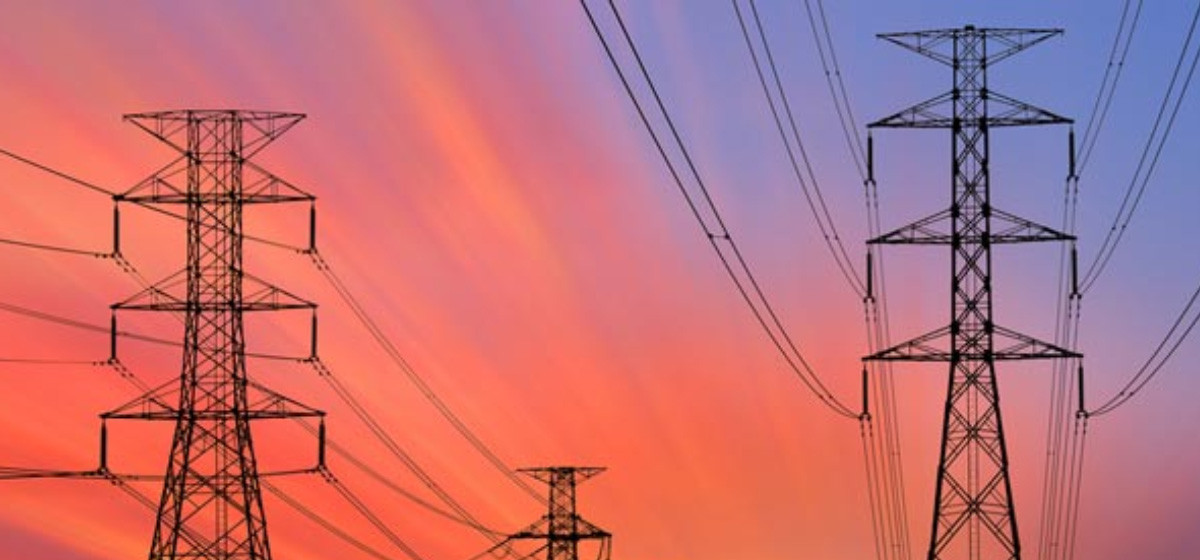
REPUBLICA, Nov 10: A study panel formed in 2009 had projected to connect an additional 1,176 MW to national grid by 2014. But only 50 MW was connected to the national grid by 2014.
"Development of hydropower projects as per the plan would have brought down load-shedding significantly. Also, the energy crisis due to Indian blockade won't have been so severe," a member of the study panel told Republica.
Talking to Republica, Bhoj Raj Regmi, secretary general of the ‘Twenty-Year Hydroelectricity Development Plan Devising Panel 2009’, said hydropower would have been a good alternative for cooking. “We would already be in a position to export hydropower to India. Given the inter-dependence, India won’t have imposed blockade,” he added.The panel was formed by Madhav Kumar Nepal-led government to devise plan for generation of 25,000 MW within 20 years. The panel had projected that undergoing projects having combined capacity of 1,176 MW would start generation by 2014.
Chameliya, Kulekhani 3, Upper Trishuli 3A and Upper Seti, which are being developed by Nepal Electricity Authority (NEA), were expected to be completed by 2014. Similarly, six other projects with combined capacity of 743 MW, being developed by NEA’s subsidiary companies, were also expected to come into operation by 2014.
“Power generation at present is not much different compared to 2009,” Regmi said, adding, that Nepal’s electricity import, however, almost doubled during the period.
Mugu district connected with national grid

Nepal import hydropower worth Rs 10 billion from India in 2014/15.
The panel had expected independent power producers to add 127 MW to national grid by 2014. It had recommended Department of Electricity Development (DoED) to award 10 different 10 projects having combined capacity of 127 MW to the private sector through open competition. But DoED did not acted accordingly.
“Long-term plans, like the ones recommended by Regmi’s panel, often gather dust due to frequent change of governments,” former energy secretary Shankar Koirala, who retired in 2011, said.
The nation saw as many as five ministers in the five-year period.
“There has been much talk but little action,” Koirala said in a frustrating tone.
Energy demand rises by around 100 MW every year. But increment in power generation is disappointingly low.
The panel had also recommended classifying projects. It had recommended that NEA and government focus on large-scale projects like Budhigandaki and Upper Arun, and give small projects to private sector.
He also said slammed NEA for dilly-dallying on signing Power Purchase Agreement (PPA) with the developers. “Projects awarded through open bidding like the Super Six projects, including Lower Solu, waited for more than three years to sign PPA,” Khadga Bahadur Bisht, president of Independent Power Producers’ Association, said.
License of Upper Solu Hydropower Project, one of the Super Six project, has now been scrapped, citing low progress in project development. “This shows that environment is not conducive for project development,” said Bisht.
Uncertainty in construction of transmission lines is the other problem that Super Six projects are suffering. Many projects are failing to achieve financial closure due to delay in construction of transmission lines by NEA.