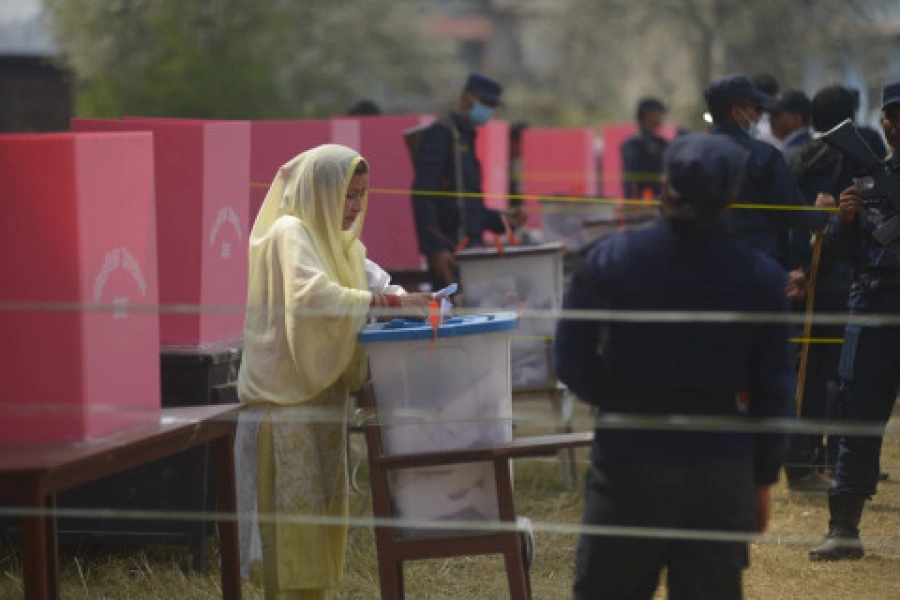
Political parties are divided over the proposal to hold local-level and provincial assembly elections simultaneously. The ruling Rastriya Swatantra Party (RSP) has been promoting the idea, arguing that it would reduce electoral expenditure and minimise disruptions to government operations. Opposition parties, including the Nepali Congress, CPN-UML and Nepali Communist Party (NCP), insist that the elections should be held separately in accordance with existing constitutional and legal provisions. The Rastriya Prajatantra Party (RPP) has also backed simultaneous elections, while the Shram Sanskriti Party is yet to take a position. The financial argument for holding the two elections together is understandable. Organising elections requires substantial public resources, while repeated election cycles can disrupt government operations and delay development activities. However, fiscal considerations alone cannot justify an arrangement that could undermine constitutional provisions and established democratic processes. Any proposal to change the timing or procedures of elections to democratically elected bodies warrants careful scrutiny, particularly in a country where democratic institutions and practices remain relatively fragile.
The Story of a Name: Market Morality and the True Cost of Being...

The main challenge lies in the difference in the tenure of the two elected bodies. The terms of local-level representatives expire in May, 2027, while provincial assembly members remain in office until November, 2027. Under existing legal provisions, local elections must be held two months before the expiry of the current representatives' terms. Holding both elections simultaneously would therefore require either advancing provincial elections or postponing local polls, potentially curtailing provincial assemblies' tenure or leaving local governments without elected representatives for several months. Neither option is straightforward. Provincial assemblies have constitutionally prescribed five-year terms, and their premature dissolution must follow constitutional procedures. Neither the federal government nor the Election Commission can simply shorten their tenure to accommodate an electoral schedule. Extending the terms of local representatives would also raise legal and constitutional questions. Synchronising the polls would thus require a clear legal basis and broad political consensus, not merely an administrative decision. The two tiers of government also differ in their institutional structures. Local governments follow a system in which voters directly elect executive heads, while provincial governments operate under the parliamentary system. Their electoral processes and constitutional mandates are distinct. Holding elections on the same date may be administratively possible, but their different constitutional and legal requirements cannot be overlooked.
The argument for reducing electoral expenditure nevertheless deserves consideration. Nepal spends substantial sums on security, election personnel and logistics each time it holds elections. Simultaneous polls could reduce duplication and ease the burden on public finances. Repeated elections also prolong restrictions under election codes of conduct, affecting policy decisions, budget implementation and development activities. However, cost savings cannot come at the expense of constitutional compliance and democratic continuity. Elections are fundamental to citizens' democratic rights and the renewal of elected institutions' mandates. Rather than seeking shortcuts that could create constitutional uncertainty, the government and political parties should explore ways to make elections more efficient within the existing legal framework. The Election Commission should focus on ensuring that local elections are held within the constitutionally prescribed timeframe. Any proposal to synchronise the two polls must first establish a clear legal basis and secure broad political consensus. Until then, the Commission should not let the cost-saving debate derail preparations for local elections. At a time when state institutions remain relatively fragile, introducing avoidable political and constitutional complications would be unwise. Respecting the electoral calendar and ensuring institutional continuity must take precedence over administrative convenience.