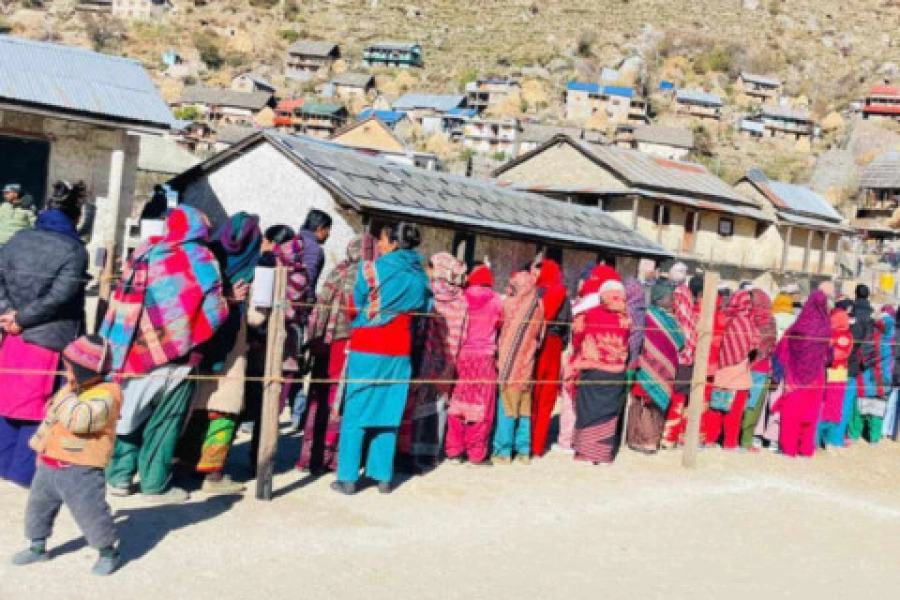
Several human settlements along the Tamakoshi riverbank in Ramechhap, Dolakha and Sindhuli districts were virtually emptied within just one hour. People stopped whatever they were doing. Some women ran to elevated areas by abandoning partially-cooked meals, too. They stayed off the riverbank for a couple of hours. [break]
Later, the villagers knew that the Cho Rolpa Lake was still safe. The going off of the automatic siren was just a result of the sudden rise in the water level of the lake. "Thank god, the lake had not burst," says Rangalal Tamang, who runs a small hotel in Manthali of Ramechhap. "Had it been the lake burst, damage would have been huge."
Cho Rolpa is one of Nepal´s six vulnerable lakes, which experts say is still at a great risk of bursting any time. Two decades ago, experts had warned that Cho Rolpa was likely to burst, which created a hue and cry among people living along the Tamakoshi riverbank. The likelihood of the lake bursting had attracted national and global attention, too.
In a bid to save Cho Rolpa, the government, aided by several donor agencies, introduced a slew of measures, including reduction of water level by up to three meters. Also, an automatic siren was installed to warn the locals of danger in case of the lake burst. They were advised to run to elevate grounds if the siren went off. On last Thursday evening, the locals did exactly what they were told years ago. Fortunately, it was a false warning.
However, the risk of Cho Rolpa Lake burst is still there. As the lake, which is situated on the foothills of Rolwaling Himalayan range, continues to expand, the locals have become more wary of the siren.
Related story
Birendra Lake bursts after avalanche in Manaslu region, no casu...