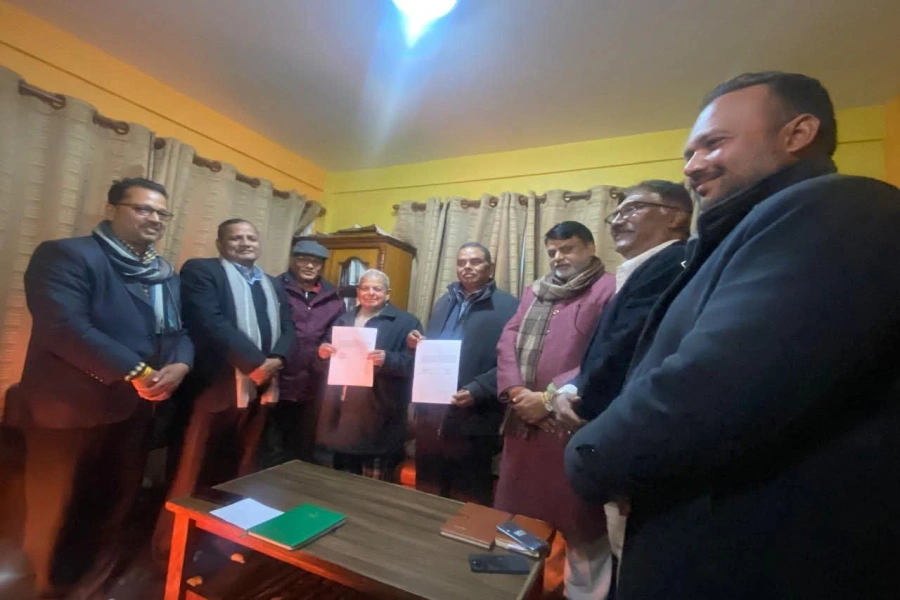
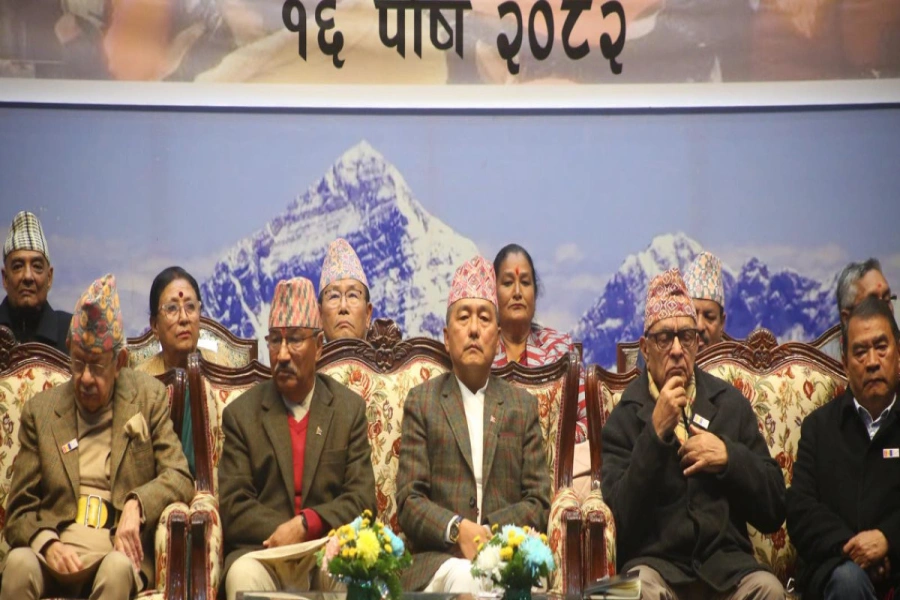
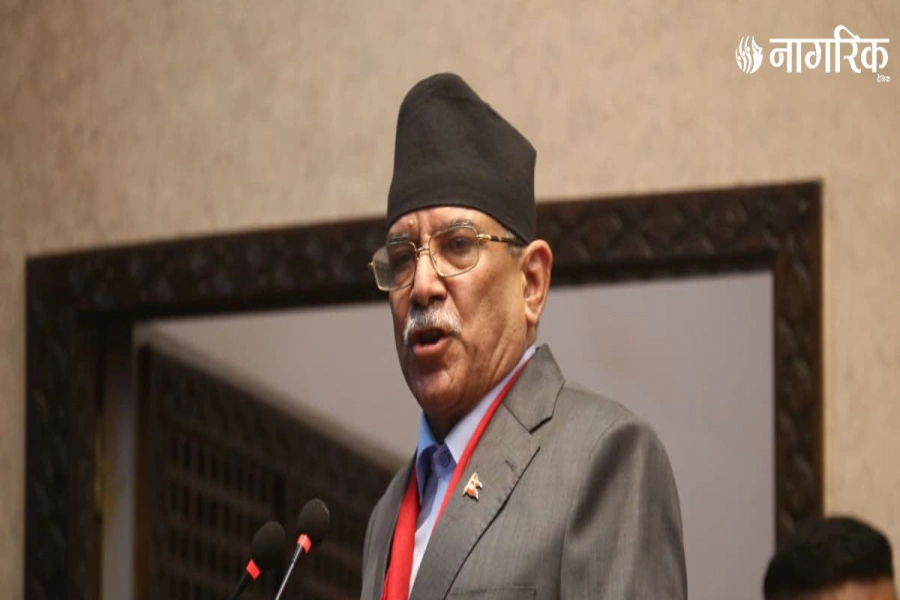
The top leaders from the major political parties, according to the white paper, were quite indifferent to their job of writing new constitution so much so that most them were among the 92 CA members who never participated in deliberations over thematic reports in the full CA meetings.[break]
"None of the top leaders contributed to create national debate on contents and disputed issues of new constitution by participating in the deliberations in CA meetings," read the document. "CA was the best platform to guide the overall course of the statute drafting in the true sense."
The noted leaders not to participate during the deliberations in the full CA meetings included Pushpa Kamal Dahal, Jhalanath Khanal, Madhav Kumar Nepal, Sher Bahadur Deuba, Narayanman Bijukchhe, Mahantha Thakur, Bijay Kumar Gachchhadar, Krishna Bahadur Mahara, Sharat Singh Bhandari, Balkrishna Khand, Sashank Koirala, Shekhar Koirala, Surendra Pandey, Dinanath Sharma, Indra Bahadur Gurung and Top Bahadur Rayamajhi. Though they participated in discussions at their respective thematic committees, they didn´t speak in the CA meetings.
CPN-UML in June formed a taskforce headed by party Secretary Shankar Pokharel with a mandate to prepare a white paper on the four-year work of the CA. The party has said it will formally make public the report only after holding deliberations in its central committee meeting soon.
The taskforce laid the blame for CA dissolution squarely on the UCPN (Maoist) leaders and it claimed that the ruling Madhes-based parties helped the former rebel leaders in doing so.
It has accused the UCPN (Maoist) Chairman Dahal of trying to fish in the murky water, during the crucial last days of the CA, by inciting Madhesi, ethnic and indigenous communities to take to the street and counter the forces who stood against the ethnicity-based federal model. The taskforce also blamed Dahal of misusing the lawmakers´ collection of signatures and memorandums submitted to him in his capacity of the head of the subcommittee formed to settle the unresolved disputes in constitution writing by trying to create divisions in other political parties.
The taskforce also criticized the UML leadership for their failure to play an effective and leading role in constitution writing as well as parliamentary businesses during the four-year tenure of the 601-member House.
"The party´s [UML] top leaders were equally entrusted with key roles in the legislative business of the House but it is unfortunate that their presence at the meetings didn´t even meet the legal requirements," said the document.
According to the white paper, the UML´s parliamentary party convened 55 meetings. Of them, only one fourth of the meetings were convened to discuss issues related to constitution writing whereas they discussed about government and parliamentary affairs in rest of the meetings.
It has strongly criticized the party leaders for failing to effectively coordinate and guide the lawmakers at the time when crucial issues were discussed in the CA as well as in the parliamentary meetings.
UML leaders stood divided in crucial CA deliberations such as on determining the system of governance and state restructuring. While some of the lawmakers from the party stood in favor of parliamentary system as proposed by Nepali Congress, other members firmly insisted in favor of directly-elected prime ministerial system. Similarly, on state restructuring, a number of UML leaders lobbied in favor of preferential political rights, some others strongly opposed the proposal.
The taskforce said it was the party leadership´s failure to keep the party unity intact on such thorny issues. It said that the party´s role in the CA always remained very ineffective due to lack of clear instruction from the party leadership in crucial issues both in constitution writing as well as parliamentary businesses.
According to the whitepaper, the coordination side in the party was so poor and ineffective that UML lawmakers were often confused when they needed to raise their hands at the time of endorsing bills in the House meetings. "The lawmakers sometimes felt humiliated because they would wait until the top leaders in the front row raised their hands for or against any bill and other members would do so accordingly," stated the document.
Related story
Transitional Justice process mired in political wrangling


-1767177833.webp)