

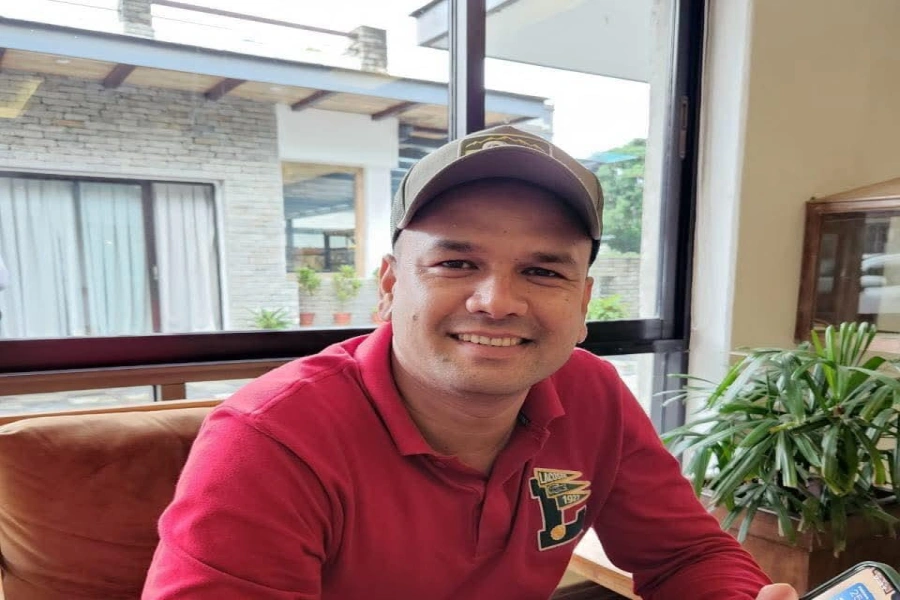
Kathmandu–1, a constituency long contested by towering figures of Nepali politics—Krishna Prasad Bhattarai, Madan Bhandari, Man Mohan Adhikari, Narayan Dhakal, Bidya Devi Bhandari, among others—has drawn national attention in every parliamentary election. This constituency has been dominated by two parties—the CPN-UML and the Nepali Congress (NC)—in elections held from 2048 BS to 2079 BS. However, in the House of Representatives elections of 2074 and 2079 BS, Rastriya Prajatantra Party (RPP) Senior Vice-Chair Rabindra Mishra was narrowly defeated both times by NC leader Prakash Man Singh, who has won every election since 2064 BS. With Singh opting out this time, Mishra is contesting for the third time in the March 5 election, intensifying competition in Kathmandu–1. A total of 29 candidates—16 from political parties and 13 independents—are in the race, including Mishra, Mohan Raj Regmi of the UML, Ranju Neupane (Darshana) of the Rastriya Swatantra Party (RSP), Menuka Bhandari of the Nepali Communist Party (NCP), and NC candidate Prabal Thapa. Republica’s Kamal Bista spoke with Thapa, a 42-year-old graduate from Australia, about his ongoing election campaign.
Excerpts:
Election-related promotional activities are visible on your social media. How is the campaign progressing?
To be candid, the Nepali Congress entered election mode slightly later than some other parties. That does not mean the party was ever opposed to elections. Rather, we believed an internal assessment was necessary before formally entering the race.
Given the changed political context, the party needed to evolve—by revitalising the organisation, energising cadres and well-wishers, rebuilding confidence and reforming structures. That is why our initial focus was on the general convention. Once the special convention concluded, the country’s largest party responsibly launched its election campaign, committed to safeguarding the democratic republic, ensuring good governance and transparency, and creating a fair environment for citizens to freely exercise their voting rights.
Instead of resorting to allegations or gimmicks for short-term popularity, we are engaging directly with people—reviewing our past decisions, performance and programmes. Based on their feedback and guidance, we are shaping action plans aligned with present needs and public expectations.
What kind of response are you receiving from voters?
We have only recently begun meeting voters, holding discussions and listening to their concerns. Even so, we are encouraged by the trust, confidence and expectations people continue to place in the Nepali Congress.
Initially, we had some doubts—about whether the party’s base had weakened and how people would respond. But after engaging with the public and sharing our views, we have felt renewed energy and momentum.
There are grievances, and we may have shortcomings. Yet people still believe that protecting democracy, promoting development, safeguarding human rights and creating livelihood opportunities are possible only under Nepali Congress leadership. The party’s restructuring, driven by a commitment to national change, has generated fresh public hope and boosted cadre morale.
Soils under Threat

Kathmandu–1 has traditionally been an NC stronghold, but RPP’s Rabindra Mishra and RSP candidate Ranju Darshana are gaining attention. How easy will it be for you to win?
Half the answer lies in your question. Kathmandu–1 has long been a Nepali Congress base, with a strong organisation, committed cadres and a reliable voter base—hence the party’s consistent victories.
I do not wish to comment on individual competitors; I respect them all. Elections are about healthy competition, and I do not underestimate any rival. Popularity and publicity are ultimately measured at the ballot box.
That said, I have lived among the people of Kathmandu–1 for years. I was born and raised here. People know me, and I understand them. They are also well aware of the Nepali Congress’s ideology, policies and programmes. We are addressing misunderstandings and renewing relationships. For these reasons, I am confident of victory.
It is said that senior leader Prakash Man Singh is not fully supportive of you. Can you win without his support?
I must reject the premise of that question. The claim that I lack Prakash Man Singh’s support is entirely false. Anyone who believes this misunderstands the Nepali Congress, Prakash Man Singh and me.
After receiving the party nomination from Kathmandu–1, I met him immediately to seek his blessings and guidance. I have worked closely with him during his previous campaigns in this constituency, sharing responsibilities and challenges. In fact, he was even more enthusiastic than I was about my candidacy. He is my guardian and leader, and our relationship transcends factional lines. Claims to the contrary are baseless and unconvincing to voters here.
As for divisions surrounding the special convention, those ended on January 18. There is no faction or opposition now—we are united as one Nepali Congress. Debate and differing views strengthen a democratic party; they are part of healthy internal life.
There is an allegation that you received the ticket due to your closeness to party President Gagan Thapa, sidelining more deserving leaders. Your response?
There are nearly 2,000 active Nepali Congress members in Kathmandu–1, many of whom are capable and deserving. I am just one among them. Several senior leaders here entered politics alongside my father, and I hold them in the highest regard. No individual is irreplaceable.
It was natural for others to aspire to the ticket. This time, I received the opportunity; next time, others may. Everyone cannot be nominated at once.
As for my closeness to the party president, there is nothing improper about that. An organisation functions on trust between leadership and cadres. If that trust is labelled favouritism, that is not my doing.
With 29 candidates in the race, why should voters choose you? What are your agendas?
At its core, this election is about representation. Voters should choose someone who is born, raised and deeply rooted here—someone who understands both local realities and national challenges.
Others may need to study Kathmandu–1 to understand its geography and people. I have lived this reality all my life and will continue to do so after the election. Even if I were to lose, I would still be accountable to the people. For nearly 15 years, even without being a candidate, I have worked closely on livelihood-related issues here. This is my home, not a constituency I studied for elections.
Aligned with the spirit of the Gen-Z movement, the reformed Nepali Congress has fielded more than 100 young candidates, including me. On national issues, I follow the party line. Locally, people want a representative who is visible, responsive and effective—both nationally and internationally—and I believe I can fulfil that role.
As the heart of the capital and home to all branches of the state, Kathmandu–1 shapes the country’s identity. From five-star hotels to tea shops, elites to landless citizens, students to senior officials—everything converges here. Its issues are therefore unique.
My priorities include traffic management, business security, promotion of local entrepreneurship, improved connectivity within inner settlements, scientific and humane management of squatter issues, urban beautification and addressing growing urban poverty.
Despite owning homes in areas like Baneshwar, many people lack sustainable income opportunities. Frequent protests—especially as the epicentre of the Gen-Z movement—have damaged the business environment, forcing enterprises to relocate. This must be addressed urgently to avert an economic crisis.
There is widespread frustration over lawmakers’ performance. Your view?
Performance must be assessed objectively. Some initiatives remained incomplete, some suffered from weak implementation, and some went unrecognised. While it is incorrect to say lawmakers did nothing, it is true that public expectations were not fully met.
What kind of lawmaker do you want to be?
A lawmaker must engage across the spectrum—from development to policymaking, from local concerns to national issues. I aim to be a representative who speaks and is heard in Parliament—raising voices not only from Baneshwar, but from across the country.
While the NC supports federalism, secularism and republicanism, some leaders have recently voiced alternative views. Where do you stand?
What matters most are the Constitution and the party statute. When the party formally decides to debate these issues, I will clearly articulate my position.
Finally, if you win, you go to Parliament; if you lose?
I have not imagined losing.





