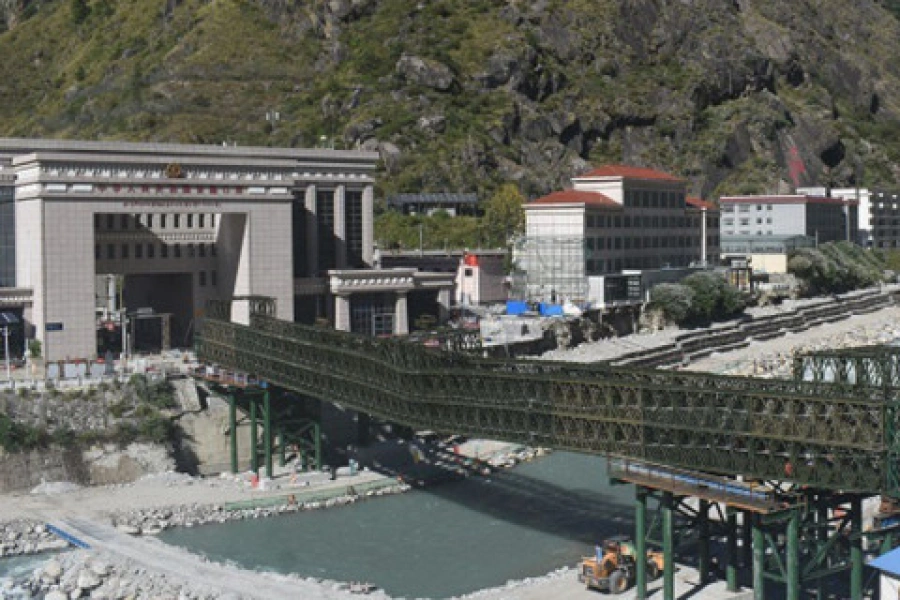
The Himalayas have long been more than a natural barrier; they are the bridge that connects India and Nepal. Few bilateral relationships in South Asia are as deeply rooted in history, culture, faith, and kinship as that between these two countries. The bonds are not just diplomatic, they are civilizational. Families straddle the border, cultures intermingle seamlessly, and faith traditions bind both societies into one larger civilizational family.
In this context, the recent political turbulence in Nepal, marked by violent uprisings and uncertainty, was viewed in India with both concern and empathy. Stability in Nepal is not merely a matter of foreign policy interest for New Delhi, it is integral to India’s own sense of security and regional well-being. When the dust settled and a new leadership under Prime Minister Sushila Karki emerged, India was among the very first to extend congratulations. Prime Minister Narendra Modi’s swift message of goodwill to PM Karki was not just a diplomatic formality; it was a reaffirmation of the special bond that has always defined India–Nepal ties.
Shared History and People-to-People Links
India and Nepal share one of the most open borders in the world. Citizens cross freely, work across both sides, and build families that straddle the frontier. Millions of Nepalis live and work in India, contributing to its economy, while Indian tourists, pilgrims, and professionals form a steady presence in Nepal. The Gurkhas, whose valor is legendary, have served in the Indian armed forces for generations, symbolizing trust and mutual respect.
Beyond this, the civilizational ties, whether through the shared reverence for Pashupatinath in Kathmandu and Kashi Vishwanath in Varanasi, or the deep cultural interlinkages of the Terai and northern Bihar, make this bond unique. This is not a relationship based on convenience; it is one forged through centuries of shared experience.
India’s Consistent Role as a Friend
You be the sunshine

India has always stood by Nepal in times of crisis. Whether during the devastating 2015 earthquake, when Indian rescue teams were the first on the ground, or during the pandemic when vaccines, medicines, and oxygen were rushed to Kathmandu, India has treated Nepal not as a neighbor but as family.
This consistency has not always been easy. There have been moments of strain, political disagreements, perception gaps, and differences in approach. But India’s record has been clear: it does not view Nepal through the lens of short-term political gains, but as a country whose well-being is integral to South Asia’s collective future.
The recent violent uprising in Nepal, which unsettled its politics, was viewed in India with deep worry. Violence, no matter the cause, undermines the foundations of democracy. India’s hope throughout the crisis was that the Nepali people’s voice would be heard through constitutional means, not chaos. The emergence of Sushila Karki as Nepal’s leader is therefore seen in New Delhi as a chance to restore calm, strengthen institutions, and renew faith in democracy.
PM Modi’s Message: Symbolism and Substance
It was telling that Prime Minister Modi was among the first world leaders to congratulate PM Karki. This was not a mere gesture; it was a recognition of Nepal’s importance to India’s foreign policy priorities. By sending this message swiftly, India sought to reassure both the Nepali leadership and the people of Nepal that they would not face the road ahead alone.
For Nepal, emerging from unrest, the gesture carried symbolism: that India values Nepal’s sovereignty, supports its democratic choices, and sees its stability as critical. For India, it reaffirmed that its “Neighborhood First” policy is not rhetoric but action.
Opportunities Ahead
With stability returning, India and Nepal have a chance to move forward on several fronts. First, economic cooperation: India remains Nepal’s largest trading partner and a crucial transit route for its exports and imports. Hydropower development, in particular, holds immense promise. Indian companies are already involved in major projects that can transform Nepal into a clean energy hub for the region, benefitting both sides.
Second, connectivity: from rail links to highways to digital cooperation, both countries stand to gain enormously by knitting themselves closer together. Border infrastructure, improved checkpoints, and cross-border pipelines, such as the Motihari–Amlekhgunj petroleum pipeline are already demonstrating what is possible when the partnership is pragmatic.
Third, youth and cultural exchanges: Nepal’s young population looks to India for education, employment, and exposure. Expanding scholarships, training programs, and people-to-people exchanges will ensure that the next generation sees this relationship not as a legacy of the past but as an opportunity for the future.
A Partnership for Regional Stability
India–Nepal cooperation is not just about the bilateral dimension; it has regional implications. At a time when South Asia faces new geopolitical flux, whether from global power rivalries or from internal upheavals, the unity of countries like India and Nepal provides a stabilizing anchor. A peaceful and prosperous Nepal is in India’s interest, just as a supportive India is in Nepal’s.
Importantly, this relationship remains free of the hierarchies that often complicate bilateral ties. India recognizes Nepal’s sovereignty and independence; Nepal, in turn, acknowledges India’s unparalleled role as a partner in its growth and stability. The relationship is not one of dependency, but of interdependence.
The Road Ahead Together
The violent uprising in Nepal was a reminder of how fragile democracy can be. Yet it was also a reminder of the resilience of the Nepali people and their institutions. India’s role throughout, measured, supportive, empathetic, was in keeping with its long-standing approach of friendship.
Prime Minister Modi’s early congratulations to Sushila Karki marked not an end but a beginning. As Nepal charts its path forward, India will continue to be a steady partner, offering support without imposition, cooperation without coercion. The ties that bind these two nations are too deep to be shaken by transient storms.
India and Nepal have walked together through history; they will continue to walk together into the future. The journey is one of shared destiny, of two nations bound not just by geography, but by heart.