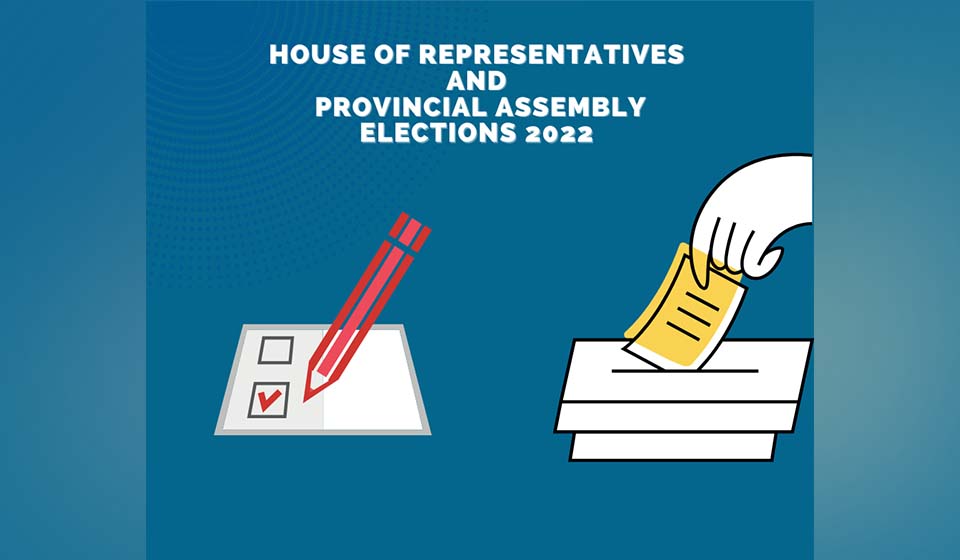
KATHMANDU, Jan 14: Nearly half of the polling stations in Madhesh Province have been flagged as sensitive ahead of the House of Representatives (HoR) elections scheduled for March 5, prompting the Ministry of Home Affairs (MoHA) to step up security preparations in the region.
The assessment emerged from a series of province-level security coordination meetings held by the MoHA across the country. The final meeting, held in Madhesh Province on Tuesday, brought the nationwide review process to a close.
The Madhesh security meeting was attended by the Home Minister, chiefs of all three security agencies, chief district officers, and provincial security heads. Although such meetings are part of the ministry’s regular program, officials said this round of discussions was heavily focused on election security.
The provincial security review process began in Lumbini Province on November 25 and concluded in Madhesh. Based on recommendations drawn from these election-focused meetings, the government plans to deploy security forces accordingly. According to MoHA sources, security challenges have been identified at 1,168 of the 2,157 polling stations in Madhesh Province.
Given the assessment, authorities are preparing to reinforce security in vulnerable areas. “Around 1,200 polling stations in Madhesh Province have been placed on the highly sensitive list, and the number could rise,” a ministry official said. “Open borders and potential clashes between Madhesh-centric parties and other political groups have heightened security concerns in the region.”
EC designates seven polling centers, 14 polling stations for Na...
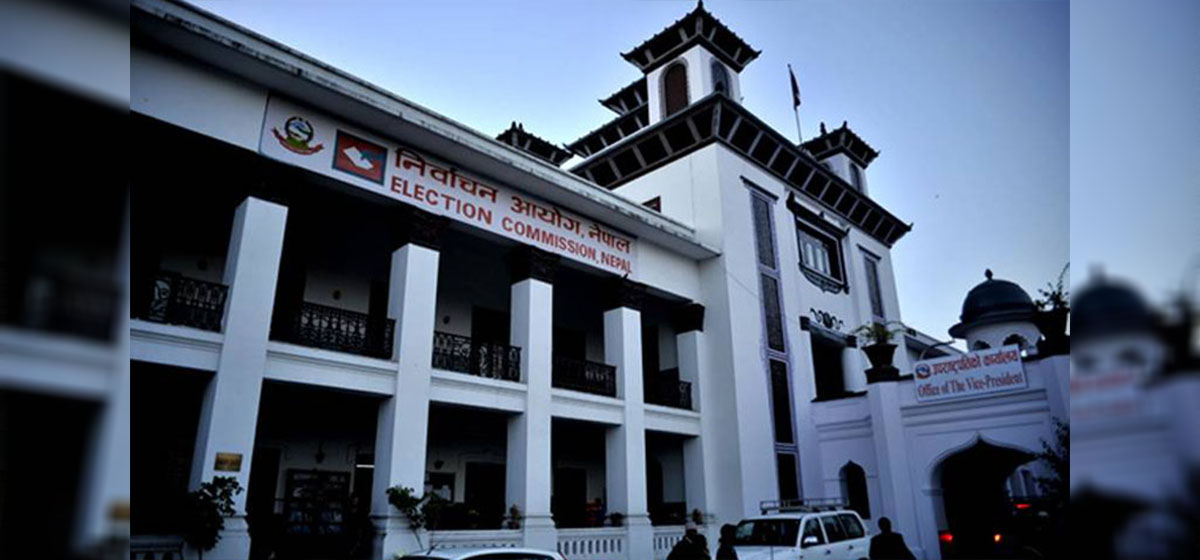
The MoHA’s nationwide security analysis has identified risks at 3,518 of the 10,926 polling stations across the country. “So far, no significant threats have been detected in major urban centers,” a source said. “Compared to the Tarai, security challenges appear relatively lower in the hill and Himalayan districts.”
The ministry has warned that clashes among party cadres could disrupt the electoral process. MoHA Assistant Spokesperson Rabindra Acharya said comprehensive security assessments have been carried out for all polling stations.
“Since the election was announced, the ministry has been collecting and analyzing security-related information from multiple sources,” Acharya said. “We now have a complete picture of the security status of all polling stations, and deployments will be made accordingly.”
The analysis was conducted using polling station details provided by the Election Commission (EC). Security agencies and political parties have identified several major threats, including fugitives who escaped from prisons during the Gen Z movement and weapons looted from the police. Other concerns include criminal groups, local gangs, party-affiliated youth wings, cross-border criminal networks, and geographical challenges. However, officials say the ministry is cautious about publicly disclosing all security vulnerabilities.
Around 300,000 security personnel to be deployed
Under the election security strategy, around 300,000 security personnel—including the Nepali Army, Nepal Police, Armed Police Force (APF), and election police—will be mobilized nationwide. Nepal Police will take the lead as election police, supported by intelligence operatives from the National Investigation Department (NID).
The APF will form the second security ring, while the Nepali Army will serve as the third. This time, however, the army will also be involved in securing ballot boxes. Plans call for the deployment of at least 12 security personnel at highly sensitive polling stations, 10 at sensitive stations, and eight at normal stations—figures that apply only to the first security ring. In some polling stations in the Tarai and hill districts, the army may also be deployed in the first ring, sources said.
Rs 1.94 billion budget for the Nepali Army
The government has allocated Rs 1.94 billion for the Nepali Army’s role in election security, with the Ministry of Finance (MoF) guaranteeing the funds. Of the total, Rs 1.94 billion has been earmarked for recurrent expenditure and Rs 40 million for capital expenditure.
The army had initially sought Rs 3.52 billion. Under the Integrated Election Security Plan, it will be deployed as the third security ring, with bases established in each electoral constituency. During the election period, the army will also be responsible for guarding critical infrastructure, including airports and prisons. Regular patrols are scheduled to begin on February 4, exactly one month before the election.
The MoF has also ensured budgets of Rs 8.66 billion for Nepal Police, Rs 1.46 billion for the APF, and Rs 58.5 million for the NID.