

The study is being carried out largely to get the actual picture of the bank and decide on the future course of reform actions.[break]
The government that is holding extensive discussion on the fate of the Financial Sector Reform Program (FSRP) has also pushed the Rastriya Banijya Bank (RBB) management, another public sector bank subjected to reforms, to off-load its cross holding shares, revalue property and sell non-banking assets for recapitalization.
“The plans of recapitalizing NBL is also similar,” said Finance Secretary Rameshwar Prasad Khanal, referring to still high negative net worth and core capital of the two largest banks of the country.
Presently, RBB has negative net worth of Rs 9.5 billion and NBL too is in need of additional Rs 7.1 billion to do away with its negative net worth and comply with the central bank’s capital adequacy provision.
Responding to lawmakers’ concern over the slowed result of FSRP and future of the two banks at Finance and Industrial Relations Committee of the parliament, Nepal Rastra Bank Governor Dr Yuba Raj Khatiwada said the central bank’s plan in NBL was to handover the management to professional chief executive soon.
“The new chief executive will be entrusted to revaluate the bank’s property, sell non-banking assets, hold annual general meeting, form new board of directors from among the promoters and shareholders, and re-list its shares for trading,” said Dr Khatiwada.
Ministry of Finance too views that revaluation of property, selling off of non banking assets and issuing shares to raise paid-up capital to Rs 2 billion from existing Rs 380 million will enable NBL turn around its net worth.
The bank, however, will need additional time to comply with NRB’s capital adequacy provision.
“If everything went well, the whole process of recapitalization and re-listing of NBL’s shares will happen by mid-January 2011,” Khanal said.
“The bank then can function as a commercially viable entity with sound profitability over next one and half years.”
As for the RBB, Khanal disclosed that the government was still adopting ´wait and watch’ approach. With the sale of cross holding share and non-banking asset and revaluation of property, MoF believes the bank will be able to narrow down its negative net worth sharply.
“The government plans to decide on the future actions only after assessing the situation then,” said Khanal.
´Political interest might guide CEOs recruitment’
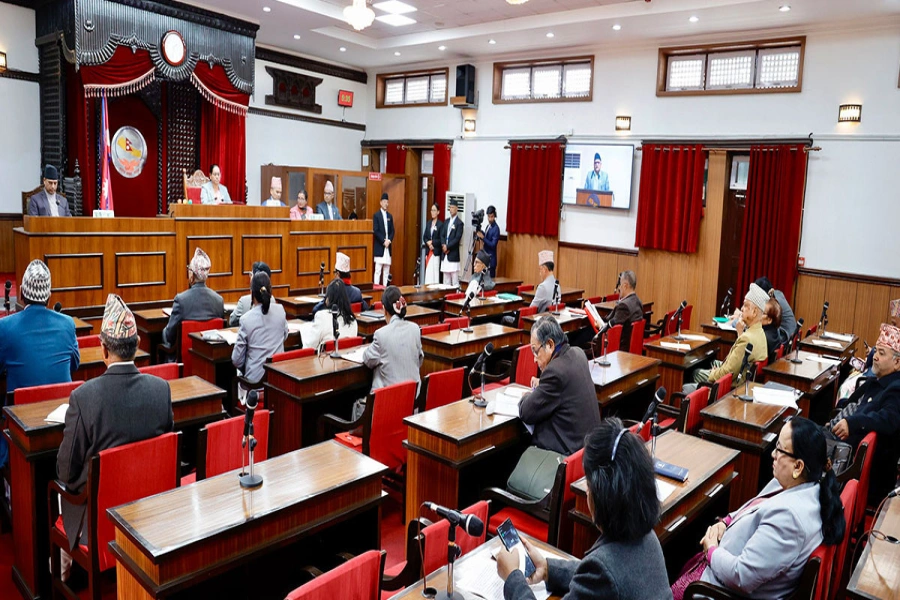
Lawmakers at the Finance and Industrial Relations Committee of the parliament on Tuesday raised serious concerns over the central bank decision of allowing the boards of Nepal Bank Limited (NBL) and Rastriya Banijya Bank (RBB) appoint the new chief executives officers.
“Both the boards have seen heavy influx of political appointees. In such a situation, chances are high that CEOs appointment will be politically guided. This will be the reversal of reforms,” said lawmaker and former finance minister Dr Ram Sharan Mahat.
RBB, being a state-owned bank, has government appointed representatives in the board. Although NBL’s 61 percent stake is owned by the private sector and bank employees, it is declared as a troubled bank and its board has representatives appointed by the central bank. The private shareholders have no representation in the board of directors.
However, Nepal Rastra Bank Governor Dr Yaba Raj Khatiwada ruled out political intervention in the appointment process, saying that the selection of the chief executives will be done by a professional body of governance committee, including independent experts.
“Also the board will need final approval of the NRB to appoint the selected chief executives. I do not see chances of incompetent and political person finding way to the post,” said Dr Khatiwada.
Despite his assurance, lawmakers instructed the central bank to maintain its presence in the bank’s management by intensifying its advisory role.
Related story
Li-Ning announced as title sponsor of NBL 3X3 West











-1200x560-1779450784.webp)


