

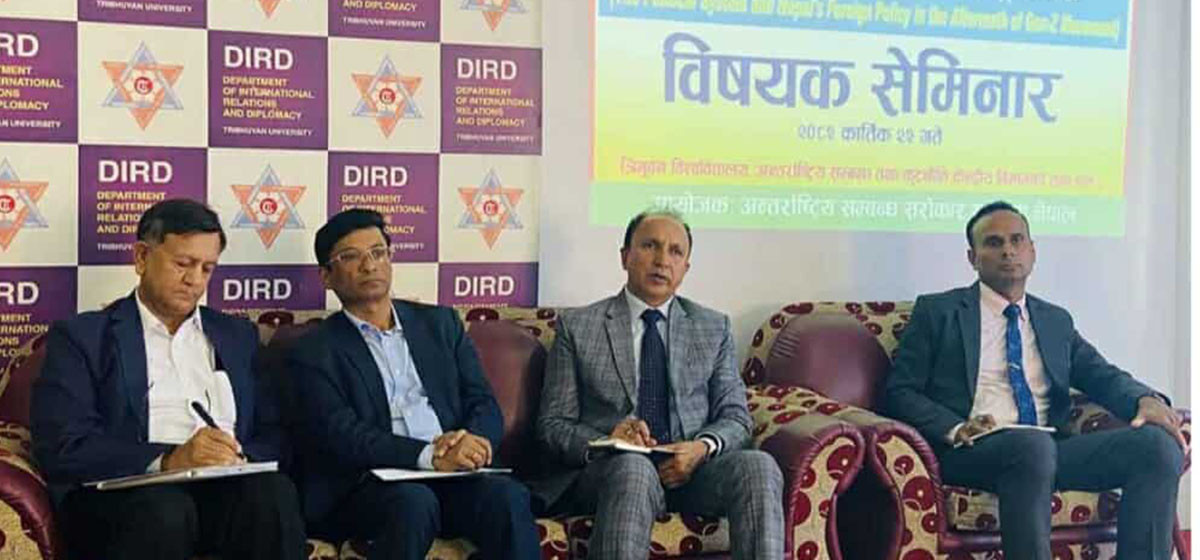
Kathmandu, Nov 9: A discussion on Nepal’s foreign policy and diplomatic leadership reform was held Saturday at Tribhuvan University, Kirtipur. The event, organized by International Relations Concern Community Nepal, focused on the theme “Nepal’s Political System and Foreign Policy After the Gen-Z Movement.”
Presenting a concept paper, Dr. Hari Prakash Chand said the absence of subject experts in the Ministry of Foreign Affairs since 1990 has weakened Nepal’s diplomacy. “In the past 35 years, 30 foreign ministers were appointed, but most lacked expertise in diplomacy or international affairs, which diluted policy effectiveness,” he noted.
Experts advise Nepal to have a clear, proactive foreign policy

Dr. Chand also pointed out similar gaps in diplomatic postings abroad, especially in the United States, urging that those with PhDs and 15 years of service experience in foreign affairs be prioritized. He emphasized giving opportunities to individuals with research backgrounds and at least a decade of field experience.
Tribhuvan University Rector Prof. Khadga KC said the Gen-Z movement was a result of corruption, misgovernance, and lack of accountability. “It reflects the frustration of youth against inequality and injustice. The time now calls for good governance and accountability,” he said.
Former Attorney General and Professor of International Law Dr. Yubaraj Sangraula described the Gen-Z movement as an awakening of political consciousness among Nepal’s youth. “It was not merely a violent event but the beginning of a new generation’s political awareness,” he remarked.
Former Chief Secretary and ex-Ambassador to China Lilamani Paudel also stressed the need for urgent reform in Nepal’s foreign policy. “Protecting the nation’s borders and diplomatic relations is of utmost importance,” he said.
The discussion also touched on Nepal’s key diplomatic challenges, the need for political reform, and the Gen-Z movement as a symbol of youth awakening and demand for change.





_20240313151708.jpg)





