Nepal has adopted a policy of nonalignment in its conduct of foreign policy. Despite significant changes in national, regional and international dynamics, Nepal’s diplomatic practice has, since the beginning, been focused on defending its sovereignty, territorial integrity and independence. Though it has included garnering bilateral and multilateral assistance for development activities, promotion of national economic interest has not been given much preference in Nepal’s multifaceted external engagement.
After the restoration of democracy in 1990, Nepal focused on economic diplomacy as a new dimension of its foreign policy execution and diplomatic dealings, and also adopted policies of liberalization and privatization. But Nepal is still struggling with a huge trade deficit, low economic growth, high unemployment rate, mass poverty, food and fuel crisis, and energy shortage. Global climate changes has emerged as yet another challenge for Nepal. The limited expansion, diversification, and development of Nepal’s bilateral, regional and multilateral relations have not been enough to promote and enhance Nepal’s economic interests.

STAT.EZONE.MN
Nepal’s trade and commercial relations are limited to a handful of countries. More than a third of its international trade is conducted with India and China. Nepal is home to a magnificent range of mountains including the world’s highest, it is the birthplace of Lord Buddha, land of brave Gurkhas, home to breathtaking natural beauty and rare flora and fauna, and is filled with historical monuments and cultural heritage. Nepal thus has the potential of becoming a premium tourist destination and establishing tourism sector as a sustainable source of national income. Despite all these resources and the hospitable behavior of Nepali people, Nepal’s tourism sector is still underdeveloped and unexploited. The abundant water resources of Nepal are untapped due to inadequate capital investment and paucity of advanced technology and management skills. The country is facing a dire energy shortage, putting its nascent industrial development at risk and resulting in capital flight.
Nepal has not been able to reap any benefits from EU’s “Everything but Arms” initiative, under which Least Developed Countries (LDCs) and Landlocked Developing Countries (LLDC) are eligible for duty free and quota free (DF & QF) market access in the EU market. Furthermore, it has also lost DF & QF market access in the US. Nepal’s abundance of natural resources, economically active and cheap labor force, well-developed banking and financial institutions and substantial market potential (including its immediate neighbors) have not been enough to attract foreign investment. Nepal’s economy has not progressed from subsistence agriculture to more lucrative sectors of trade, tourism and investment even after over two decades of democratic rule and start of economic diplomacy. Nepal is still designated a LDC.
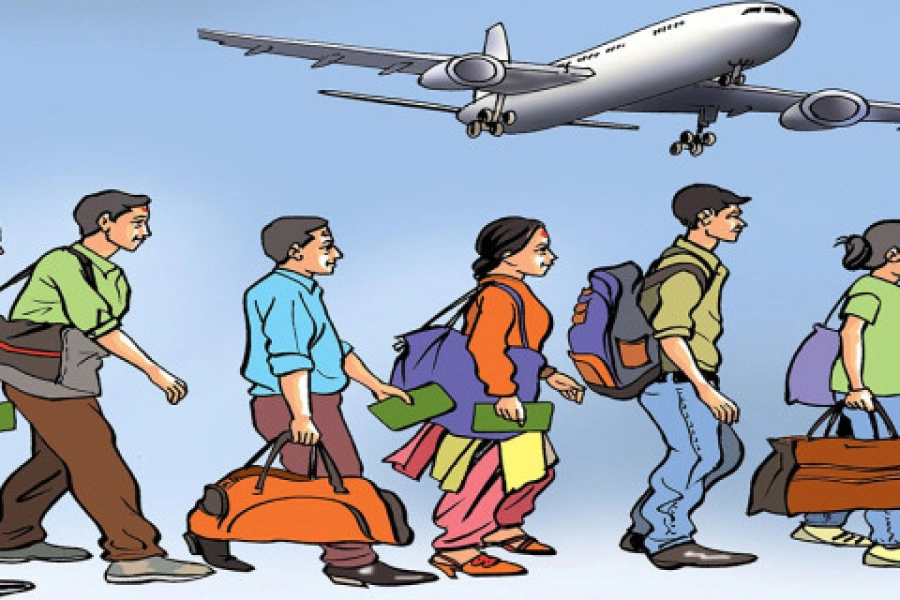
Hydropower, agriculture, tourism, bio-diversity, herbal processing, mines and minerals industries and infrastructure development are the sectors with the most potential of attracting foreign investment through astute economic diplomacy at bilateral, regional or multilateral levels. Such investments can bring meaningful changes to Nepal’s socio-economic status and people’s lives. However, prolonged political uncertainty, energy crisis, poor industry-labor relations, and weak law and order situation are posing as big stumbling blocks. In the context of the recent historic political changes and people’s desire and aspirations, it is imperative to direct Nepal’s diplomatic engagement towards attracting foreign investment. The investment should optimally be used to explore Nepal’s plentiful natural resources and promote tourism industry. Lucrative new labor destinations should be explored to absorb the growing workforce, which will help improve the country’s socio-economic status and to attain a sustained, broad based and inclusive economic growth.
Hydropower, tourism, bio-diversity and herbal processing are the sectors with the most potential.
Nepal should make sincere efforts to reap benefits from its immediate neighbors—India and China—through clever economic diplomacy instead of just focusing on maintaining balanced relations in the neighborhood. Nepal can attract capital investment and technology from its immediate neighbors to exploit its water resources, promote tourism, build infrastructure, develop and commercialize agriculture, and promote the service sector. This can contribute to reducing trade deficit, generating employment, increasing national revenues, and reducing poverty, and also promoting mutual understanding, cooperation and collaboration in the neighborhood.
Nepal should execute its diplomacy around an idea floated by former PM Baburam Bhattarai. It should develop a trilateral economic cooperation mechanism to develop Nepal as a vibrant bridge between the two Asian powers.
This concept will not only benefit Nepal, but also add to mutual understanding and cooperation between the two emerging global powers. It will contribute to their common interest in regional and global forums as well as promote sustainable regional peace and stability, which is crucial to maintaining global peace and stability.
The author is affiliated with the Ministry of Foreign Affairs
rebantakc@yahoo.com
Related story
Joshi wins Apex Smile Festival award