KATHMANDU, Jan 22: Although the periodic election of the House of Representatives (HoR) was scheduled for 2084 BS, the Gen Z movement pushed it forward by two years. Seizing this unexpected political opening, several locally elected representatives resigned midway through their terms, leaving behind unfinished mandates, which, critics argue, is a betrayal of the people who elected them.
With as many as 16 months still remaining in their tenure, these representatives abandoned their posts and filed candidacies for the HoR election. Voters had entrusted them with a full term at the local level. According to local governance experts, resigning midway without completing that term amounts to deceiving the electorate and undermining the public mandate.
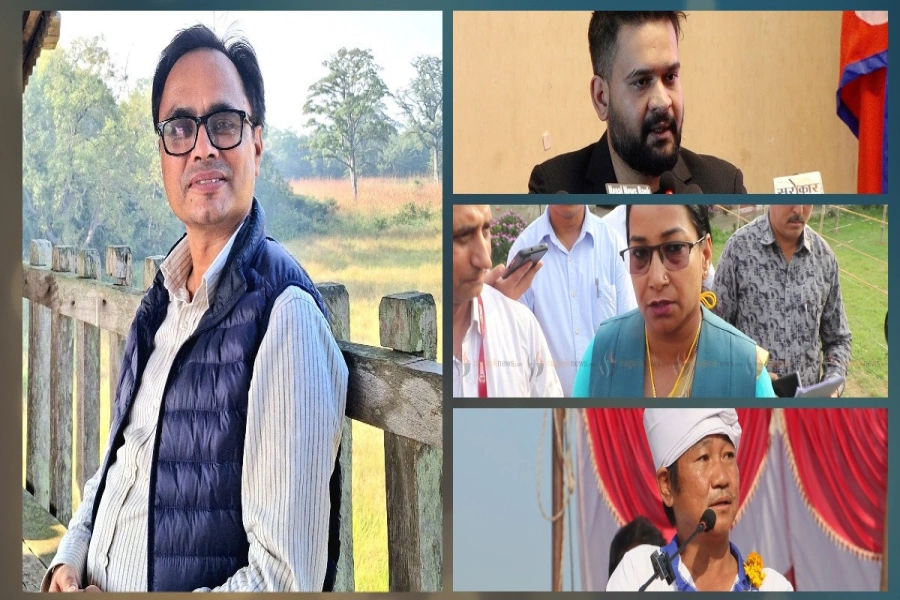
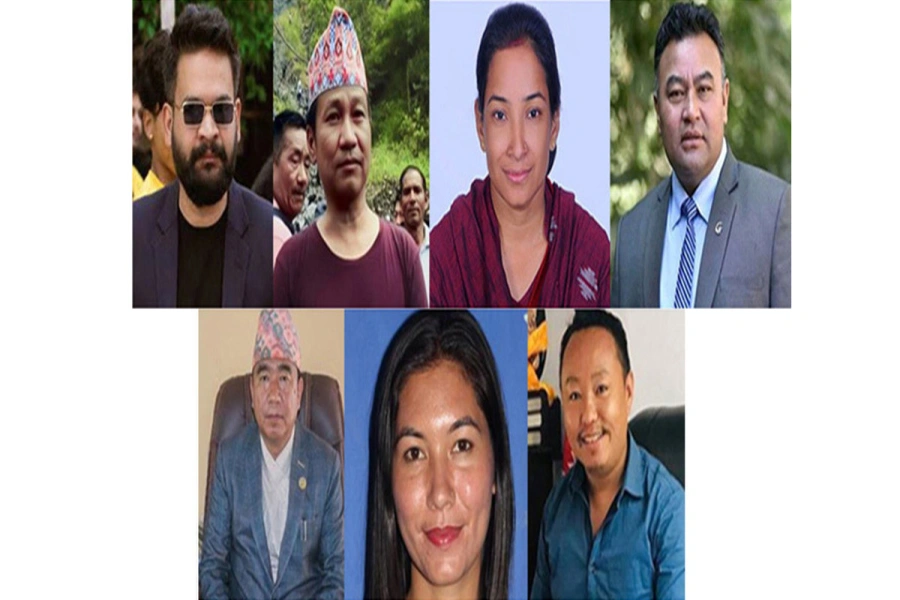
Balendra Shah (Balen), Harka Raj Rai (Sampang), Renu Dahal, Ashok Byanju, Khim Bahadur Thapa, Asmita Thapa and Asim Rai—elected just three years ago across various local governments—have now set their sights on the federal parliament, leaving local offices vacant and voters disillusioned.
Shah and Rai were elected as mayors of Kathmandu Metropolitan City (KMC) and Dharan Sub-metropolitan City respectively as independents. Dahal was elected mayor of Bharatpur Metropolitan City (BMC) from the then CPN (Maoist Centre); Byanju became mayor of Dhulikhel Municipality from the CPN-UML; Khim Bahadur was elected chairperson of Kaligandaki Rural Municipality from the UML; Thapa served as vice-chairperson of Likhu Rural Municipality from the UML; and Rai was elected chairperson of Dudhkoshi Rural Municipality from the then Maoist Centre.
Elected to local governments for a four-year term in 2079 BS, their mid-term resignations have left posts vacant, fractured the public mandate, and triggered widespread criticism.
JSP central leaders accused of betraying party in November 20 e...

Local governance expert Bimal Pokharel views such resignations as a direct insult to voters. “Our system grants extensive authority to local-level chiefs. They are empowered by law, control budgets, and manage resources. Many of them built their public image within structures created by the federal government and, in the process, misled the public. That played a key role in their rise. Once they enter the federal parliament, that illusion will be shattered,” Pokharel says.
Shah won the Kathmandu mayoral race by defeating candidates from the CPN-UML and the Nepali Congress (NC). He secured 61,767 votes, while NC candidate Sirjana Singh received 38,341 votes and UML candidate Keshav Sthapit garnered 38,117 votes.
While leading KMC, Shah sustained his popularity largely through sharp criticism of the federal government and traditional political leaders. Riding that popularity, he resigned as mayor and filed his candidacy from Jhapa Constituency-5 for the HoR election, where he is contesting against UML chair KP Sharma Oli. Shah has been fielded by the Rastriya Swatantra Party (RSP), which has projected him as a future prime minister.
Rai, who rose to prominence in Dharan through free labor campaigns, formed the Shram Sanskriti Party under his own leadership and entered the HoR race. After touring provinces from Sudurpaschim to Koshi, he is now focused on constituency-centered campaigning in the eastern hills.
Drawing activists from both communist and NC backgrounds, Rai has filed his candidacy from Sunsari-1. Alongside him, Manoj Bhattarai, ward chair of Dharan Sub-metropolitan City–17, has also resigned and entered the HoR election race.
Bhattarai, elected ward chair in both 2074 BS and 2079 BS, is contesting from Sunsari-1 on behalf of the Nepali Communist Party (NCP). With Rai and Bhattarai launching new parties and entering the parliamentary race mid-term, many voters say their mandate has been undermined.
Rai won the Dharan mayoral race with 20,821 votes, defeating NC candidate Kishor Rai, who secured 16,059 votes. Since assuming office, Rai has remained in the spotlight—both for his popularity and for controversies. He frequently uses social media to counter critics, a strategy also employed extensively by KMC Mayor Shah.
BMC Mayor Dahal has likewise entered the HoR race from Chitwan-3, resigning mid-term and drawing criticism for abandoning local voters. Elected mayor twice—in 2074 BS and 2079 BS—Dahal is contesting against RSP candidate Sobita Gautam. She had won in 2074 BS by a narrow margin of 203 votes and, in 2079 BS, defeated RPP–UML alliance candidate Bijay Subedi by more than 12,000 votes.
Byanju, a two-time mayor of Dhulikhel Municipality from the UML, has also resigned midway and entered the HoR race from Kavre-2. He had secured his most recent mayoral victory by a margin of 940 votes.
Similarly, Khim Bahadur, chairperson of Kaligandaki Rural Municipality in Syangja, resigned before completing his term and filed his candidacy from Syangja-2 on behalf of the UML. Thapa, vice-chairperson of Likhu Rural Municipality in Okhaldhunga, has also resigned and is contesting the HoR election from the UML. She had been elected vice-chairperson in 2079 BS.
In Solukhumbu, Thulung Dudhkoshi Rural Municipality Chairperson Rai resigned from office and entered the HoR race, abandoning her second term midway in pursuit of a federal role.
Election law mandates a by-election if a post becomes vacant with more than six months remaining in the term. The government is required to hold local-level elections 16 months after the completion of the federal parliamentary election on March 5. However, due to the high cost involved, by-elections may not be conducted in such cases.
The trend is not limited to mayors and chairpersons. Ward chairs and ward members have also left their posts midway to contest the HoR election.
Sushil Sah Kanu, ward chair of Birgunj Metropolitan City–10, and Ramkishor (Parag) Singh, ward chair of Birgunj Metropolitan City–20, have also filed their candidacies. Kanu is contesting from Parsa-2 on behalf of the RSP, while Singh is running from the same constituency representing the Ujyalo Nepal Party.