Though the new constitution has already been implemented through a number of key events, it has come under serious challenge from some political forces right since its promulgation.
The elections for the president, vice president, prime minister, speaker and deputy speaker were some of the key events that have been conducted in accordance with the new constitution immediately after its commencement.
The first step in implementation of the new constitution started with the convening of the 601-member House on October 2, within a week of the promulgation of the new statute, as required by Article 296. The House was given continuity as a regular parliament.
Subsequently, the election of a new prime minister was held on October 11 as per Article 298. Similarly, elections for a new speaker and deputy speaker as well as the president and vice president were held on October 16 and 28 respectively, again in accordance with provisions of the new constitution.
The new constitution made it mandatory to hold elections for the prime minister within seven days of the commencement of the parliamentary session, for the speaker and deputy speaker within 20 days and for the president and vice president within a month.
Meanwhile, the Ministry of Law, Justice and Parliamentary Affairs is all set to register a bill to amend 193 existing laws and bring them in line with related provisions in the new constitution. "The Some Nepal Acts Amendment Bill is ready and will be registered at parliament within a few days," said Dilliraj Ghimire, spokesperson of the ministry.
Similarly, the Supreme Court has established a constitutional bench in accordance with Article 137, and the apex court is also formulating regulations concerning procedures at the said bench.
As part of the formulation of new laws to implement the new constitution, a panel formed by the ministry has identified 109 federal, 22 provincial and 6 local-level laws that need to be formulated for the implementation of the new constitution. Article 300 envisions that provincial high courts shall be established no later than one year after the date of commencement.
Likewise, Article 47 says that laws for enforcement of the fundamental rights of citizens must be formulated within three years of the promulgation of the new constitution. “Our ministry is in regular coordination with other ministries responsible for formulation of the new laws, replacement laws and amendment bills,” said Ghimire.
Following protests against some provisions in the new constitution in various Tarai-Madhes districts, the previous government had registered a constitution amendment bill at parliament three months ago. But the bill was tabled in the House only a week ago after having been shelved for so long. Deliberations on the bill started in parliament Monday amidsts protests by agitating Madhes-based political parties.
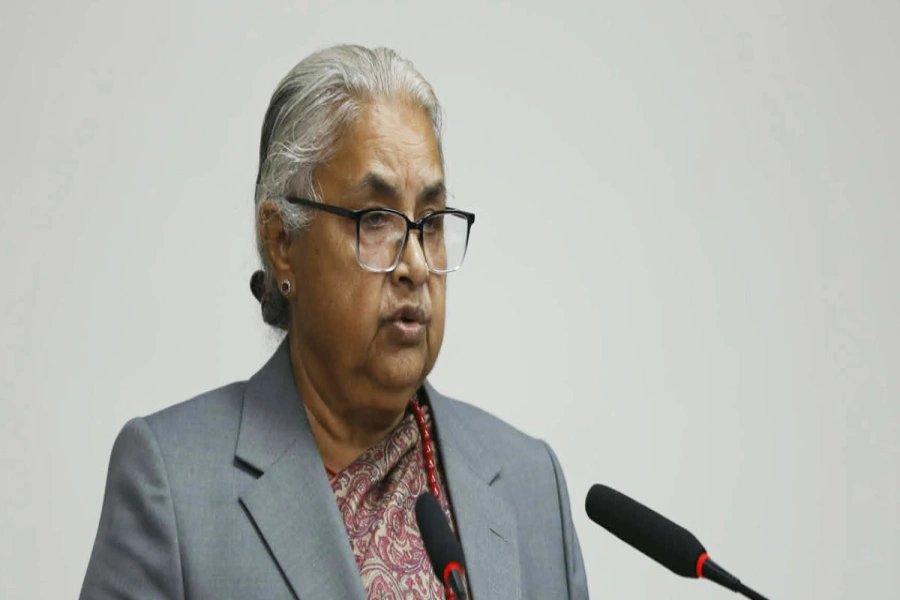
"I have been insisting that the bill should be endorsed through maximum possible consensus through dialogue," Speaker Onsari Gharti told Republica.
She said parliament is ready to cooperate with the government to endorse the laws for implementing the constitution, with maximum possible consensus among the major political parties.
However, former speaker of parliament and then chairman of the constituent assembly (CA) Subas Nembang believes that increasing polarization among the political forces that had earlier worked together for the new constitution has proved a major challenge in the implementation of this constitution. “I am worried to see increasing distance among the major political parties as their consensus is a must for its implementation,” Nembang told Republica. “However, I am hopeful that the parties will come together sooner or later.”
Major political parties stood together during the promulgation of the new constitution but divisions surfaced among the Nepali Congress, CPN-UML and UCPN (Maoist). The three major parties stood divided over the formation of the new government and the election of the president, vice-president, speaker and deputy speaker. They also disputed among themselves while registering the constitution amendment bill and over other issues right since the promulgation of the new constitution.
Though the government announced a constitution publicity campaign to correct "misleading information" about the new constitution, agitations in Madhes have not subsided. At least 51 people have already lost their lives so far.
The Ministry of Federal Affairs and Local Development has been entrusted with launching the publicity campaign. Simultaneously, the Ministry of Law and Justice is also running an education campaign in various ethnic languages to inform citizens about the main features of the new constitution .
According to the ministry, it has concluded the campaign in 69 districts so far.
Some critics, however, accuse the government of breaching the spirit of the new constitution including 40 ministers in the government in contravention of Article 76 which states that the numbers of ministers shall not exceed 25.
Related story
Desperate search for missing girls as nearly 80 dead in Texas f...