Both the print and electronic media are crowded with reports about a swollen Seti River, water from which overflowed following incessant rainfall last week, and submerged a large section of Ramghat, Hemja and Gaighat settlements in Kaski.
The flood water not only entered the residential areas of these localities but also washed away many houses, displacing several locals. People living in the area believe this has been the biggest inundation in over a decade. Earlier, on May 5 this year, flash floods in Kaski District killed at least 50 people. Dozens are still missing and many more have lost their homes, businesses, crops and livestock.

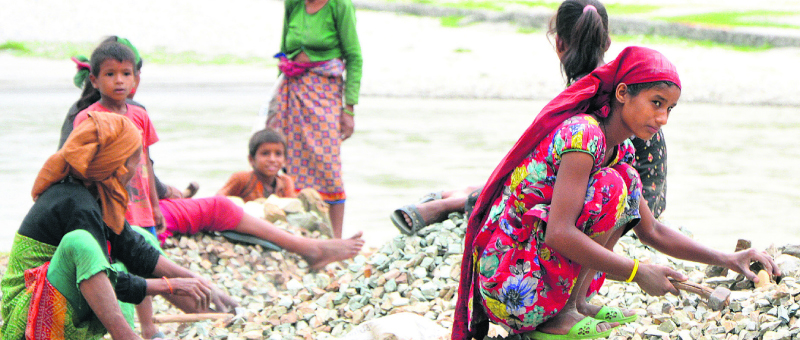
When I follow these headlines, I often wonder how many of these lost lives belonged to women and how would other women’s lives have changed after experiencing such a tragedy. This is not to say a woman’s life is more valuable than a man’s, but it is true that a woman’s life is different, especially the further she lives from a city, a school, a health clinic, or a water source. A woman’s life, particularly in Nepal and other parts of South Asia, faces unique challenges and vulnerabilities, and these are growing as the effects of climate change are now felt closer home.
I have travelled extensively, listening to experts (mostly men) talk about how rising global temperatures will affect the quality and quantity of our water resources, agricultural productivity, health, and then our peace and order and so on. This is in addition to changing weather patterns that will bring more frequent floods, droughts, landslides, irregular rainfall patterns and stronger storms.
A recent research has helped highlight the impacts of climate change on public health in Nepal. The study shows a definite trend in climate-sensitive diseases, the incidences of which rise in certain months and certain places of the country. Another research has correlated increased incidences in climate-sensitive diseases to fluctuations in rainfall patterns. This quantitative analysis provides a reliable picture that policy makers and markets need to respond to with preventative health care measures and adaptation actions.
A recent World Health Organization report titled ‘Gender, Climate Change and Health’ also presents evidence of how women’s experiences of climate change are different from those of men. Globally, women and minorities are more likely to be injured and killed than men in natural disasters. The lower a woman’s socio-economic status, the higher her risks of death, injuries and other adverse impacts. Women think and act differently in relation to climate change, which affects their vulnerability.
The question is, what can Nepal do better to understand the vulnerabilities of women with respect to climate change in a more effective way?
To begin with, the Nepal government should integrate gender analysis and participation with both planning and practice. Gender analysis will help decision makers, designers and implementers understand how gender norms, roles and relations affect men and women in activities such as obtaining and using fuel, energy and water, which in turn helps us to design or know which adaptation actions are most appropriate for Nepali women.
Gender analysis should be extended to the cost-benefit analysis of projects, especially those that must consider which options to fund for climate adaptation and mitigation. The recent ADB study, which included analysis of impacts of climate change on health in Nepal, noted that health and gender benefits are often stated in the narrative of project documents as benefits, but rarely accounted for in the cost-benefit economic analysis. As a result, we never really know how economical or beneficial an option might be for women, and the wrong choices may be made.
The Nepal government has taken steps towards greater inclusion of gender perspectives. Ministries, during their policy review and reformulation procedures, mainstream gender perspectives into their acknowledgements of climate change impacts in their respective sectors. This is certainly critical in devising useful and all-encompassing policies.
In addition to inclusion of gender perspectives in policy formulation, female participation in development should also become a new norm. Women are not just vulnerable to climate change, they are also agents of change and they should be actively involved in development choices, project designs, implementation, and monitoring.
The second action should be to ensure the Central Bureau of Statistics is able to collect, analyze and report sex disaggregated data. Data is crucial in understanding the degree of gender differences in a society and how climate change may impact women differently. Sex disaggregated data from disasters would also help understand mortality and morbidity rates. My understanding is that gender disaggregated data is unavailable in most of the developing countries but this should not be an excuse for us to not improve our systems in Nepal.
A third action—for long-term and sustainable development—requires a policy and market shift to a more preventative health care system and strengthening of health information and disaster responses systems to strategically address the risks and impacts that women face. Health is the strongest link between climate change and gender. If we want to improve women’s resiliency to climate change impacts, then we must improve the health systems they use. The areas where women can be impacted are many, and as primary laborers and caregivers yet often less educated and culturally restricted, their health suffers first when there is hunger, epidemic, water-related infections. Also, when men in their household migrate and when household stress leads to domestic violence, it is women who suffer the most. However, it is important to understand that their health and safety is essential to the well being of their families.
A woman faces unique challenges and vulnerabilities that are growing as effects of climate change are now felt closer home.
These three actions—which address the underlying causes that can put women at a disadvantage when it comes to climate change and natural disasters—will certainly boost the government’s broader human development agenda. These causes of vulnerability include poverty, lack of empowerment, weak health care, lack of education and social safety nets and gender inequity.
From the gender perspective of climate change, Nepal could either lose or gain much depending on how seriously we accept and act on the implications of climate change and disasters on women. Increased vulnerability to climate change and greater impact on their health and safety should not become women’s fate. Though it is unfortunately a reality today, it is certainly not something we cannot change.
The author is joint secretary in the ministry of Environment, Science and Technology
Related story
#Sexploration Episode 3 Discussion on Gender Markers