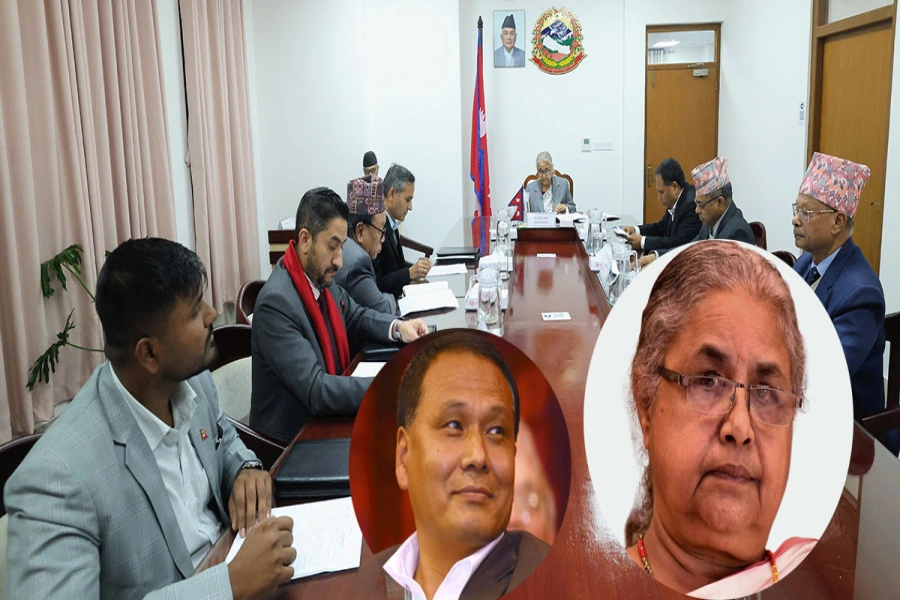
KATHMANDU, Dec 9: Nearly three months after assuming office, Prime Minister Sushila Karki continues to shoulder the responsibilities of eight ministries, including the Office of the Prime Minister and Council of Ministers (OPMCM). Civil servants across these ministries say the absence of departmental ministers has made it difficult to take ministerial and policy-level decisions, leaving several key tasks stalled.
Karki currently oversees the OPMCM, the Ministry of Foreign Affairs, Defense, Water Supply, Women, Children and Senior Citizens, Forests and Environment, Culture, Tourism and Civil Aviation, and Labor, Employment and Social Security. Appointed on September 12, she has already expanded her Cabinet three times—on September 15, September 22, and October 26—but still retains seven ministries under her control.
While Karki regularly attends meetings at Singha Durbar, officials say she spends most of her time inside the OPMCM and rarely visits the other ministries she heads. As a result, ministerial chambers in those ministries remain quiet, with empty chairs and untouched nameplates. When files requiring ministerial signatures pile up, joint secretaries and senior officials must carry them to the prime minister’s office.
Karnali: Number of ministries reaches eight

With no departmental ministers to guide daily operations, employees across multiple ministries say they have far less workload than usual—and that important decisions are being delayed.
“There is a clear difference when a departmental minister is present in the office versus when we have to take every file to the Prime Minister’s Office,” said a senior official from one of the ministries under Karki. “Meeting the prime minister is also not easy. Given the number of responsibilities she has, it is natural that access is limited.”
A senior official from another ministry echoed this concern, noting that the absence of ministers has slowed progress.
“When the ministry needs to make important decisions or move projects ahead quickly, not having a departmental minister creates complications,” he said. “Overall performance has taken a hit.”
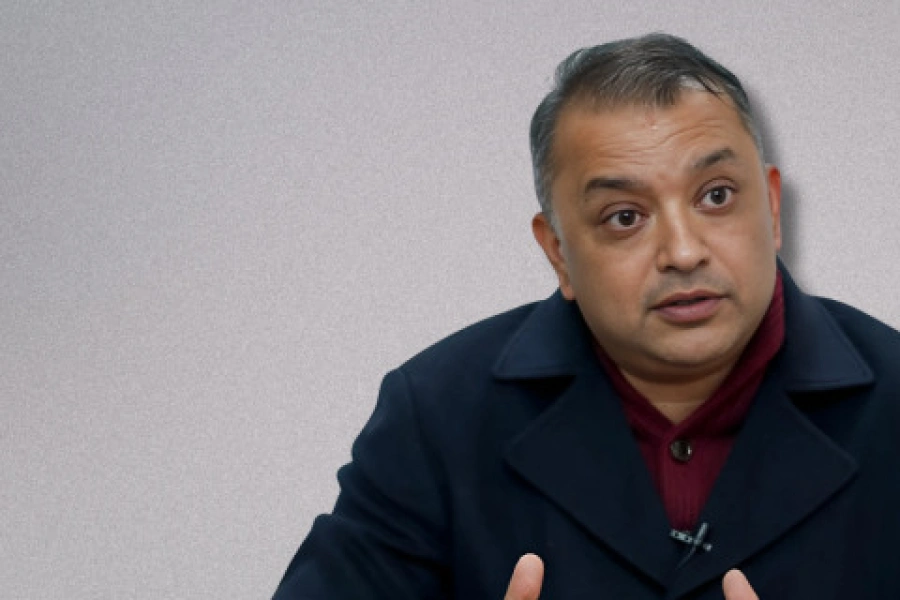
Like Karki, Kulman Ghising—tasked with three major development-heavy ministries—is also struggling to keep up with the workload. Ghising currently leads the Ministry of Energy, Water Resources and Irrigation; the Ministry of Physical Infrastructure and Transport; and the Ministry of Urban Development. He also handles certain responsibilities from the Ministry of Water Supply. A substantial portion of the national development budget for roads, infrastructure, buildings, energy and irrigation lies within these ministries.
“Usually he (Ghising) comes to our ministry only once a week—and even that for just two or three hours,” said an employee at the Ministry of Urban Development. “How much can be accomplished in such a short time? A lot of our work is stuck because there is no full-time minister.”
Meanwhile, Minister Anil Kumar Sinha has also been assigned three important ministries: Industry, Commerce and Supplies; Law, Justice and Parliamentary Affairs; and Land Management, Cooperatives and Poverty Alleviation.