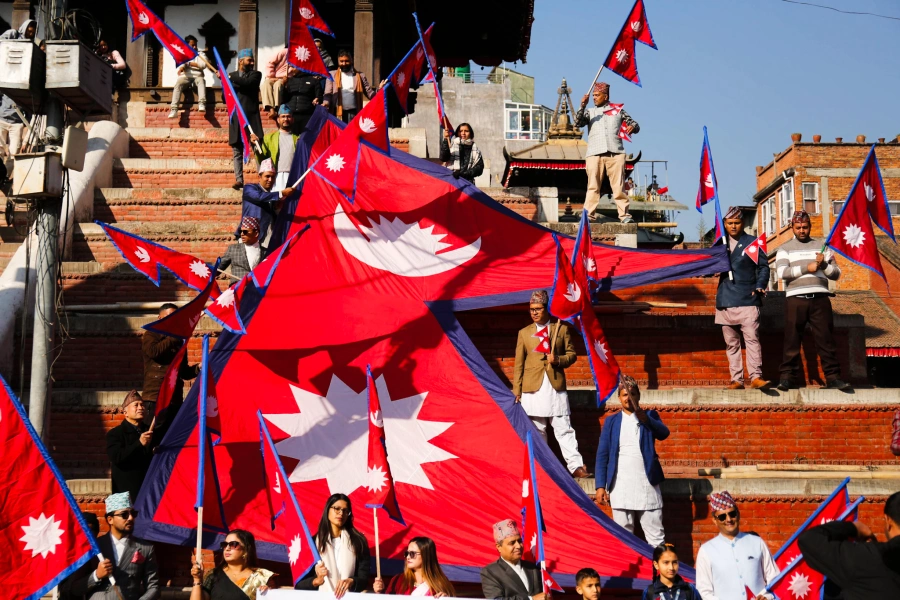
The cabinet´s decision means that President Dr Ram Baran Yadav will not be conferring any state medals this year on the occasion of Republic Day, which falls on Sunday. [break]The interim constitution entrusts the president with honoring those who have made an outstanding contribution to the nation, people and society, on the occasion of Republic Day. The recipients are recommended by the cabinet.
A sub-committee headed by Deputy Prime Minister Bharat Mohan Adhikary and including the home minister, the home secretary and others had recommend very few names for state medals this year.
Various ministries, the president, vice-president, prime minister, ministers, secretaries and several others had submitted a total of 250 names to the home ministry for approval by the sub-committee.
Out of the 250 names submitted, the sub-committee approved only 25 for the state medals.
"This is probably the first time that the state is not honoring anyone with state medals," said a source, adding, "The cabinet decided not to accept the sub-committee´s recommendations, saying its expectations were not addressed by the latter."
Last year, the government had decided to honor some 300 individuals with state medals on Republic Day. But the government´s decision to honor some controversial figures was widely criticized.
"We have received more than 250 names from various ministries, government offices, corporations, the Nepal Army, Nepal Police, Armed Police Force, VVIPs and others, based on a quota systems," said the source, adding, "We, however, selected only a few people for the state medals on the basis of their extraordinary contributions. The cabinet didn´t like the sub-committee´s selection."
Before the country was declared a republic, the king used to distribute state medals to various individuals on the occasion of Democracy Day.
However, the country could not confer medals on anyone in 2066 BS, the year the country was declared a republic, due to lack of a relevant law. The government last year introduced such a law. Government employees, army and police personnel, scholars, university teachers, professors, intellectuals, justices, journalists, poets and writers, civil society leaders, human rights activists, lawyers, judicial staff, industrialists and others as approval by the sub-committee are supposed to get the medals for their outstanding work.
The medals are categorized into first, second, third, fourth and other classes. Nepal Ratna is considered the highest medal.
Related story
Nepal bags four gold medals in Chemnitz Open Karate Championshi...