KATHMANDU, July 20: During a meeting, King Mahendra shared an important experience with us. He said, when his father (King Tribhuvan) was called to Delhi by Indian Prime Minister Jawaharlal Nehru, he made them wait for over an hour in the drawing room.
He said, "Look, in order to get rid of India´s hegemony, we must seek external support. But if we think of establishing ties with China, no one is ready because all the politicians, bureaucrats and army generals are Indian puppets.”[break]
It was in 1952 when Crown prince Mahendra in Delhi preparing to send his father to Switzerland for medical treatment. He had also succeeded his father as the chairman of Royal Council.
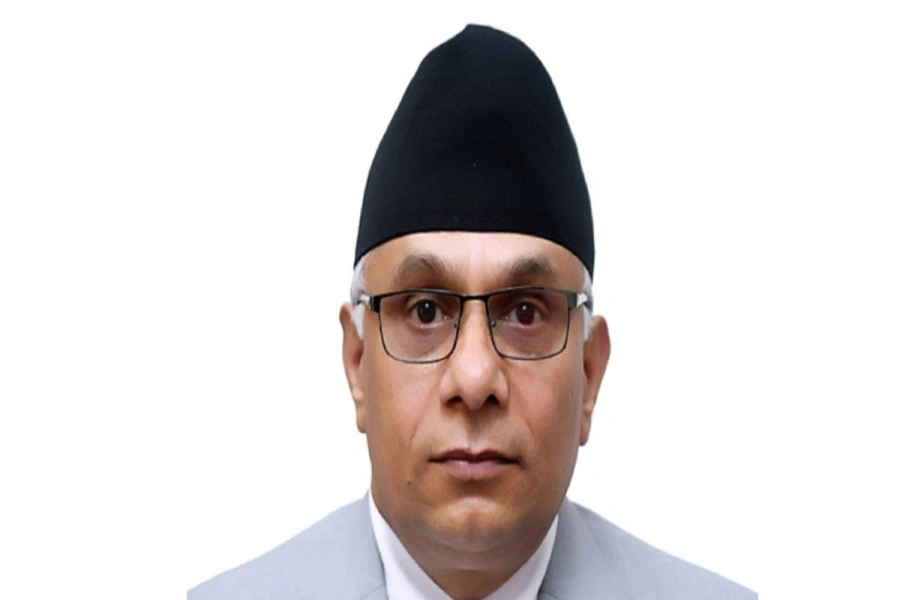
Khagendra Jung Gurung
He knew me as a communist as I had associated for a long time with Acharya Nerendra Dev. Being a communist, a warrant to arrest me was issued. Police, who came to arrest me, in Manang were sent back by the villagers. Later, Indian military mission also came to my village to arrest me but I took shelter for a year in Tibet´s Shingwa village from where I left via Kalimpong for Delhi.
In New Delhi, an Indian astrologer helped me to establish contact with Crown Prince Mahendra. He withdrew my arrest warrant and both of us returned to Kathmandu.
Crown prince Mahendra was looking for someone who could help him establish diplomatic ties with China. He approached me, as no one was ready to talk to the Chinese.
He wrote a letter to Mao Tse Tung (Mao Zedong). The plan was to send me to China as Mahendra´s secret emissary. China had already occupied Lhasa. The People´s Liberation Army (PLA) had even reached the Nepali borders. In Tibet, a reign of terror was being unleashed - extortion, intimidation, and arrests. One had to move in groups; otherwise, it was impossible to walk alone. There was no food, no accommodation. One had to carry food from Nepal. I gathered some locals and formed a team of 60 people with some 30 guns.
We entered Tibet, and on the first day, we spent the night on the banks of the Tsangpo River (Brahmaputra in India). It was a seven-day trek from the Larke Bhanjyang (mountain pass) in Nepal. We cross the river and entered Tibet via Manang, and no army personnel helped us. They said they could do nothing as no one among them spoke Chinese. I wasn´t given any money, either. I went there on my own expenses as I had felt that owed something to King Mahendra.
I introduced myself to the Chinese army garrison stationed on the other side of the Tsangpo. Then I was taken in an army vehicle to Lhasa. I spent a month there before proceeding to Peking. I was taken care of by the Chinese; I was given food and accommodation.
Later, I came to know that Mao did not speak English. So he had arranged for a Nepali interpreter. He had an Indian Chinese from Darjeeling brought over whom he later granted Chinese citizenship. He was a young man. It took the Chinese government one month just to complete the process of having the Chinese from Darjeeling in Peking (Beijing).
It took us three days to reach Peking in a Dakota (DC3) aircraft. First, I was flown to Xinjiang Province, and finally Peking. On the following day of my arrival, I met Chou En-lai (Zhou En Lai).
I did notice that the Chinese, too, were exploring ways to establish diplomatic ties with Nepal. One main reason was the Dalai Lama´s recent escape and flight to India. And the Chinese knew that Nepal had strong ties with India. Until then, China had established no contact with any Nepali leader.
I noticed Mao spoke only Chinese. Chou was fluent in French. So they wanted someone who could speak Nepali well. Thus, the Chinese had looked for a Nepali-speaking interpreter, as mentioned above.
I told Chou that I was sent by Crown Prince Mahendra and showed his letter to him. He, instead, advised me to hand it over to Mao. Mao was staying on the outskirts of Peking in an ordinary house. It took us an hour to reach his residence.
Crown Prince Mahendra had written in his letter, "We are close to India culturally and religiously; we do have strong ties with heads of India´s princely states as well. But the abolition of these princely states has posed a threat to Nepal, too. As a result, my intention is to bring to power those Nepali leaders who do not have any ties with Indians.
For this, your support for Nepal is essential. Such a change of political guards will help me establish strong ties with the People´s Republic of China. I wish to adopt the Swiss model of political system. So I fervently seek your support. And for this I am ready to sacrifice even my throne and become a Communist."
After reading the text, Mao praised Mahendra.
He said, “Your King´s sacrifice for the people is incredible even though he is an aristocrat.” Mao assured me that he was ready to help Nepal at all costs. But he reminded me of the uncertainty of a politically sovereign Nepal. He advised me that an economically strong Nepal would help itself emerge stronger. So to make Nepal economically stronger, we should take into account four things - coal, iron, petrol, and electricity.
"We are still consolidating our strength," Mao told me. "If you invite the USSR to explore coal, iron and petrol, we will help you build roads. If you own these four natural resources, you will naturally exert your strength."
With this advice, Mao handed me a letter and I returned to Nepal. But before my arrival, a Chinese delegation had already reached Kathmandu. By then, King Tribhuvan had passed away.
King Mahendra was clever. He said the Chinese delegation had come to Nepal to discuss the levy Tibet was paying to Nepal.
In 1962, the brief but bitter war between India and China changed the political spectrum.
India felt humiliated. They felt that King Mahendra might tilt toward China which would pose a threat to India. Nehru came to Nepal to inaugurate the Koshi Barrage. He expressed his willingness to extend all kinds of support to Nepal out of fear of Nepal´s pro-China stance. When King Mahendra proposed to Nehru to open the Chicken Neck (the narrow stretch of West Bengal in its north) for Nepal´s trade with East Pakistan, Nehru was ready to accommodate the proposal.
Simultaneously, the Chinese had also trusted King Mahendra.
Another important but unfortunate incident was that when I met, on my way to Kashmir, Din Dayal Upadhya, who had succeeded Shaym Prasad Mukherjee as President of the Bishwa Hindu Janasangh which was later renamed Bharatiya Janata Party.
In India, rumors had it that King Mahendra had become a Communist. I happened to meet Upadhya at a hotel in Jammu on my way to Kashmir. He asked me whether I was close to King Mahendra. He also explored whether Nepal could be part of India.
Upadhya then suggested, "If King Mahendra thinks it can be possible, he, instead of being a dictator of a small kingdom, could be the emperor of the whole India. Why don´t you convey this message to him if you are so close to him?"
On my way back to Nepal, I met a couple of Indian leaders, including Communists. Upon my return, I promptly conveyed the message to King Mahendra. He looked elated. I had never expected that he would be so happy.
He had already committed that he would be ready to be a Communist in his letter to Chairman Mao.
Then King Mahendra handpicked Khadga Bahadur and Sailendra Kumar Updhaya in the ministry and sent a delegation to New Delhi to further probe Din Dayal Upadhya´s ´suspicious´ proposal.
I came to know of it when Indira Gandhi later shared this information with me. She said, “Your King had sent such a proposal to India.” She also wondered, “Do you think he is a nationalist?”
Indians just wanted to create distrust between the Chinese and King Mahendra. And this incident created what New Delhi was brewing all along.
As told to Prateek Pradhan and Puran Pd Bista.
Gurung, 82, was the Minister of Health during Tanka Prasad Acharya´s government.
Related story
Mao's grandson, rumored to be dead in North Korea, makes public...


-1200x560-1774606010.webp)