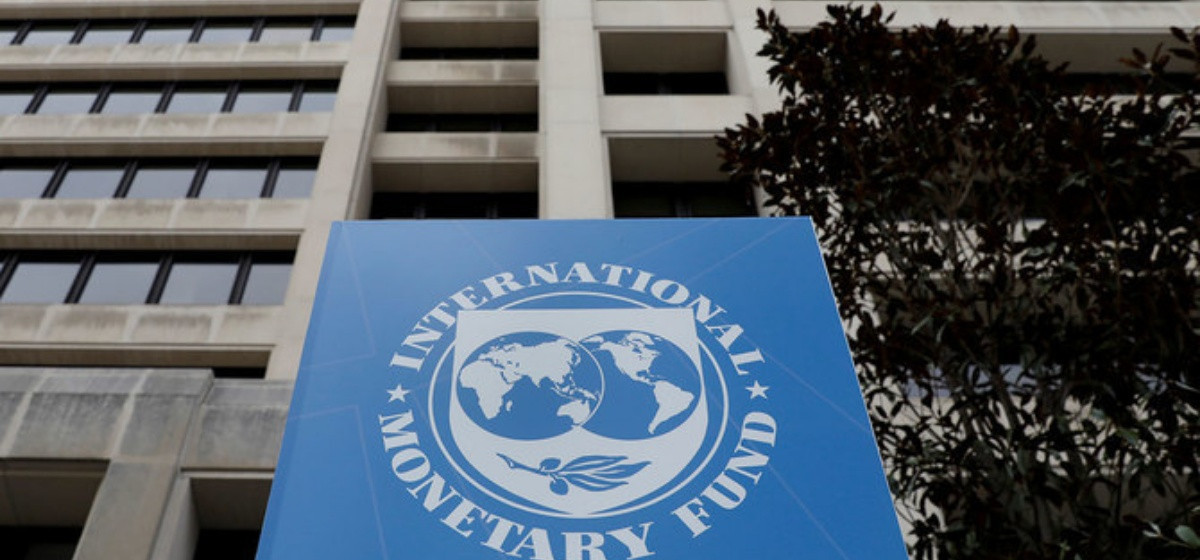
The fresh development surfaced after top IMF officials responded positively to the government´s request to reopen the Nepal office. [break]
The government had requested IMF to re-establish the Resident Representative office mainly arguing that the country is in dire need of close economic surveillance and prompt policy inputs to deal with possible financial instability.
Finance Minister Barsha Man Pun had made such a request personally when he met with top IMF officials during the annual meetings of the IMF and the World Bank Group in September.
“They responded positively. Hence, to formalize the process, we have also sent an official request letter to the IMF,” said a senior official at the Ministry of Finance (MoF).
MoF sent a request in this connection in October and officials at Nepal Rastra Bank (NRB) said the IMF is expected to formally respond to it anytime soon.
IMF started overseeing Nepal operations from New Delhi and limited its presence by maintaining a locally staffed office in the NRB from November 1, 2010. It attributed its decision to IMF´s reorientation towards a more regional focus and efforts to strengthen surveillance with an increased focus on multilateral aspects and budgetary considerations.
Nepal had requested for the revision in decision mainly referring to huge deficit in balance of payments it suffered about a year ago and upheavals seen in the financial sector.
In its request letter too, MoF has argued that the country needs IMF´s expertise to monitor and deal with adverse impacts that global financial crisis, commodity price volatility and trade imbalances can have on economy.
Problems seen in domestic financial system also make it imperative that the country´s economy and financial system are monitored closely for prompt remedial action.
A knowledgeable source said that the inter-governmental organization too agrees that Nepal´s case is sensitive.
“The IMF Delhi office has worked effectively and has been very responsive to our calls so far. But placement of a Resident Representative and presence of IMF office in the country will render the whole process more efficient and prompt,” said a NRB source.
Under Surveillance, IMF monitors economic and financial developments, and provides policy advice, especially to prevent economic crisis. It also provides credit facility to countries to overcome difficulties related to balance of payments and implement policies addressing structural problems and reducing poverty.
IMF also provides technical assistance in areas of its expertise, which among others include strengthening, preventing and resolving crises in the financial system. It also supports anti-money laundering drive.
Related story
IMF reaches staff-level agreement on 3rd review under Extended...