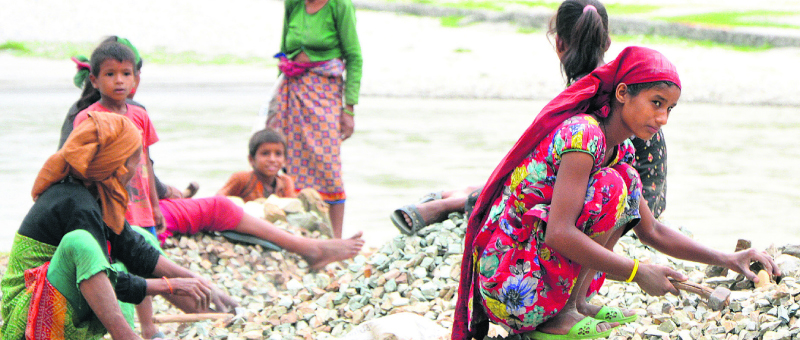
"Equality for women and girls is not only a basic human right, it is a social and economic imperative. Where women are educated and empowered, economies are more productive and strong. Where women are fully represented, societies are more peaceful and stable,” says the United Nations (UN) Secretary General Ban Ki-moon. In our own tradition, Manu in his most celebrated treaties, Manu Smirit, said hundreds of years ago that wherever women are held in esteem, the Gods are pleased (yatra naryastu pujyante, ramante tatra devata; yatrai tastu napujyante sarvastatra afalaha kriyaha).
World Telecommunication Day has been celebrated annually on 17 May since 1969, marking the founding of the International Telecommunication Union (ITU) and the signing of the first International Telegraph Convention in 1865. It was instituted by the Plenipotentiary Conference in Malaga-Torremolinos in 1973. However in November 2005, the World Summit on the Information Society (WSIS) called upon the UN general assembly to declare 17 May as World Information Society Day to highlight and focus on the importance of Information and Communications Technologies (ICTs). The general assembly then adopted a resolution in March 2006 to celebrate World Information Society Day on 17 May every year.

In November 2006, the ITU Plenipotentiary Conference in Antalya, Turkey, decided to celebrate both events on 17 May as World Telecommunication and Information Society Day (WTISD). The theme of this year’s WTISD is ‘Women and Girls in ICT’, which aims to ensure that this so far repressed section of the world’s population is now given equal opportunities. The purpose of WTISD is to help raise awareness about the various possibilities and benefits of the Internet and other information and communication technologies (ICT) to societies and economies, as well as of ways to bridge the digital divide.
ITU has made significant efforts in bringing global attention to this theme. ITU has declared the annual World Telecommunication and Information Society Award will be presented to eminent personalities who have drawn attention to women rights and used ICTs to empower them. It is imperative that every member state as well as the stakeholders of ICTs emulate the efforts made by ITU in recognizing those involved in empowering women in their respective capacity through appropriate innovative initiatives.
On the occasion of World Telecommunication and Information Society Day 2012, ITU has called upon all stakeholders (policy makers, regulators, operators and industry) to promote the adoption of policies and strategies that will promote ICT opportunities for women. The use of ICT has immense potential in achieving the goals of gender equality, poverty reduction and overall socio-economic development of our nation. It can potentially address burning national issues—such as inclusion and empowerment for the excluded and marginalized sections.
Most of our law and policy makers are not experts in the field of ICT. The stark lack of exposure and willingness to understand the myriad of possibilities that ICTs can bring to a country like ours has meant little or no focus on it in our policy arena. It is unfortunate that most of the donor funded ICT development projects and programs could not be implemented due to the reluctance and incompetence of our bureaucracy. Experiences with the World Bank funded telecommunications sector reform project or ADB funded ICT development project have been bitter.
‘ICT is an essential tool for the social and economic development of women and girls. Information and communication technologies (ICTs) can provide women and girls an education and job training, promote literacy, improve access to health care, enable the exercise of legal rights and participation in government. Investing in women has a multiplier effect. Women reinvest in their families and communities. Accelerating broadband and ICT provision to women and girls will promote gender equality, empowerment and social and economic development of both men and women.’ Such statements are not mere hypothesis but have been proved with experiences around the world.
The preliminary results of the 2011 census indicate women account for 51.44 percent of the total population in Nepal. It implies that this gender should not be left behind in the digital revolution. The digital divide includes a gender divide, especially for rural and marginalized women.
Gender equality is a basic human right enshrined in the UN Charter, and it is one of the main objectives of the UN Millennium Development Goals (MDGs). ICTs are tools that can help accelerate progress towards achieving this target, and it is for this reason that ITU Council proposed that we focus our efforts this year on this theme of using the power of ICTs to provide new digital opportunities to end discrimination.
WSIS declared its global commitment to ensuring women’s empowerment and full participation in the information society and to use ICT as a tool to promote gender equality. ICTs and related e-applications are key instruments in achieving the Millennium Development Goals.
ICTs have the potential to address some of the problems currently faced by women who wish to further their education through open and distance learning. There is evidence that under adequate conditions, ICTs increase the quality of basic and secondary education for girls. The learning outcomes seem to be greater for girls because when girls connect to the Internet, they focus more on academic related issues than on leisure. The findings suggest that there was more impact on communication and reasoning skills of girls than that of boys. When ICTs use local languages and incorporate a strong visual component, they have the potential to be an effective educational tool to reach women with limited literacy.
The use of ICT has immense potential in achieving the goals of gender equality, poverty reduction and overall socio-economic development of our nation.
The following measures need to be adopted. One, gender mainstreaming, which ensures that an organization’s program and policies include gender analysis from inception and that strategies to ensure gender equity are implemented in all facets of the organization’s operations. Two, adopting gender-sensitive program design. Gender sensitive program design takes conscious steps to remove barriers to women’s participation and actively encourages women’s involvement.
Three, engendering ICT and policies, which means developing an ICT policy and action plan that makes explicit reference to women to ensure there is a systematic effort to develop strategies and activities that focus on the needs of women. Four, providing women with access to equipment. Five, providing gender-sensitive training, which is an essential component of any effort to support the education of the female gender ICTs.
Six, ensuring relevancy by introducing relevant content that pertains to their lives. Seven, promotion and information sharing to spread awareness among women about the potential benefits of using ICTs for education. Media as a transmission vehicle to raise awareness and knowledge about how ICT can empower women can be tapped extensively.
ICT sector stakeholders should pave the way by providing avenues of advancement to professional women at the highest echelons and by encouraging young women to seek new opportunities within the sector.
The author is Director, Nepal Telecommunications Authority
The following measures need to be adopted. One, gender mainstreaming, which ensures that an organization’s program and policies include gender analysis from inception and that strategies to ensure gender equity are implemented in all facets of the organization’s operations. Two, adopting gender-sensitive program design. Gender sensitive program design takes conscious steps to remove barriers to women’s participation and actively encourages women’s involvement.
Three, engendering ICT and policies, which means developing an ICT policy and action plan that makes explicit reference to women to ensure there is a systematic effort to develop strategies and activities that focus on the needs of women. Four, providing women with access to equipment. Five, providing gender-sensitive training, which is an essential component of any effort to support the education of the female gender ICTs.
Six, ensuring relevancy by introducing relevant content that pertains to their lives. Seven, promotion and information sharing to spread awareness among women about the potential benefits of using ICTs for education. Media as a transmission vehicle to raise awareness and knowledge about how ICT can empower women can be tapped extensively.
ICT sector stakeholders should pave the way by providing avenues of advancement to professional women at the highest echelons and by encouraging young women to seek new opportunities within the sector.
The author is Director, Nepal Telecommunications Authority
Related story
Two-day Huawei Digital Nepal Conclave 2022


-1200x560-1781083488.webp)