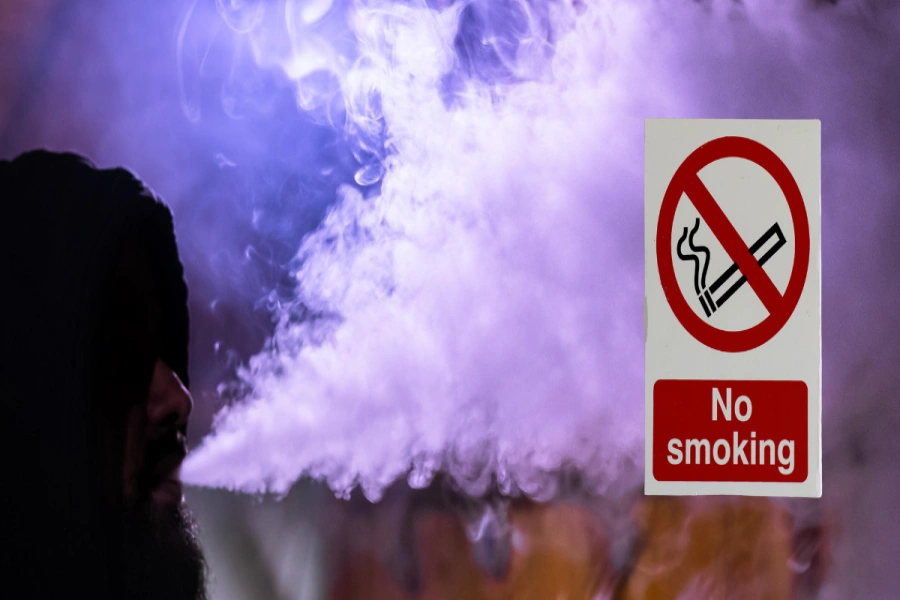
Nepal is under growing fiscal pressure. Revenues are falling short of targets, the budget deficit remains high, domestic and international borrowing is increasing, and the government is struggling to finance essential services. Yet one of the most effective and evidence-based solutions to raise revenue remains underutilized: tobacco excise taxation.
The evidence is clear:Nepal is losing billions by not raising tobacco excise.
Cheap Cigarettes, High Economic Costs
For many Nepalis, cigarettes remain easily affordable, often cheaper than a cup of tea in urban areas, making tobacco use a daily habit rather than a financial decision. This affordability is not accidental; it is the direct result of weak and inconsistent tobacco tax policy.
Tobacco use is a major public health and economic burden in Nepal.Each year, tobacco use kills around 39,200 people in Nepal, making it one of the leading causes of preventable death in the country. Recent estimates show that the total economic cost of tobacco use reached NPR 46.4 billion in FY2024/25, equivalent to around 1 percent of GDP.In comparison, tobacco tax revenues in the same financial year were only about NPR 27 billion, covering less than 60 percent of these costs.
In simple terms, tobacco is costing Nepal far more than it generates in revenue.
Low Taxes, Limited Impact
Despite this, tobacco taxes in Nepal remain relatively low. Currently, total taxes account for around 41 percent of the retail price of the most sold brand of cigarettes, far below the World Health Organization’s recommended level of at least 75 percent and significantly lower than in neighbouring countries. India’s tax rate is around 58 percent, Bangladesh’s is 73 percent, while other countries exceed 60 percent. As a result, Nepal has one of the lowest tobacco tax rates in the region.This is further reflected in the Tobacconomics Cigarette Tax Scorecard (4th Edition), where Nepal scores only 1.25 out of 5, well below the average for its region, income group, and the global average- highlighting substantial room for improvement in Nepal’s tobacco tax system.
This gap has real consequences: low taxes keep cigarettes affordable, sustaining consumption and increasing long-term economic and health costs.
Why Affordability Matters
Police seize smuggled cigarettes

What matters is not just price, but affordability: if incomes rise faster than cigarette prices, tobacco becomes more affordable. In Nepal, analysis shows that cigarette affordability has remained largely unchanged over the past several years, as modest tax increases have been offset by rising incomes. This means that even small tax increases do not reduce access, especially to young people.
This is why small, incremental tax increases are not enough.
Small Tax Increases Are Not Enough
Nepal’s own experience demonstrates that higher tobacco taxes work. In the fiscal years 2021/22 and 2022/23, the government implemented significant tax increases, around 25 percent and 17 percent, respectively,which led to a substantial rise in revenue, adding nearly NPR 6 billion over two years.
Importantly, these increases did not produce the negative effects often predicted by opponents. There was no evidence of a surge in illicit trade, no collapse in industry performance, and no major disruption to consumers. In fact, the largest tobacco company in Nepal continued to report strong financial growth during this period.
However, this momentum has not been sustained. In the last three fiscal years, increases in tobacco excise have been minimal: around 3-5 percent. As a result, revenue growth has stagnated, with only around NPR 1 billion added over this period, while government projections have consistently fallen short, with actual collections significantly below targets.
For the current fiscal year, tobacco excise revenue is projected to reach NPR 36 billion(an expected increase of around NPR 8 billion)but this target now appears highly unlikely given the modest 3-5 percent increase in excise rates and the current pace of revenue collection. In reality, estimates suggest that the government is likely to generate only around NPR 1-2 billion in additional revenue under the current approach.
This highlights a critical policy failure: maintaining the status quo is not delivering results.
What the Evidence Shows
To generate meaningful revenue and reduce tobacco consumption, Nepal needs larger and sustained increases in tobacco excise. Tobacco taxes should be increased regularly at a rate that exceeds inflation, ensuring that cigarettes become progressively less affordable over time. In particular, evidence suggests that increases of at least 35 percent are required to deliver meaningful fiscal gains, and such increases should be implemented consistently over multiple years to achieve sustained impact.
Policy analysis shows that increasing tobacco excise by at least 35 percent could generate an additional NPR 8.3 billion in revenue in a single year. A more ambitious increase of 50 percent could raise up to NPR 11-12 billion, equivalent to nearly 2 percent of the current budget deficit
These are not marginal gains; they represent significant fiscal space. Even a portion of this additional revenue could finance critical public services, from local hospitals and primary healthcare to education and infrastructure, reducing pressure on the national budget.
At the same time, higher taxes would reduce tobacco consumption. Evidence shows that tobacco demand is relatively inelastic, meaning that while consumption declines when prices rise, it does not fall proportionally. As a result, higher taxes lead to higher revenue even as consumption decreases.
Countries around the world have successfully increased tobacco taxes to boost revenue while reducing consumption. Nepal can do the same.
Debunking Common Myths
Common arguments against raising tobacco taxes are not supported by evidence.
One frequently cited concern is illicit trade, particularly given Nepal’s open border with India. However, empirical evidence shows that illicit cigarette trade in Nepal remains extremely low at around 0.33 percent of the market. Moreover, since the cigarette prices in Nepal remain lower than in neighbouring countries, there is little economic incentive for large-scale cross-border smuggling into Nepal.
Another concern is that higher taxes will reduce government revenue. In reality, both global and Nepal-specific evidence show the opposite. Demand for tobacco is relatively inelastic: meaning that when cigarette prices increase, some people cut down or quit, but most continue to buy cigarettes. Because the tax per cigarette rises more than consumption falls, higher taxes lead to higher overall revenue.
There are also concerns about the impact on low-income households. While poorer households spend a larger share of their income on tobacco, they are also more responsive to price increases. Higher prices encourage quitting or reducing consumption, leading to long-term health and financial benefits. In this sense, tobacco taxation is progressive.
Policy Solution
The policy solution is clear. Nepal should implement a substantial increase in tobacco excise; at least 35 to 50 percent and sustain these increases over time. At the same time, the government should simplify the current cigarette tax structure. Nepal’s existing system, with five different tax tiers, is complex and reduces the effectiveness of tax policy. It allows tobacco companies to shift products into lower-tax categories and enables consumers to switch to cheaper alternatives, weakening the impact of tax increases.
Moving towards a simpler system, starting with a three-tier structure and gradually transitioning to a uniform tax, would make tax increases more effective, reduce opportunities for tax avoidance, and improve revenue collection. A simpler system would also be easier to administer and align Nepal with international best practices.
In addition, tobacco taxes should be extended to emerging products such as e-cigarettes and hookah, which are increasingly used by young people. Evidence shows that a large proportion of users of these products are aged between 15 and 24, making early intervention critical.
The Choice is Clear
The choice facing policymakers is straightforward. If no action is taken, tobacco tax revenues will stagnate, cigarettes will become more affordable, and the economic burden of tobacco will continue to rise. If reforms are implemented, Nepal can significantly increase revenue, reduce tobacco consumption, and lower long-term healthcare costs.
Tobacco taxation is not just a public health measure;it is a fiscal necessity. Delaying action will make reforms more difficult as tobacco becomes more entrenched and economic costs continue to rise. Nepal cannot afford cheap cigarettes anymore and it cannot afford to ignore one of its most effective tools for both revenue and public health.
(The author is an economic researcher and consultant at Nepal Development Research Institute (NDRI). The views expressed are personal.)