

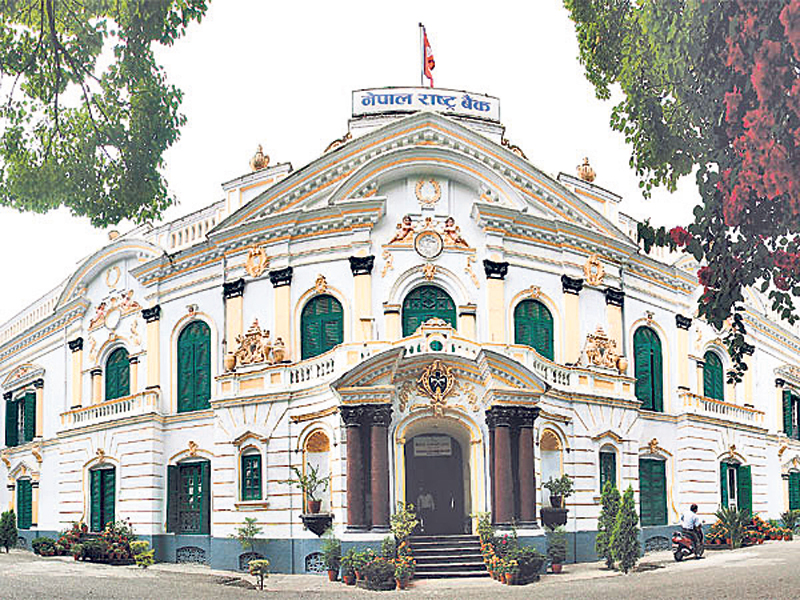
In an exclusive interview to myrepublica.com, Nepal Rastra Bank Governor Dr Yuva Raj Khatiwada said that last year´s abnormal expansion of money supply, which was over 25 percent, that fueled consumption was one of the sources of all ills that the economy is facing. [break]
Referring to continued double-digit inflation, Dr Khatiwada expressed the hope that the inflation would slowly come down to single digit soon. The inflation is being fueled by supply side of agricultural products, mainly cereal food, and that can be addressed by increasing investments in the sector, he added.
"Investment in the agriculture sector, which is less affected by political instability, power shortage and security problem, is the best option we have to propel growth, and check inflation and balance of payment deficit," Dr Khatiwada said.
Growth in agriculture sector will not only check supply led inflation but will also help to curtail huge agricultural imports, he further elaborated and stressed on the need to moderate investments like linking markets and building infrastructures.
"Appropriate policy intervention in the agriculture sector can help lower trade deficit by at least Rs 15-20 billion in next two years," he added.
Governor Khatiwada ruled out the possibility of a major crisis in the banking sector in the near future and added that the financial results at the end of the third quarters were better that what the central bank had expected.
"Though there has been marginal growth in loan loss provisions, they are obvious after a slowdown in real estate sector," he said and added, "The important thing is that there has been no remarkable change in the level of NPAs of banks."
Commenting on the liquidity situation, Dr Khatiwada said that though overall liquidity has yet to be normal, it is improving as deposits is marginally growing and disbursement of fresh loans is almost at nil.
The most reliable indication is the inter-bank lending that has gone down 6 percent from over 12 percent recorded just a few months back.
However, the banking sector is still facing credit crunch because of the high credit-deposit ratio in banks, Dr Khatiwada said and ruled out immediate possibility of reviewing ceiling imposed on realty loans.
"The good thing is that the monetary authority still has space for further monetary growth as it has been just half at 6 percent of what was last year. We will adopt the policy of easing liquidity if needed," Dr Khatiwada said, adding that the focus should be on boosting productive sector rather than fueling assets bubbles for that additional liquidity.
The governor ruled out comments that credibility of banks is eroding and added that credibility of banks is far better than what was few years back and that the NPA of banks is at a healthy level.
"Banks have not been able to attract additional deposits because a lot of money has been stuck in realty sector, stock and commodity market. The impact of higher interest rates will be seen once the sector that has absorbed huge money moves out of recession," he added.
Consultations over the possibility of relaxing the disclosure limit is going on given the difficult situation that the economy is facing, but at the same time we have duties as per the global Anti Money Laundering context reviewed in September, Dr Khatiwada said.
"Maybe we should take business community into confidence for that. We are also discussing the existing limit of Rs 3 million and Rs 5 million," he added.
The governor also said that we should be open in reviewing and discussing Nepal´s exchange regime, which is a regular process, if not directly related with the exchange rate between Nepal and India.
"The point to be noted is that the present political situation is not favorable for reviewing the peg with Indian currency as it can be reviewed only if there is a stable government," Dr Khatiwada said. But he added that there should be discussions on every policy, including exchange rate regime.
"This is not the right time to alter the exchange rate between NC and IC because they can´t bring any benefit to Nepal," he added.
Related story
Increased govt expenditure and improved BoP necessary to ease l...












-1200x560-1779450784.webp)


