Honorable Prime Minister,
As you prepare to address the United Nations General Assembly, you carry both an important responsibility and a historic opportunity. You will speak on behalf of the people of Nepal at a time when the country is confronting the devastating consequences of floods and landslides, including the tragic loss of lives, homes, livelihoods, and infrastructure.
I first wish to express my heartfelt condolences to the Nepalese and foreign nationals who lost their lives in the recent disaster and to wish a speedy recovery to all those who were injured or otherwise affected.
The destruction has once again demonstrated the extraordinary vulnerability of Nepal and the Himalayan region to climate-related disasters. Nepal has every reason to call upon the international community, particularly the world’s major carbon-emitting countries, for greater solidarity, responsibility, and assistance.
As Nepal seeks that solidarity, however, I respectfully ask you to bring another longstanding humanitarian issue before the international community: the unresolved plight of the approximately 6,500 Bhutanese refugees who remain in eastern Nepal.
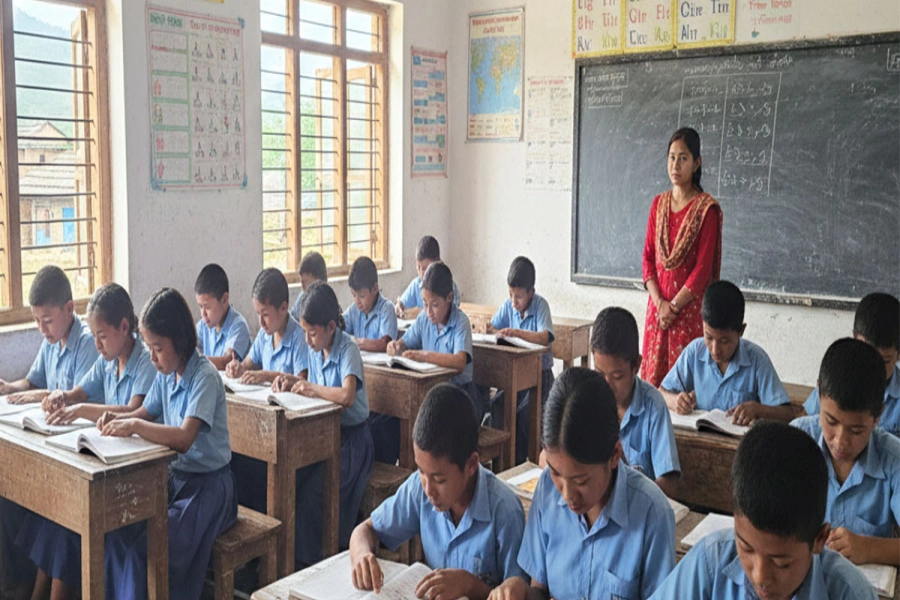
For more than three decades, these refugees have lived with uncertainty. Some were born in the camps and have known no other home. Their parents fled or were expelled from Bhutan in the early 1990s, and many have grown old waiting for a permanent solution. Some have died while waiting.
No child should have to grow up without a secure legal identity, citizenship, or a place he or she can permanently call home.
Nepal deserves international recognition for the refuge it provided to Bhutanese refugees when they had nowhere else to go. Through an international resettlement program, more than 113,000 Bhutanese refugees were resettled in third countries between 2007 and 2018, with the United States receiving the largest share.
Those of us who were resettled have not forgotten Nepal.
Former Bhutanese refugees now live throughout the United States, Canada, Australia, Europe, and elsewhere. Many have become citizens of their new countries and have established themselves as doctors, nurses, teachers, engineers, business owners, community leaders, students, and professionals. Yet we remember the refugee camps where we once lived and the country and people who gave our families shelter during one of the most difficult periods of our lives.
That gratitude has been demonstrated repeatedly. During natural disasters and other crises in Nepal, members of the resettled Bhutanese community have contributed to relief efforts. Following the recent floods and landslides, members of our community have again organized fundraising efforts to assist with rescue, relief, and reconstruction.
Our financial contributions may be modest compared with those of governments and international organizations, but the sentiment behind them is not. We remember what Nepal did for us, and many of us believe that when Nepal is in difficulty, we have a responsibility to help.
A Crisis Nepal Did Not Create
Vox Pop: Youths Expect Substantive Changes from Kathmandu’s...

The Bhutanese refugee crisis cannot be understood solely as Nepal’s responsibility.
Beginning in the late 1980s, citizenship and cultural policies implemented in Bhutan had severe consequences for the Nepali-speaking Lhotshampa population of southern Bhutan. Human rights organizations have documented discriminatory citizenship measures, arbitrary arrests and detention, serious human rights abuses, and the forced displacement of members of this community.
By the early 1990s, more than 90,000 Lhotshampas had become refugees in Nepal. The refugee population subsequently grew substantially as families remained in the camps and children were born there.
Nepal and Bhutan attempted to resolve the crisis through bilateral negotiations, holding 15 rounds of ministerial talks. Yet those negotiations failed to produce a comprehensive solution, and large-scale voluntary repatriation to Bhutan never occurred.
The passage of time does not erase this history. Nor does the successful third-country resettlement of most Bhutanese refugees mean that the underlying problem has been resolved.
Bhutan has earned international recognition for its philosophy of “Gross National Happiness.” The principle of measuring national progress through human well-being rather than economic growth alone is admirable. But genuine happiness cannot be separated from human rights and human dignity. The displacement of a large number of Lhotshampas and the unresolved question of the rights of those who wish to return should also be part of that conversation.
My purpose is not to criticize the Bhutanese people, their culture, or Bhutan’s legitimate national aspirations. It is to insist that the experiences and rights of those who were displaced should not disappear from international attention simply because their crisis has lasted for decades.
A Moment for Leadership
Prime Minister, I therefore respectfully ask you to use your address before the United Nations General Assembly to call for renewed international attention to this unresolved crisis.
Nepal should continue to encourage Bhutan to engage seriously with the question of refugees who wish voluntarily to return to their country of origin. At the same time, Nepal and the international community should recognize that many of those who have lived in Nepal for more than three decades need realistic opportunities to build secure and dignified lives.
The approximately 6,500 refugees who remain should not simply be regarded as a burden inherited from previous governments. They are human beings who can become neighbors, workers, entrepreneurs, professionals, and contributors to society if given the opportunity.
Likewise, the large Bhutanese diaspora created through third-country resettlement can serve as a valuable bridge between Nepal and the wider world.
People who once came to Nepal as refugees may one day return as investors, philanthropists, skilled professionals, visitors, and friends of Nepal.
There is also a broader moral connection between the two issues Nepal now has an opportunity to raise internationally.
Nepal is suffering severe consequences from climate change despite its relatively small contribution to global greenhouse gas emissions. It therefore has every right to ask the international community to share responsibility for the human and economic costs it is bearing.
Similarly, for more than three decades, Nepal has carried much of the humanitarian burden resulting from a refugee crisis it did not create.
In both cases, Nepal can legitimately call for international responsibility, cooperation, and solidarity.
Five Steps Toward a Durable Solution
When you address the United Nations General Assembly, I respectfully ask your government to commit itself to pursuing the following measures:
1. Create a secure legal future for refugees who wish to remain in Nepal.
Nepal should explore and establish a lawful pathway to permanent legal status and, where constitutionally and legally possible, naturalized Nepali citizenship for long-term Bhutanese refugees who wish to make Nepal their permanent home.
2. Support voluntary and dignified repatriation for those who wish to return to Bhutan.
Nepal should work through the United Nations and the wider international community to encourage the Government of Bhutan to engage seriously with refugees who seek voluntary return, with appropriate guarantees concerning their safety, dignity, legal status, and rights.
3. Seek additional opportunities for family reunification and third-country resettlement.
For refugees who have close family members already resettled abroad and who wish to join them, Nepal should work with UN agencies and interested governments to explore available family reunification, humanitarian, or resettlement pathways.
4. Protect the refugees’ freedom to choose their future.
Any decision concerning local integration, repatriation, or resettlement must be voluntary and made without fear, intimidation, or coercion. Refugees themselves must be allowed a meaningful voice in decisions affecting their futures.
5. Build stronger ties with the resettled Bhutanese diaspora.
Nepal should explore mechanisms that would enable former Bhutanese refugees who now live abroad to invest, undertake philanthropic activities, share professional expertise, and otherwise contribute to Nepal’s development. Where appropriate, the government could consider providing incentives or facilities comparable to those available to other diaspora communities investing in Nepal.
Prime Minister, the Bhutanese refugees who remain in Nepal have already waited more than three decades for a lasting solution. Their children have been born and raised in refugee settlements. Their parents have grown old there, and some have died while waiting.
How many more decades should they have to wait?
As Nepal calls upon the international community for solidarity in confronting the human and material devastation caused by natural disasters and climate change, I respectfully ask you to extend that same principle of solidarity to those who have lived for decades as refugees on Nepalese soil.
Being a refugee should not become anyone’s permanent identity.
The Bhutanese refugee crisis cannot be solved by Nepal alone. Nepal, Bhutan, the refugees themselves, and the international community must work together. But Nepal can once again provide leadership by bringing this forgotten crisis before the world and by helping create a dignified future for those who have waited far too long.
Sincerely,
Hari Khanal
The author is a member of the resettled former Bhutanese refugee community. He was resettled in Massachusetts, United States, in 2008 through the third-country resettlement program and is now a naturalized U.S. citizen.