Myrepublica.com: Why has the trash not been picked for almost two weeks now?
Moktan: The locals around the Sisdol landfill site are not allowing the garbage trucks to enter the landfill site because they feel that the government should ensure development of the area as well. Their demands include, employment for the people in the area, roads, hospitals and many other things. These are demands that the municipilaties cannot fulfill. It is a difficult situation and I don’t know how it will be solved.
Myrepublica.com: The Sisdol landfill site will be filled within two month and the next landfill site at Aletar has a capacity to hold only 14 months of garbage. What is the way of dealing with the trash in the long term?
Moktan: The only way to deal with the trash in the long term is to privatize the waste management system. The local waste collectors will not be able to handle the job either, an international tender has to be issued and an international company has to be invited immediately to make a processing plant, there is no other option.
Since the returns of a processing plant is huge, there should be interest it this area as well. Only then will there be a long-term solution. I don’t know why our government keeps on looking for landfills. We are loosing millions by not making a processing plant. The municipalities would earn a lot from it but I don’t understand why they are not interested in it and instead are losing a lot of money in waste management.
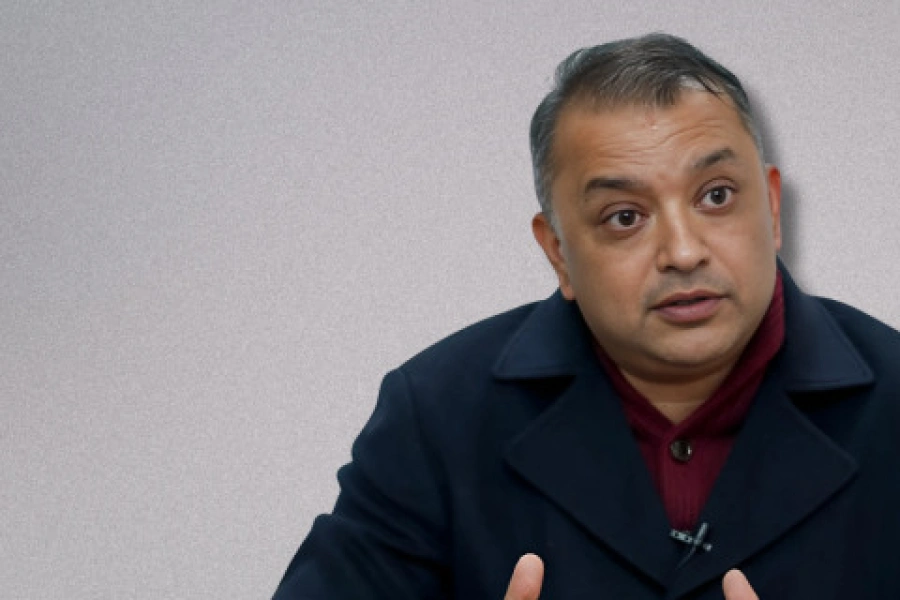
 Mandhoj Moktan
Zakaria Zainal/MyRepublica.com
Related story
A German artist turns Kathmandu’s trash into art

Myrepublica.com: I heard that there were companies interested to come here to make processing plants but they declined due to the uncertain political situation of the country in the past decade.
Moktan: That is not the whole truth. On 2000, 14 companies had bid for the contract to set up a processing plat. A French company had won the tender for a construction of a processing plant in Gokarna. I heard that the company later rejected the contract because Nepali government officials wanted to visit processing plants in France in the French company’s money. Government officials don’t seem to want to deal with the problem, they are only interested in their own personal benefit.
Myrepublica.com: So who is the culprit for the current situation?
Moktan: Political interference has always come in the way of those who wanted to work. When Keshav Staphit was the mayor, he had tried to build a processing plant with the ability to extract 300 tons of compost fertilizer per day, but again when the government changed, so did the plans and nothing materialized.
I don’t know what the Environment Ministry and the Mynistry of Local Development is doing. We can get Rs 6 million yearly just from carbon trading, if we can create biogas from the waste, but no one seems interested.
Along with corruption, the leaders also seem to lack a vision about how to deal with the problem.
Myrepublica.com: Some sectors of the valley are processing their own waste. How viable is this?
Moktan: Yes, some parts of the Valley are dealing with their own waste. I have also collected the waste of Ward No. 35 and placed them in three temporary landfills. But then again, why should locals do anything about their waste when they pay tax to the government.
But that doesn’t mean local initiative is wrong. We are in the process of setting up a biogas plant from the waste of Ward No. 35. We want to distribute the gas to homes in the area by creating a pipeline. Since this will benefit the locals, they are enthusiastic about the project.
 Mandhoj Moktan
Zakaria Zainal/MyRepublica.com
Myrepublica.com: How many more years will the people have to deal with the garbage in the streets?
Moktan: Even if the work begins today and the processing plants are built in a fast pace, the situation will remain for a period of 2 years.
Myrepublica.com: You were in Japan involved in the waste management work there. What is the difference between waste management techniques there and in Nepal?
Moktan: There is a vast difference. Here, the problem is associated with the historical and cultural way with which we view trash. Even today people feel that the work of collecting waste belongs only to people of certain castes. Others feel that the trash is not there business. There, trash is collected in a very organized way, where trash is separated at the source itself. This way, the garbage trucks have to come only once a week, saving a lot of money.
Myrepublica.com: Can you tell me about the concept of a processing plant?
Moktan: A processing plant is where the separated waste is taken there so that it can be recycled or processed into usable products. Most of the waste is recycled. In our case, 60% of our waste is organic, which has a big potential for turning it into energy.
We recycle a little bit of our plastic, turning it into black pipes. A little bit of our paper is recycled and some of the metal is sent to India, but the majority of the waste remains unused.
Trash can be turned into a profitable business, but here there is no avenue for it. I have wanted to set up a small processing plant but locals do not understand the concept and are not willing to lease the land for it, because they feel it will make the surrounding dirty. I had tried to begin a sorting and composting space but locals didn’t allow, so I started composting under the Manahara Bridge, and was able to turn the trash into 15 tons of compost fertilizer which was bought by the Dugad company. There is a big demand of compost fertilizer but locals won’t allow it. The main problem is to get land for the project..