KATHMANDU, Sept 8: A year ago, the Gen Z generation took to the streets, questioning not just the government but the old way of running the state. The government’s ban on social media was the immediate trigger, but rising unemployment, nepotism, favoritism and an unresponsive state were the deeper causes.
The anger of frustrated young people on September 8 and 9 last year quickly moved from the streets to the centre of power. What followed was more than a change of government. A new generation was brought to power carrying the heavy expectations of good governance.
The question now is whether the new generation can deliver on those expectations or become trapped in the maze of traditional politics. Political analyst Puranjan Acharya says it is too early to question the government’s intentions, despite confusion over some of its priorities.
He says the government appears eager to work and has been more active than previous administrations. “The government’s work does not fully match what young people expected, but it has not given them reason for despair either,” he says. Some areas show a lack of maturity and understanding, he adds, but there is no reason yet to doubt its intentions. He believes the government should not face a full political verdict until it has completed two years.
Acharya says questions can be raised over diplomacy, the lack of a stronger investment climate and the absence of visible progress on job creation. He urges the government to correct its weaknesses as it moves ahead. He points to the strong public response to fundraising for victims of the Bhotekoshi disaster as a positive sign.
But the government also faces a structural problem: while the House of Representatives has a younger generation, most other state institutions remain dominated by the old political establishment. One institution alone cannot provide the strength needed to change the system. He also warns that treating everything associated with the past as corrupt and immediate action could make corruption control even harder.
Five months after the new political force reached the centre of power, the core questions raised by the movement remain largely unanswered. Will those responsible for major corruption cases face action? Will young people find opportunities at home? Will the state become accountable to citizens instead of continuing to make decisions behind closed doors? The central question one year after the movement is simple: the streets changed the government, but can the government change the state?
The demand for action against the “big fish” has become the government’s biggest political test. An agreement between the interim government and Gen Z representatives had called for an independent high-level commission to investigate major corruption cases. Yet political interests and legal obstacles have slowed the process.
Who hijacked the Gen Z movement? MP BK demands investigation

The Supreme Court has issued an interim order halting the work of a five-member Property Investigation Commission formed under former Supreme Court justice Rajendra Kumar Bhandari. The commission was tasked with examining the assets of senior political office holders and high-ranking officials who have held public positions since 2006. Its legal basis has come under serious constitutional challenge.
Sociologist Dipesh Ghimire says the government has made little progress in investigating major corruption scandals. He also links the lack of improvement in employment to the growing difficulty of creating hope among young people that they can build a future in Nepal.
Ghimire says political generational change has largely taken place, with a significant number of people around 40 entering Parliament. He also sees some improvement in political integrity. The transition following the movement was managed quickly, he says, but that does not mean everything has succeeded, nor that nothing has changed. Sustainable economic and social progress, he argues, depends on strong and capable state institutions.
Within a year, Nepal moved from a street movement to a change of government, dissolution of Parliament, an interim government and elections. Such rapid political change is rare in Nepal’s democratic history. The real test now is whether reform can move as quickly as political change. Analysts say political parties must show determination, commitment to good governance and policy stability. Otherwise, political change may remain rapid while meaningful reform continues at its old, painfully slow pace.
Economic and political challenges
A study by Tribhuvan University’s Central Department of Economics has concluded that policy instability harms the economy and undermines business confidence. It recommends keeping economic policies stable for at least five years, reinforcing the need for policy consistency as Nepal seeks economic recovery after the Gen Z movement.
Analysts say the federal budget recently presented has tried to address newer areas such as the digital economy, software development, startup financing and energy trading through private sector partnerships. Yet young people’s frustration has not disappeared because administrative delays and inefficiency remain. With hundreds of thousands of young Nepalis leaving the country each year and unemployment exceeding 20 percent, Nepal still needs practical policies that create jobs at home.
The trend also suggests the country is gradually losing its demographic dividend. As much of the productive age group leaves for foreign labour markets, domestic industries and services are struggling to find skilled workers.
Digital freedom was the starting point of the Gen Z movement, making digital space and e governance central issues after the protests. Pressure has grown to make public services such as citizenship, driving licences, passports and national identity cards more accessible online. Critics, however, say the government has not fully abandoned its traditional approach of controlling digital space instead of expanding technology and digital literacy.
This reflects a continuing disconnect between the state and a technologically literate younger generation. Unless policymakers view digital space as a means of better governance and public participation rather than a threat, similar conflicts could emerge again.
The government’s biggest challenges now are creating meaningful employment, addressing the economic shock and rebuilding public trust in state institutions. Public frustration has also been fuelled by the lavish lifestyles of political leaders and their families. The first major digitally driven youth movement in Nepal, powered by platforms such as Reddit, Discord and TikTok, forced the government to lift its ban on 26 social media platforms.
Analysts say the movement sent a serious warning to established political parties. Yet building an alternative political force and institutionalising policy change require greater experience, maturity and strategic planning. Following the movement, established parties also began giving greater attention to younger politicians.
Within the Nepali Congress, CPN UML and Nepali Communist Party, demands for leadership transition and greater responsibility for younger leaders have grown stronger. Some parties have introduced quotas or set percentages for youth representation in central committees and other organisational levels. Others have begun giving younger faces priority in ministerial appointments and parliamentary committee leadership.
The growing influence of the RSP and other new political forces, along with their strong support among young voters, has also pushed established parties to bring younger people into their ranks.
Yet justice for those killed or injured during the movement remains unresolved. Although the government has pledged investigations, prosecution and justice for victims, the process has not reached a conclusion.
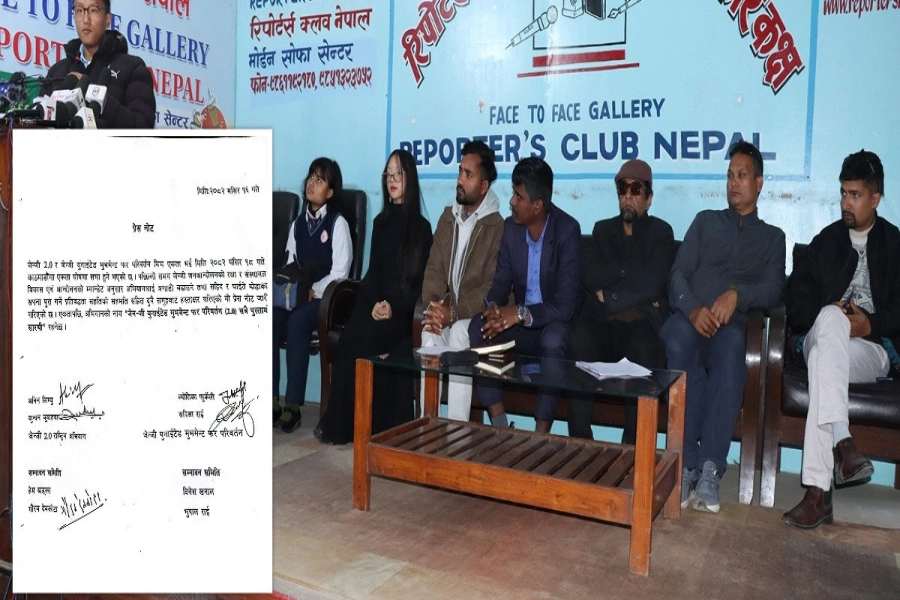
A 10-point agreement between the interim government led by former chief justice Sushila Karki and Gen Z representatives included demands for martyr status, free treatment for the injured, relief and job guarantees for victims’ families, judicial investigations, action against those responsible, an end to policy corruption, a constitutional amendment commission, digital rights and electoral reforms including a “none of the above” option.
Officials say some administrative measures have been implemented, but major policy, structural and legal reforms remain unfinished. So far, 45 people have been declared martyrs, 53 families have received Rs 1.5 million each in compensation, and Gen Z clinics have been established at 16 hospitals. The government says it has formed an integrated task force to implement the agreement, but Gen Z leaders remain dissatisfied.
The September 8 protests became a turning point in Nepal’s political history. Twenty protesters were killed when police opened fire as demonstrators moved from Maitighar Mandala toward Baneshwor.
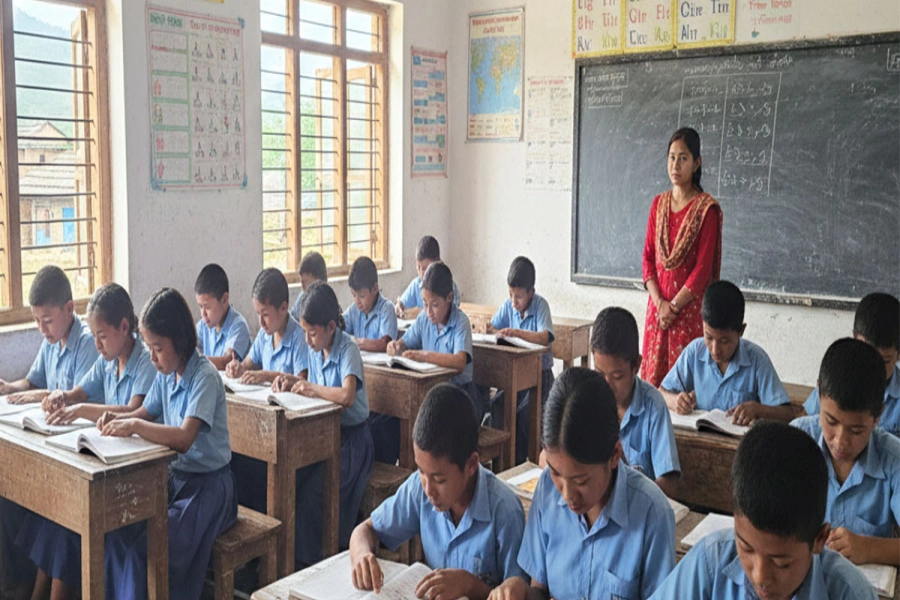
The death toll later reached 77, while more than 2,000 were injured. The movement intensified after the government violently suppressed young protesters, including school and college students in uniform, according to Gen Z leaders.
On September 9, widespread destruction followed as protesters attacked and set fire to major government buildings, including Singha Durbar, the Parliament building and the Supreme Court, as well as private residences linked to political leaders and major hotels. Unable to withstand the pressure, the government led by then Prime Minister KP Sharma Oli collapsed.
Parliament was dissolved on September 12, two years ahead of schedule, and an interim government was formed under former chief justice Sushila Karki. Backed by the movement and political parties, the interim government held elections on March 5, making good governance, corruption control and political change central issues. The election gave the new RSP nearly a two-thirds majority, marking a major shift in Nepal’s political landscape.