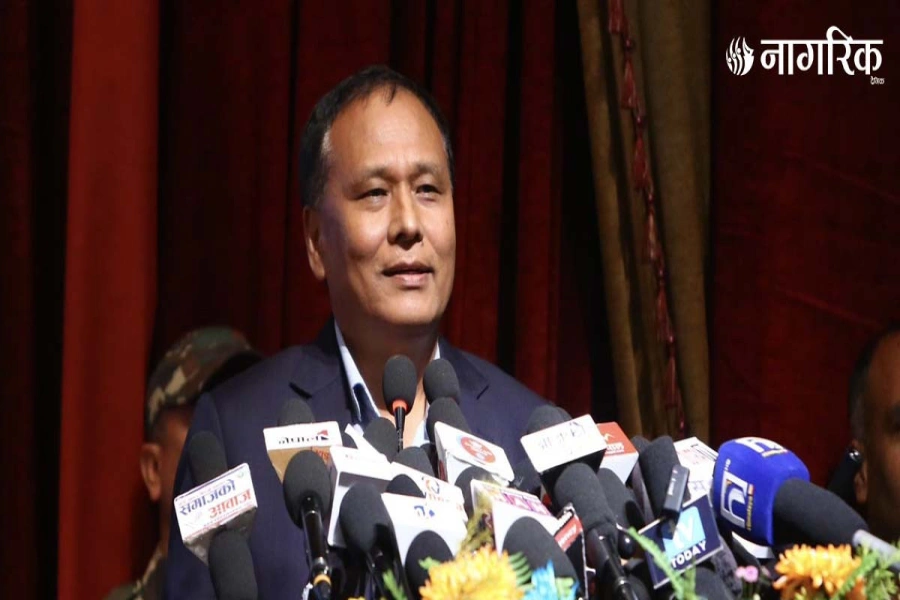
KAVRE, Aug 24: Kavrepalanchok is set to be developed as a national learning center for noncommunicable diseases, with a focus on strengthening primary healthcare services.
The chiefs of all 13 local governments in the district made the commitment during a policy dialogue on developing Kavre as a national model and learning center.
Dr Pomawati Thapa, chief of the Noncommunicable Diseases and Mental Health Section at the Department of Health Services, said Kavre’s experience in preventing and managing noncommunicable diseases has helped reduce complications linked to high blood pressure.
Under a campaign launched on September 2, 2022, patients with high blood pressure have been identified, treated and monitored through 167 health facilities across all 13 local levels. With support from local governments and the World Health Organization, 618 health workers have been trained. Around 10,000 people in the district are currently taking blood pressure medication regularly.
Under pressure

The Department of Health Services said the model program, the first of its kind in Nepal, has since been expanded to Parsa, Bara, Kailali and Ilam based on Kavre’s experience. It plans to gradually extend the program to other districts.
According to government data, more than 137,000 people die from noncommunicable diseases in Nepal each year, while around 4.7 million people are at risk of high blood pressure.
The program has stressed the need for trained health workers, protocol-based treatment, effective referral systems, patient tracking and follow up, regular medication and reliable drug supplies.
Dr Gampo Dorji, senior health policy adviser at WHO, said Kavre’s experience could provide important lessons for other districts and stressed regular patient monitoring and continuity of medication.
Bagmati Health Ministry Secretary Dr Sumitra Gautam said Kavre’s experience could serve as a national model.
Two patients benefiting from the program said regular medical care and medication had given them a new lease on life. They also called for stronger public awareness campaigns on hypertension.
A nine-point commitment paper was issued at the policy dialogue. It calls for placing citizens at the center of healthcare, expanding noncommunicable disease programs, strengthening coordination among federal, provincial and local governments, and developing a sustainable primary healthcare system.
The commitment also aims to develop Kavre as a national learning center for primary healthcare, ensure program sustainability through resource mobilisation, strengthen accountability based on evidence and outcomes, and establish local governments as leaders in transforming the national health system.
The chiefs of all 13 local governments in Kavrepalanchok signed the commitment paper. WHO, the Epidemiology and Disease Control Division, the Bagmati Ministry of Health and Social Development, the district’s 13 local governments and the District Public Health Office have endorsed the initiative.