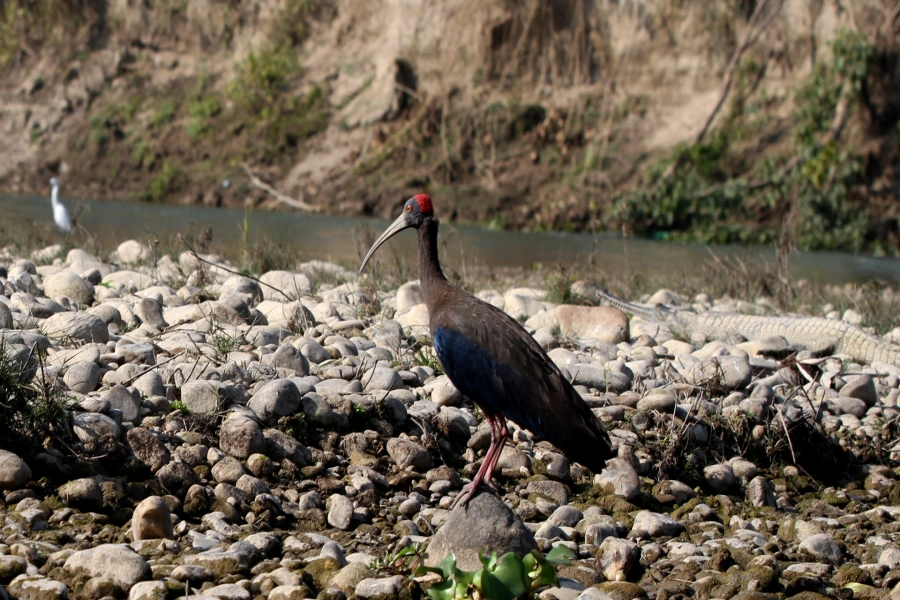
Today is the 19th World Wetlands Day. The global celebration kicked off in 1997 after the Ramsar Secretariat began marking the wetlands following the adoption of the Ramsar Convention on Wetlands on February 2, 1971. So far, 168 nations have joined the convention committing to preserve over 2,200 wetlands of international importance right around the world.As one of the parties to the convention, Nepal is all set to mark this year's World Wetlands Day with the historic declaration of a cluster of nine lakes of Pokhara valley as a Ramsar site—an addition to the already existing nine Ramsar sites in Nepal, namely Koshi Tappu, Beeshazari, Jagadishpur, Ghodaghodi, Gokyo, Gosaikunda, Rara, Phoksundho and Mai Pokhari. These are recognized as Ramsar sites for high value ecosystem they provide for people and for their biodiversity.
While the country is all geared up to celebrate the biggest event in the history of wetland conservation, there is still a lot to be done to make people aware about wetlands and its vital importance for both ecosystem and people.
The significance
The Nepali term for wetland is "simsar", which means lands with water. Lakes, ponds, rivers, swamps, reservoirs and paddy fields are all wetlands.
Wetlands are an important part of the ecosystem that regulate water and have a unique role in maintaining the food chain. Wetlands are also habitats for several species of wildlife, from aquatic animals to migratory birds, which lie within various ecosystems of the high mountains and lowland plains. Hence wetlands functions as a corridor connecting marine, aquatic and terrestrial ecosystems.
As a part of the freshwater ecosystem, wetlands play a crucial role for human life as well as biodiversity. Likewise their existence is integral to culture, religion, tourism, livelihoods and the economy.
The threats
In recent years, wetlands have been facing many threats primarily from climate change, unsustainable development and anthropogenic activities. Climate change is altering hydrological regimes and increasing the vulnerability of the wetlands whereas encroachment, overgrazing, unsustainable tourism and infrastructure development and pollution are degrading the health of wetlands.
Unsustainable harvesting of wetland resources, the spread of invasive species and sedimentation have also resulted in rapid deterioration of wetlands.
Boosting conservation
Government of Nepal with the support from World Wildlife Fund (WWF) Nepal had carried out a host of activities including preparing inventories and documenting cultural, religious and spiritual significance of the important wetlands, and supporting development and implementation of site management plans of Gosaikunda and Ghodaghodi ramsar sites. The government with the support from WWF Nepal also declared Gokyo, Gosaikunda, Rara and Phoksundho as four high altitude wetlands in 2007.
Given the importance of wetlands for people and biodiversity and Nepal's declared Ramsar sites that have put the country on the global map of conservation significance, efforts to conserve them need to be strengthened. The impacts of global climate change and population growth have directly affected water which makes the conservation of wetlands even more important. Following are the measures for Nepal to protect its prized wetlands.
Nepal should create an enabling policy environment that builds national level commitment to wetland conservation. We need to raise awareness amongst key stakeholders on the importance of wetlands and their conservation at the local and national levels. Likewise, we need to conduct studies and maintain information and knowledge-base on wetlands to better understand their conservation status. It is vital to identify, protect, restore and manage critical wetlands through the implementation of their management plans and the engagement of all stakeholders including local communities in wetlands conservation. Finally, we need to promote sustainable and environment friendly tourism that creates minimum human pressure on wetlands and their watersheds.
Wetlands are an important part of the natural ecosystem. Nepal is gifted with one of the world's most treasured water systems. In order to sustain the benefits from wetlands and their resources, for the present and the future and for people and biodiversity, Nepal needs to build synergy in conservation efforts starting with strong political commitment driven by cooperation from local, national and global level stakeholders.
The author is Program Manager of Integrated River Basin Management at WWF Nepal
Related story
World Wetlands Day being observed today