The song Anjana was singing was meant for me. I was being carried away. She reached out her hand. I was being pulled to her. Our feet moved to the rhythm of the song. Those few moments became a lifelong memory. “It’s not the length of happiness that’s important, but the moment” –I’m finally beginning to understand Anjana’s words.[break]
***
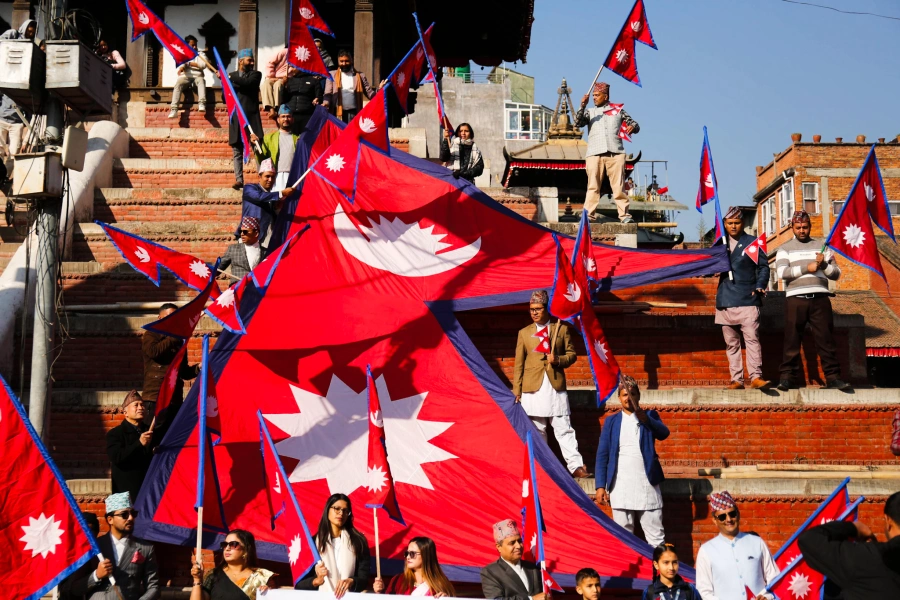
Those 19 days of April 2006 were a period of revolution. The police were after me like predators, and like a refugee, I kept fleeing from house to house of friends and relatives.
In the midst of all the hustle and bustle, I received an SMS in my mobile. The message which was related to medical science was not meant for me.
“You’ve sent the message to the wrong person,” I wrote back.
“I’m sorry,” was the immediate reply, “I entered the wrong number.”
Another text followed in a while, “You’re Gagan, aren’t you?”

“Yes,” I answered.
“I sent you the message accidentally,” read the fourth message, “Can I message in the future?”
It wasn’t a new thing for me to communicate with strangers on my cell phone. I replied, “Yes.”
We began sending messages to each other. It wasn’t difficult to guess that my unknown friend was a woman. “Can you please tell me your name?” I asked her many times. I never got a reply.
An SMS came from her one day, “My house was attacked with teargas today, and my grandmother got injured.”
I wrote back, “This happens in a revolution. Citizens aren’t safe even inside their homes. The only solution is to come out to the streets and end the autocratic regime.”
The same day, I read the news in the paper: “The police attacked Nepali Congress politician Arjun Narsingh KC’s house with teargas. His mother has been injured.”
I felt a cold rush. “Are you Arjun Narsingh KC’s daughter?” I texted her.
“Yes.” Our correspondence, after that, stopped for days. Maybe she felt like she’d been caught like a thief.
I had been to Arjun Dai’s house several times for political discussions. Even though I didn’t know her personally, I was aware that one of his daughters was studying medical science.
The pressure of the revolution was rising. Monarchy was ended in 19 days, and angry fists changed to ‘V’ for Victory signs. My days of hiding, too, were over.
“Congratulations for the people’s victory,” I received a message one peaceful morning after the success of the People’s Movement. I felt happy reading the text.
“Can I call you?” she asked.
“Anytime.”
***
We began to talk over the phone regularly. But we hadn’t met.
“16 July,” I proposed.
“Why?” she was surprised.
“It’s my birthday.”
“Really? Mine’s on the same day too.”
The date was set. We went to Dwarika’s. It was our first date. We talked for a long time. I felt like a new person, sitting in front of her, away from my busy daily political duties and street protests. It had been a while since I had given time to myself.
“It’s late, we should go,” she glanced at her watch.
“I’ll drop you,” I offered and asked for the bill.
I assumed that Anjana would pay, thinking that she knew I couldn’t afford to treat her in a place like Dwarika’s. But she thought that the guy would pay on a date such as this. Nearly an hour passed by in the dilemma.
Finally, I looked at the bill. It had come to Rs 4,000. I had only Rs 2,000. There was no point feeling ashamed. I said “I have 2,000. Do you have the rest?”
Coincidentally, she too had Rs 2,000 only. We paid the bill and left. Then, neither of us said anything about it. After we became more open with each other, we recalled the day repeatedly. She says, “You didn’t pay that day because you didn’t have money, right?”
“Yes,” I reply with a laugh. Her face lightens up as she giggles.
***
Our ‘dating spots’ were public—restaurants or cinema halls. We found a peaceful place even in a crowd. We were lost in each other. She would come and meet me, without telling her family. I also would set aside some hours from my busy schedules to meet her.
She understood me. Most of all, she listened to what I had to say. She became my mirror, where I could see my strengths and weaknesses. I always wished my life partner to be understanding—of what I think, of who I am. Anjana, I feel, is the person I have always imagined.
***
One day, I went to Arjun Dai’s house for a party campaign. That day, she came downstairs, carrying a broken camera as an excuse. Arjun Dai couldn’t fix the camera, but formally introduced us to each other.
“This is my daughter Anjana. She’s studying medical science.”
“He is youth politician Gagan Thapa.”
I turned red with embarrassment but she kept smiling.
***
“Hello,” I heard Anjana’s voice on the other end, “Where are you?”
I was going to Ramechhap with her father. She was on her way to America for further studies.
“Have you reached?” I moved to a corner.
“No,” she said, “I’m in London in transit.”
In a while, Arjun Dai began to talk about his daughter. “My daughter’s gone to America. It’s time to make her career,” he spoke of her. I patiently listened. Eech time he said her name, I also began to feel a little lost.
“What about you? Do you have any plans for marriage?” he suddenly asked me while back from Ramechhap.
“Not yet,” I said.
He went on, “The girl you marry will face a lot of difficulties. You have no time to eat or sleep. You’re always on the move. How will you give a wedding party?”
“I’m going to have a simple wedding, with no party,” I said out loud, while thinking, I’m going to marry your daughter in the end.
Anjana revealed our relationship to her father when he went to America. “This is your decision, but it’s a difficult one,” he acceded with much warning. But she was determined.
“I want to marry you,” I emailed her one day, “But for that, you’ll have to return to Nepal and continue your studies and build your career here.” It wasn’t possible for me to go to America, and if she decided to study there, we would be apart for four years.
She didn’t reply to my email. After a few days, she arrived in Nepal, leaving all her dreams behind.
***
The responsibility of taking care of a family and being a Constituent Assembly member fell on my shoulders at the same time.
After our marriage, I sometimes felt that she didn’t understand my work.
“Gagan, your entire life is passing with your busy schedules,” Anjana reminds me many times, “We need to learn how to find time in between all of this.”
But, I slowly began to comprehend.
After I got involved in broader things such as the country, the citizens and loktantra, I began to dismiss small things.
For years, I had forgotten to ask my mother how she was feeling when she was ill. My father has diabetes, but I hadn’t taken him to the clinic. I found out from an uncle in Itahari that my grandmother had been in bed for 20 days. Even though we lived in the same house, I had little knowledge of what was happening.
It was because of such habits that Anjana kept telling me, “Whatever you do, whatever you’re trying to do, and your family will fully support you. We’re willing to sacrifice anything.
But if you don’t understand the importance of your mother, father and your wife, nor will you be able to understand the importance of the society. To understand the society, you need to know the value of your own family.”
These days, I try my best to give time to my family and I work at home. I have never seen my mother so happy. You don’t have to sacrifice your family to excel in an area of work; all you need is two words of love. Thanks to Anjana, this is the difference between politics and love.
Related story
Office of the Company Registrar starts SMS service