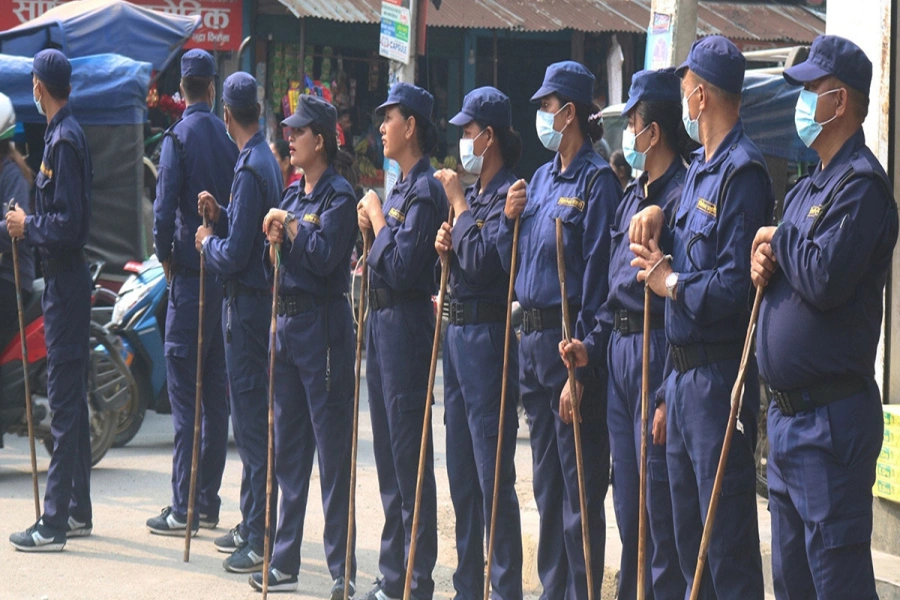
The National Examinations Board of Nepal recently announced this year’s Secondary Education Examination (SEE) results. The SEE is taken by Grade 10 students across the country and remains one of the most important milestones in Nepal’s education system. Of the roughly 430,700 students who appeared, 65.9 percent passed, while about 146,500 were classified as non-graded, meaning they did not meet the passing standard.
Minding the cohort
At first glance, the story is daunting but simple: around 66 percent passed and 34 percent failed. A 34 percent failure rate in a national examination is, by any standard, a massive educational failure. There appears to be some satisfaction that the failure rate declined slightly from last year. But regardless of whether the rate improved by a few percentage points, no serious country should treat such numbers as routine.
Yet even this alarming figure hides a much deeper crisis. The real question is not only how many students failed SEE this year. The more important question is this: how many children who began Grade 1 ten years ago actually reached SEE and passed? That question changes the picture entirely. According to the Ministry’s Flash Report, 1,053,824 children were enrolled in Grade 1 in 2015. These are roughly the children who, under normal progression, should have appeared in SEE this year. Yet only about 430,700 students actually sat for the examination. Even that number is not a clean cohort count, because some SEE candidates are repeaters from earlier years, while some students from the original Grade 1 cohort are still stuck in lower grades.
Still, the broad picture is unmistakable. Of the more than one million children who entered Grade 1 a decade ago, only about 41 percent appeared in SEE this year. And of those who appeared, only about 66 percent passed. That means only around 27 percent of the children who began Grade 1 ten years ago successfully passed SEE this year. The remaining 73 percent were either lost along the way, delayed by repetition, or failed at the final hurdle.
This 73 percent is the number Nepal should be discussing, not only the 34 percent.
Desperate search for missing girls as nearly 80 dead in Texas f...
Hurdles before the iron gate
The official SEE pass rate is calculated only among those who survive long enough to sit for the exam. But hundreds of thousands of children disappear from the system long before they reach that iron gate. Some drop out; some repeat grades, and some continue attending school without mastering even basic reading and numeracy skills. By the time SEE results are announced each year, the real educational crisis has already unfolded quietly over the previous decade.
This is what makes Nepal’s educational failure so dangerous. The system does not fail only at the gate. It leaks, weakens, and filters students throughout the entire journey. The tragedy begins early. Many children fall behind in foundational learning during the first few years of schooling and never recover. According to UNICEF, only about 45 percent of children aged 9 to 14 possess foundational reading and numeracy skills expected at Grades 2 and 3. This means more than half of Nepal’s children are already struggling with basic learning long before they approach SEE.
Once children lose confidence academically, the effects compound. Repetition increases. Motivation weakens. Attendance becomes irregular. Families under economic pressure begin to question the value of continued schooling. Eventually many children disengage psychologically before they leave physically. By Grade 8 or 9, many students are no longer studying with the expectation of higher education or skilled employment. They are simply moving through the system because there are few alternatives.
That silent disengagement rarely appears in official statistics. This year’s muted public response is deeply worrying. Earlier SEE results at least generated some national debate. This year, apart from a few newspaper commentaries and editorials, the country largely moved on quickly. That silence itself says something important: Nepal has normalized educational failure on a troubling scale.
Reverse sorting
The crisis becomes even more troubling when we examine the growing divide between public and private schools. One of the least discussed features of Nepal’s education system is that SEE outcomes are not presented with public-private breakdown. That omission is unfortunate because it not only buries important information, but also obscures the scale of failure in the public schools on which the majority still depends.
This year, about 26 percent of SEE examinees appear to have come from private schools. Yet based on patterns seen in earlier years, it is reasonable to suspect that private schools account for about 85 percent of students scoring 80 percent or above. In other words, a minority of examinees capturing the overwhelming majority of high scores. These are the students most likely to enter the limited number of fields that demand strong grades: computer, science, medicine, engineering, and other competitive professions.
So the divide is no longer merely educational. It is increasingly social and economic. Public schools are now attended disproportionately by children from poorer households, rural communities, and families with fewer resources. Families with means increasingly exit the public system and place their children in private schools. The result is a two-track education system: one pathway for those with opportunity, and another for those without it.
This is not merely an education problem. It is a labour market and national development problem. Education is supposed to function as the great ladder of mobility. But when public schools lose trust and poor children are concentrated in weak institutions, that ladder begins to break down. Instead of reducing inequality, the system reproduces it, making the poor poorer not only in income, but in confidence, skills, and future possibility.
Right questions
Nepal often speaks about development, productivity, employment, industrialization, and prosperity. But none of these goals can be achieved without education. A country that loses most of its children before meaningful secondary completion cannot build strong human capability. And without human capability, long-term economic progress becomes impossible.
Generation after generation, children from poorer households remain trapped in cycles of weak schooling, low skills, and limited opportunity. That is not simply institutional failure. It is a profound national failure. Each year Nepal asks: “What percentage passed SEE?” That is the wrong question. The country should instead ask: how many children who enter Grade 1 are still learning, progressing, and completing school ten years later? How many acquire genuine foundational skills? How many develop the capabilities needed for productive adulthood? How many poor children are able to use education as a path upward?
Until those questions become central, Nepal will continue to celebrate marginal improvements in SEE pass rates while ignoring the much larger disappearance of children from the promise of education itself. The SEE result should therefore not be read simply as a one-year examination outcome. It should be read as a ten-year report card on the entire school system. And that report card has been deeply troubling, decade after decade. Can Nepal muster the courage to change it?
The author holds a PhD in Economics and writes on economic issues in Nepal and Canada. He can be reached at acharya.ramc@gmail.com