Indra Bahadur Rai wrote years ago: One can write only about things one likes and people one loves. [break]
This is no hate literature, therefore. At worst, this review can be taken as an advertorial, an advertisement, or a promotional brochure: it deserves some honorable mentions, after all.
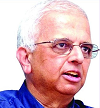
The author of “Anusmaran” (Dobhanko Manchhe) is Nagendra, whose full name is Nagendra Sharma. He comes from Kharsang (British Kurseong), and I from Darjeeling Bazaar.
This geographical distance alone was fact enough for us to have never crossed our paths in West Bengal. When I was born in Shillong in 1943, Nagendra Dai was already a mid-teenager. I met him for the first time in 1976 only when we both attended a writers’ meet and picnic above Kathmandu’s Balaju Gardens.
In fact, I knew Sophie Didi first. That she was Nagendra Dai’s wife dawned on me only later when I saw them together in their Putali Sadak home.
She was a Section Officer at Radio Nepal where I was a studio musician for ten years (1966-76).
Classically educated and trained in Allahabad, she was a vocalist of Shastriya Sangeet. But she wanted to be a modern singer at Radio Nepal, was crazy for the styles of Amber Gurung, Bachchu Kailash, Nati Kazi et al. Much as they also wanted to encourage her, they, however, found her notes a wee bit off-key in modern songs.
As it is, Radio Sagarmatha occasionally plays those modern titles recorded by Sophie Sharma and archived by the FM station.
“Anusmaran” (Dobhanko Manchhe) is interspersed with humility and modesty, humor and self-effacement, and at places with self-deprecation.
But, as the foreword to the book is so ably written by Prof Dr Govind Raj Bhattarai, there is no real need to reiterate Nagendra Sharma’s series of “variegated” or “chequered” careers in Calcutta and Kathmandu – lawyer, American Embassy officer, Royal Nepal Airlines executive, legal advocate for copyrights and intellectual property rights in Nepal, information director for King Birendra’s coronation, chairman of the Gorkhapatra Sansthan and the Industrial Development Board, and so on.
There is no need, either, to discuss the nearly two dozen books Nagendra has written on diverse subjects. Dr Bhattarai himself has illuminated in his introduction on Nagendra’s literary and journalistic outputs, as well as his “hero’s journeys” – I borrow Joseph Campbell’s phrase – through not only his own life and times but of Nepal herself.
The book is also about those people who ruled and influenced Nepal, for better or worse, and how Nagendra was called upon to play his pivotal roles in Nepal’s affairs for more than four decades. Penning his foreword to all these codices, and arranged in more than twenty chapters, the learned Professor has acted as Nagendra’s folkloric explainer for “Anusmaran” as an autobiographical work.
I must, therefore, divert readers to other self-indulgent peregrinations.
While reading Nagendra Dai’s signed copy of “Anusmaran,” I had the pleasant shocks of recognition as I turned the pages. I was indeed reading the Nepali version of what we two had begun during the Y2K period.
He was writing his life stories in English, and I edited the texts. Some three-fourth of the opus was completed before the new Millennium arrived, and we left it at that, expecting more pages to roll out from his computer as time passed.
We separated and saw less of each other as we moved on to our respective newer callings. But I remember some significant segments in the English original which are either retold, revised, some toned down, and quite others expunged in the new Nepali avatar.
There are understandable reasons for such rearrangements.
One major player in the English texts is Shekh Shumsher, the Rana student who brought Nagendra from Kharsang to Kathmandu in the first place.
He was the son of General Dhruva Shumsher of the Bishal Nagar palace. The regal compounds also had a young student visitor called Surya Bahadur Thapa when Nagendra was ushered in as Shekh’s guest. Who this particular Surya Bahadur is or was needs no further fuss in this article.
The Nepali edition of Nagendra’s autobiography does mention both Shekh and Surya Bahadur to some extent, but the aura of Shekh is brighter in the English original and Surya Bahadur somewhat opaque.

So impressed was I by Shekh’s Sufi/Rumi-like image that I asked Nagendra Dai one evening: “What about Shekh now? Where is he? Do you see him?”
“No, we haven’t met for years,” Nagendra said. “He was disillusioned with Kathmandu and left for the Madhesh, and for good, it seems now. He’s literally disappeared.”
Part of another chapter is on Nagendra’s own father-in-law, Dr Dilli Raman Regmi, the biological father of Sophie Didi and her elder brother Madan Regmi, the “rebel” poet of his youth, who now heads the China Study Circle.
The English version also highlighted Haribhakta Katuwal in more detail; he has been much précis-ed in the present book.
Likewise, two of Nagendra’s closest friends and professional associates are missing from “Anusmaran.” The late BB Singh, Nagendra’s Miitjyu, was a Thakuri and a near and dear one of the Sharmas for many years.
The English version describes “General Chyang” – after chyangra, our fond nickname for him – as a natty dresser who, while visiting Calcutta, would rather buy a fresh shirt everyday than have his clothes cleaned and ironed.
Another missing friend from the present volume is yet another smart dresser. He is Shiva Hari Singh “Pagal” Pradhan who could be the only remnant of the Dr IK Singh era in Kathmandu.
He was the brief prime minister’s principal PR secretary.
My professional and prolonged association with Nagendra Sharma began in 1990 when I returned from Bangkok to find Nepal choked by Rajiv Gandhi.
There was an air of revolt stirring within Nepal itself against the mean and myopic monarchy and its mannequins.
The country was paralyzed for fourteen months before the Kathmandu Spring of 1990 burst forth.
It was with the Dawn of Democracy that I was pressed into the editorial and input services for Nagendra’s pet publication, called Weekend.
It was also a time when Nagendra was unceremoniously hounded out of the Industrial Districts Development Board as its chairman.
His midnight purge was engineered by the Nepali Kangress Iron Man Ganeshman Singh’s notorious Chhetrapati Durbar’s minions in the new power play in neo-democratic Nepal. Nagendra always had his well-established law firm to fall back upon in any case; thus he had the time and luxurious bent to dabble in his hobbies. Weekend was one such toy.
Romancing with Weekend has some sad-comic impressions with me. For one, I soon discovered that the logo of Weekend had the prefix of “Bi-” inserted in a different shade in the middle left-hand corner of the lettering; so it was not a weekly magazine but a fortnightly one.
What a trick! Secondly, it was a personal project of Nagendra, a plaything, an idea to toy with while I envisioned it as a formidable contender to The Independent.
But most things were not pleasant at the Weekend. First, Nagendra had allowed useless hangers-on and unproductive “advisors” and “experts” to surround him, and they yapped ad infinitum while actual production professionals and editorial sharpies were in short supply.
It was also, at best, a garage undertaking, and the result was a sort of a vanity publication. It had no systemic management worth the name; everything was ad hoc, verging on Nagendra’s childlike whims and wishful tendencies. We literally worked in tool-shade environs and atmosphere.
One early issue’s page layout was done by Yojana, Nagendra’s daughter. Another issue was designed by Allen Bairochan Tuladhar in his Hotel Panorama office.
For the next issue, Nagendra took me to another consultancy office at Putali Sadak, an outfit entirely manned by women.
Printing press also changed with every edition. The magazine’s distribution network had no idea about sales and returns, and we had no notion of circulation, profit and loss.
It was a chaotic circus until Weekend was frozen by a sub judice moratorium in the celebrated Cartoon Court Case Caper slapped by the Supreme Court.
The erratically anarchic publication schedules of Weekend were indefinitely suspended. It was a merciful godsend, and it was time for me make myself scarce.
The devil-may-care trick called Bi-Weekend showed the other side of Nagendra Sharma as its indulgent and happy-go-lucky publisher/editor while his national records as an efficient corporate executive, a mandarin with unqualified foresight, a visionary adman, boldly decisive and policy-formulating chairman of Nepal’s public-sector boards and corporations, and brave-new-Nepal’s other head-honcho positions that he brilliantly filled up – including the most challenging assignment as director of information for King Birendra’s coronation, a portfolio for which he was literally picked off the street on Exhibition Road – are scattered throughout the pages of “Anusmaran.”
Nagendra Dai and I saw even less of each other when the Sharmas left their home and hearth at Putali Sadak.
Their house on one side of the traffic-congested crossroads was especially vulnerable because Putali Sadak, as a whole, became one of the five worst polluted precincts in town.
Very soon, in the 1990s and thereafter, the area also morphed into a hotbed of torch-bearing political processions, its colleges and campuses erupted in student protests, police baton charges became common, and the resultant brickbats and cinders of burnt rubber left by violent agitators coated the surface of the streets.
Soon, therefore, the family relocated itself somewhere in Mandikatar.
It was in those later years that Sophie Didi was gripped by dementia and her previous ailments were further aggravated.
I missed her in those seven or eight years, which I believe were the worst period in her life. But the forebodings were evident in Putali Sadak itself. I must explain:
Sophie Didi was retired from government service, and this new fact of life affected her mentality for the worse. One evening, she told me: “Peter bhai, I’m going to die in
six months.”
I knew why she said this. Since we two minced no words in our conversation, I gave her a resounding speech that evening. What I told her can be summed up in the following way:
Sophie Didi was already a pre-selectively condemned lamb of Nepal’s entrenched bureaucracy, its freeloading culture, self-serving trappings and institutionalized temptations.
Preemptively, the hidebound Nepali Hindu society she lived in, with its caste and class and faulty value system, also caused to hasten her delusions and disillusionments, as it did to other Nepali hakims like her.
Nepal needs another fiery Shankaracharya to demolish the Pashupatinath Temple and build it anew by way of unleashing another Hindu Reformation to redeem the Nepali psyche for its rightful peacefulness and salvation.
Until such times, meanwhile, Nagendra Sharma will continue to lament the loss of his most dearly beloved Sophie. In the last pages of “Anusmaran,” he sounds as if he is evoking Thomas Hardy’s own regrets, anguish and remorse for his lost wife.
Here, Nagendra sounds like Shiva gone berserk, carrying the decaying and disintegrating mortal remains of his one and only Parbati all over the Universe.
With this specter well in sight, Dr Govind Raj Bhattarai seems to apply his own soothing balms by illustrating other men of Nagendra’s age who have lost their spouses, or suffer with the vicissitudes of their life partners.
His preface is a gentle sermon from a younger novitiate to a senior apostle who is beyond consolation and logic at this stage.
I have cast my own calming sentiments here, for no religious message and spiritual succor of any kind seems to help here.
Such is the Nepal we all live in where sadness and fatalism atrophy every bud that tries to bloom.
In conclusion, I recollect how Jack Kerouac summed up the Buddha’s teaching: Birth is the cause of death! These six simple words allow us six average decades of complicated life. If there is more of it, it is a baneful bonus while life itself can be snuffed even before that, or at any point, anywhere.
It is the span between accidental birth and certain death, called life, which is the most uncertain fate we deal with in every nanosecond we live.
“Anusmaran,” in that sense, among other testimonials, is as much about Sophie Sharma as it is about a Nepali universal everyman called Nagendra Sharma.
Related story
Heart to Heart with Malvika