The complainants have accused him of possessing a Nepali passport, an Indian passport, and a refugee identity card. Republica on Sunday found a letter sent by the home ministry back then to the Sindhupalchowk District Administration Office (DAO) directing the office to investigate the charges against him. [break]
The complainants have accused him of lying about his nationality, name, address and age in the passports and the refugee identity card. He also faces corruption charges.
Attached with the home ministry´s letter languishing at Sindhupalchowk DAO are photocopies of the two passports and the refugee identity card. The complainants have sought action against him charging him of committing the serious crime of faking nationality.
According to the documents attached with the complaint, he was issued a passport (number 1121588) from the foreign ministry on 04.01.2000. The passport identifies him as Mr Wangchuk Rinpoche, a resident of Bauddha, Kathmandu-6, born on 29.07.1967.
He is also accused of holding an Indian passport (Number A2129812) that was issued from Guwahati, India on 12.06.1998 that identifies him as Indian national Khenpo Chime Tsering, a resident of Kuligal, India, and born on October 1, 1965.
The complainants have further accused Lama of holding a refugee identity card claiming he is a Tibetan national bearing the name Lama Chime Tsering. He was issued the identity card from Mysore, India in 1969, the complaint says.
The complainants also have accused him of misappropriating funds while operating the Bajra Net Company in Lazimpat and issuing registration certificates for non-existent monasteries.
The complaint was filed at the home ministry on April 15, 2005 by Phunchok Lama, Tendup Lama and Gyalzen Lama of Bauddha. The ministry issued a directive on May 29, 2005 to Sindhupalchowk to investigate the charges by summoning Lama. A DAO source said the office replied to the ministry that Lama could not be reached.
Republica´s repeated attempts to reach Lama to inquire about these charges failed.
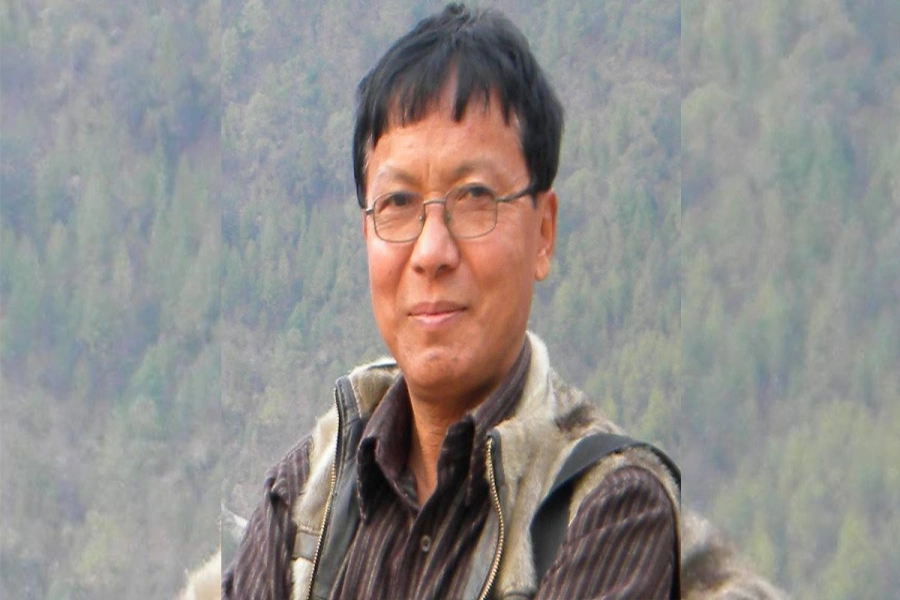
A Free Tibet activist
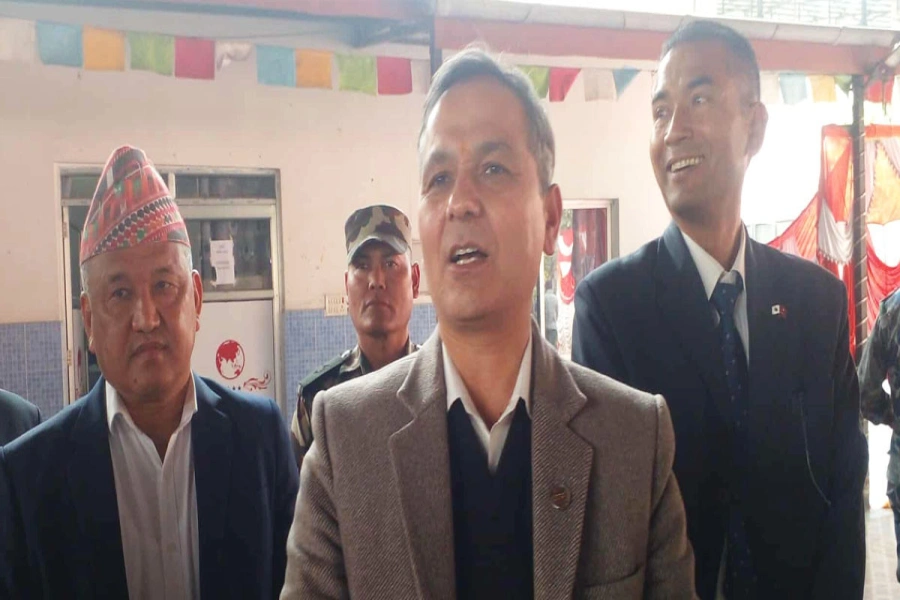
 State Minister for Finance Lharkyal Lama with Dalai Lama.
Photo from www.khempo.com
Related story
Amendment on Citizenship Bill for nationality and national secu...

Just two weeks after reiterating Nepal´s commitment to one-China policy, Prime Minister Jhalanath Khanal inducted, perhaps unknowingly, a long-time associate of Free Tibet movement into his cabinet.
During a meeting with Chinese People´s Liberation Army Chief General Chen Bingde in Kathmandu on March 24, Khanal outdid his predecessors in expressing such commitment by conveying to the general that not only Tibet but even Taiwan is an integral part of China, and his government has a zero tolerance policy to activities detrimental to Chinese interests. [break]
But on April 12, Khanal dealt a big blow to Chinese interests by naming Lharkyal Lama, a long-time campaigner for Free Tibet, as minister of state for finance.
The CPN-UML party, of which Khanal is the chairman, also officially adheres to one-China policy.
State Minister Lama is a long-time associate of senior members of the Free Tibet movement including the Dalai Lama, who retired last month as the political leader of the Tibetan government-in-exile. Lama studied at the Ngagyur Nyingma Institute of Higher Buddhist Studies in Mysore, India, that has produced many Tibetan Buddhist leaders who have kept the Free Tibet movement alive.
In Nepal, Lama´s contribution has been principally in securing entry of Tibetan youths to the United States.
"Lama helped many Tibetan refugees, including some of my friends, make it to the United States," said Khenpo Nima Dorje, chairman of High Level Monastery Management Committee.
UML leaders contacted by Republica to enquire about the conflict between Lama´s past and the party´s one-China policy defended the party´s adherence to the policy, and said no one but Lama himself is responsible for his allegiances.
“There is no question about our party´s official commitment to one-China policy,” said UML leader Pradeep Gyawali. “But I cannot vouch for some party member´s commitment to the policy. Lama has remained a controversial figure in our party ever since his name appeared in the proportional representation list for Constituent Assembly election,” he added.
Nepal´s adherence to one-China policy has traditionally meant the government´s commitment to control activities contradicting Chinese territorial interests; to deny sanctuary to persons involved in such activities; and also to sever all contacts with them.
In June 2009, the government´s commitment to the policy was questioned by Beijing when six Nepali lawmakers visited Dharamshala and met the Dalai Lama. This prompted the Chinese to seek an explanation from the Madhav Kumar Nepal government.
The government did diplomatic damage control saying the lawmakers were not fully aware of their visit´s itinerary.
And again, in June 2010, three Nepali lawmakers -- two from Nepali Congress and one from Madhesi People´s Rights Forum -- traveled to Dharamshala on a junket and met the Dalai Lama´s prime minister Samdong Rinpoche, prompting an outcry from then main opposition Unified Communist Party of Nepal (Maoist).
The Maoists, who are now the biggest party in the ruling coalition, said the visit was tantamount to the government supporting Free Tibet movement.
State Minister Lama has not only met leaders of the Free Tibet movement, he is one of them.
A UML leader said the responsibility of cross-checking the background of cabinet members rests on the prime minister´s shoulders.
“You should ask the prime minister about Lama´s associations and the prime minister´s decision to name Lama as the state minister,” UML leader Amrit Kumar Bohara told Republica when asked about whether or not Lama´s induction into the government contradicts the state´s and the UML´s adherence to one-China policy.
“When there was talk about Lama being picked as minister, I told him that the time was not right for him to take up a ministerial post,” added Bohara, who is from Lama´s home district, Sindhupalchowk. “I reminded Lama that his job was to push for the rights of his community in the new constitution. I even asked him whether he was himself actively seeking a ministerial berth, instead of focusing on his job as a representative of the Buddhist community in the Constituent Assembly,” Bohara said.